Agreement Scenes
Agreement Scenes is an exercise in which performers practice fully agreeing with every offer their scene partner makes. By removing all conflict and negation, the exercise reveals how scenes can build through mutual enthusiasm and escalating shared reality. It reinforces the "yes, and" principle at its most fundamental level.
Structure
Setup
- Two or more players perform a scene under one constraint: every offer must be accepted completely, and no player may introduce conflict, refusal, or negation.
- The instruction removes one of improvisation's most common defaults and forces performers to find scene energy through shared enthusiasm rather than tension.
How Agreement Scenes Work
- When a player makes an offer, the partner accepts it with genuine enthusiasm and builds on it immediately.
- The builds stack: each player adds to the shared reality the previous offer established.
- The scene cannot fall back on disagreement, problems, or obstacles as a source of energy.
What Agreement Reveals
- Scenes generate energy through escalating shared enthusiasm, not only through conflict.
- The absence of conflict reveals what other scene engines performers have access to: discovery, novelty, joy, shared investment in an activity.
- The exercise also reveals how much unexamined negation performers normally import into scenes: the instinct to complicate, correct, or resist an offer.
Common Scene Shapes Under Agreement
- Two characters who are both delighted by the same discovery, building a shared world of mutual enthusiasm.
- Two characters pursuing the same goal with increasing investment and momentum.
- Characters who discover something together and keep escalating the wonder of that discovery.
Progression
- After running agreement scenes, run a scene with no constraint and ask performers to bring the same capacity for shared enthusiasm into work that allows conflict.
How to Teach It
How to Explain It
"In this scene, you agree with everything. Not grudgingly. Not secretly planning to disagree later. Genuinely. Everything your partner says is wonderful and true. Whatever they give you, you want more of it. If they love it, you love it too."
Common Notes
- The exercise is often harder than it sounds for experienced performers who have been trained to seek conflict as their primary scene engine.
- The instruction is not "be nice." Characters can be fully specific and emotionally committed. The constraint is about acceptance of offer, not about personality type.
- The most valuable moment in the exercise is when performers discover the scene energy available through escalating agreement. This often produces genuine discovery.
Common Pitfalls
- Players use agreement as a kind of polite passivity: "Yes, great, sure." Genuine agreement requires active building, not just not saying no.
- Players import implied conflict into their agreement: "I agree, but..." or "Yes, although..." Agreement is clean.
- The scene becomes flat because performers have no other tools for generating forward motion without conflict. This is the training opportunity.
Worth Reading
See all books →
The Young Actor's Book of Improvisation
Dramatic Situations
Sandra Caruso; Susan Kosoff

Improvisation Starters
A Collection of 900 Improvisation Situations for the Theater
Philip Bernardi

The 5 Elements of Improv
How to Take Your Improv to the Next Level
Andrew M. Spragge; Karen L. Eichler
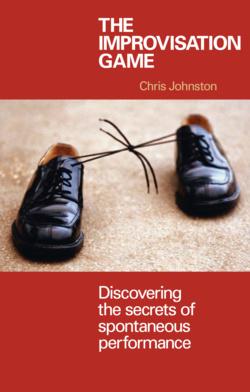
The Improvisation Game
Discovering the Secrets of Spontaneous Performance
Chris Johnston

Group Improvisation
The Manual of Ensemble Improv Games
Peter Campbell Gwinn; Charna Halpern

The Improvisation Edge
Secrets to Building Trust and Radical Collaboration at Work
Karen Hough
Related Exercises
I Know
I Know is a scene-building exercise in which performers respond to every offer with the two-word affirmation that names the game, followed by an addition that expands the shared reality. The response functions as an amplified form of yes-and: it validates the partner's offer, implies pre-existing shared knowledge, and propels the scene forward through rapid mutual agreement. The exercise prevents denial and forces each player to build on their partner's contributions without hesitation, creating scenes that accumulate detail and emotional weight at speed.
Positive Scene Challenge
Positive Scene Challenge is an exercise in which performers must play an entire scene without conflict, negativity, or problems. Characters agree, support each other, and share genuine enthusiasm. The constraint forces improvisers to discover that compelling scenes can emerge from shared joy rather than from opposition.
Negotiation Skills
Negotiation Skills is an applied improvisation exercise in which participants engage in structured two-person scenes built around a negotiation scenario, using improv principles -- agreement, active listening, building on offers -- to navigate competing interests toward a shared outcome. The exercise makes the underlying dynamics of negotiation visible and trainable by placing them inside low-stakes fictional scenarios before transferring them to real professional contexts.
Location, Relationship, Escalate, End
Location, Relationship, Escalate, End is a scene construction exercise in which performers build a scene through four discrete, progressive stages: first establishing a specific physical location, then establishing the specific relationship between the characters, then escalating the scene through increasing stakes or emotional intensity, and finally bringing it to a definitive end. The exercise provides a structured scaffold for scene construction and trains performers to execute each element with commitment and specificity before moving to the next.
Yes And
Yes And is the foundational improv exercise and philosophical principle in which performers practice accepting a partner's offer (the "yes") and adding new information that builds on it (the "and"). One player makes a statement; the partner responds by first affirming the reality of that statement and then contributing something new. The exercise trains the most essential skill in improvisation and has become the defining principle of the entire art form.
Open Offer
Open Offer is a scene-starting exercise in which one performer enters the space and makes a clear, specific opening offer -- a line of dialogue, a physical action, or an emotional state -- that establishes a strong starting point for their scene partner to build on. The exercise trains the ability to begin scenes with purpose and generosity rather than caution or ambiguity.
How to Reference This Page
The Improv Archive. (2026). Agreement Scenes. Retrieved September 28, 2026, from https://improvarchive.org/exercises/agreement-scenes
The Improv Archive. "Agreement Scenes." The Improv Archive, 2026. https://improvarchive.org/exercises/agreement-scenes.
The Improv Archive. "Agreement Scenes." The Improv Archive, 2026, https://improvarchive.org/exercises/agreement-scenes. Accessed September 28, 2026.
The Improv Archive is a systemically maintained repository. The archive itself acts as the corporate author.