Dada Monologue
Dada Monologue is an exercise in which a performer delivers a monologue composed of seemingly random, disconnected words and images in the spirit of the Dada art movement. The exercise frees performers from the pressure to make logical sense and trains the audience to find meaning in unexpected juxtapositions. It builds confidence in committing to material without understanding where it leads.
Worth Reading
See all books →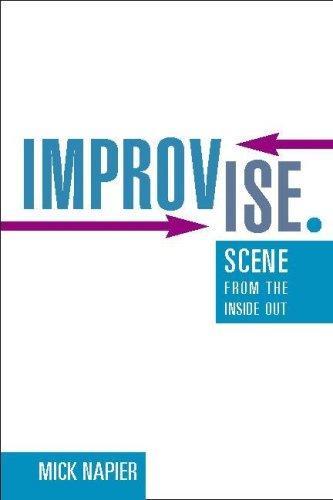
Improvise
Scene from the Inside Out
Mick Napier

Semiotics and Pragmatics of Stage Improvisation
Domenico Pietropaolo; Paul Bouissac

Action Theater
The Improvisation of Presence
Ruth Zaporah

The Improv Illusionist
Using Object Work, Environment, and Physicality in Performance
David Raitt
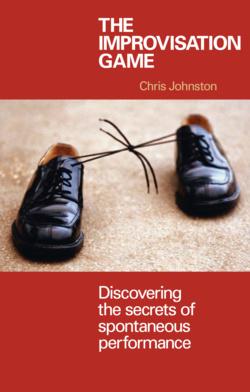
The Improvisation Game
Discovering the Secrets of Spontaneous Performance
Chris Johnston

Something from Nothing
The Technique of Improvisation
Richard Goteri
Related Exercises
Communal Monologue
Communal Monologue is an exercise in which multiple performers deliver a single monologue together, trading off mid-sentence or mid-thought without any performer beginning a new idea. Each speaker must continue seamlessly from where the last one stopped, maintaining the same voice, tone, and thought. The exercise trains verbal listening, agreement, and the construction of a collective voice.
Monologue Thief
Monologue Thief is a hybrid game and exercise in which one performer delivers a monologue and a second performer -- the thief -- intercepts lines, phrases, or images from the monologue and builds them into their own parallel or transforming monologue. The exercise trains active listening at the level of specific language rather than general meaning, and develops the ability to receive and immediately transform material offered by a scene partner into new creative output.
Character Monologue
Character Monologue is an exercise in which a performer delivers an extended solo speech in character, speaking directly to the audience or to the ensemble. The sustained solo performance builds stamina, character depth, and the ability to hold attention without scene support from other players. Character Monologue develops the skill of generating detailed, specific character voices and perspectives under the pressure of uninterrupted stage time. The exercise serves as a core training tool for monologue-based long-form formats such as The Armando, where monologues function as the engine that generates scene material for the rest of the ensemble.
Non Sequitor
Non Sequitur is a hybrid game and exercise in which performers deliberately break logical connections between lines of dialogue, forcing each new statement to have no apparent relationship to the one before it. The exercise trains performers to let go of the need to make sense, builds comfort with absurdity, and paradoxically reveals how audiences will construct meaning even from disconnected material.
Solitaire
Solitaire is a solo performance exercise in which a single performer improvises a complete scene or monologue without any scene partners. The player must populate the world with implied characters, environment, and narrative through their own voice and physicality alone. The exercise develops self-reliance, strong point of view, and the ability to sustain audience engagement independently.
Mantra
Mantra is a vocal and mental exercise in which performers select and repeat a single word or short phrase, gradually shifting its rhythm, volume, pitch, and emotional intensity. The repetition strips away self-consciousness and helps players discover how meaning transforms through delivery alone. The same word spoken softly becomes a prayer; spoken forcefully becomes a command; spoken rapidly becomes a plea. Mantra prepares performers for emotionally committed scene work by building comfort with vocal extremes and sustained focus. The exercise draws on meditation practices adapted for theatrical training.
How to Reference This Page
The Improv Archive. (2026). Dada Monologue. Retrieved September 29, 2026, from https://improvarchive.org/exercises/dada-monologue
The Improv Archive. "Dada Monologue." The Improv Archive, 2026. https://improvarchive.org/exercises/dada-monologue.
The Improv Archive. "Dada Monologue." The Improv Archive, 2026, https://improvarchive.org/exercises/dada-monologue. Accessed September 29, 2026.
The Improv Archive is a systemically maintained repository. The archive itself acts as the corporate author.