Fish Sticks
Fish Sticks is a circle exercise in which players ask simple "Do you ... ?" questions while everyone tracks their own answers by lowering fingers. The round quickly reveals shared experiences, differences inside the group, and how honestly participants are listening to the question being asked.
Structure
Setup
- Place the group in a circle, almost shoulder to shoulder.
- Ask everyone to stretch both hands forward with all ten fingers visible toward the center.
- Explain that each player begins with ten fingers up.
Core Rule
- One player asks a question that begins with "Do you ... ?"
- Examples in the source include questions about pets, reading, school, stress, and bullying.
- Each participant answers privately for themself.
- If a player cannot identify with the statement, that player lowers one finger.
- No one is out until ten "no" answers have been registered.
How The Round Moves
- Continue around the circle with a new question from each student.
- The response is physical, not verbal. Players do not need to announce yes or no.
- The round keeps moving until only one player still has a finger up, or until the teacher has gathered enough material for discussion.
What Players Are Actually Tracking
- The exercise is not testing speed.
- It is asking players to listen carefully, compare the question to their own experience, and respond truthfully without making a speech.
- Because the answer is shown with fingers instead of words, the room can notice patterns quickly without stopping for every person to explain them.
When To Stop
The source frames the winner as the last person with a finger still raised. In practice, the round can also stop once the teacher has surfaced enough shared and contrasting experiences for the discussion that follows.
How to Teach It
Objectives
- help a group learn about shared and different experiences without long explanations
- practice careful listening to a specific question
- build honesty and self-awareness inside a simple game structure
How To Explain It
Everyone put both hands out so I can see all ten fingers.
We are going to ask "Do you ... ?" questions. If the answer is no for you, put one finger down. Keep your answer silent, be truthful, and listen closely to the exact question.
Playing Notes
- Keep the question stem consistent. Starting with "Do you ... ?" makes the response rule easy to follow.
- Set expectations about subject matter before the first round. The source is explicit that some topics are not appropriate for every classroom.
- Remind players that they do not need to explain their answers out loud.
- Watch the pace. The game works best when the next question arrives before the room starts debating or joking about the previous one.
Common Pressure Points
- If players start asking questions only to get laughs, the round stops being about listening and honest comparison.
- If students watch other hands before deciding, they begin copying the group instead of answering for themselves.
- If the facilitator allows immature or overly personal questions, the room can become self-conscious instead of open.
- If players answer verbally, the pace slows and the simple physical rule gets buried.
Notes That Appear Directly In Source Material
- Levy presents the exercise as an activity elementary teachers can use with students standing in a circle.
- The source says players should keep all ten fingers visible at the start and lower a finger when they cannot identify with a statement.
- The source advises the teacher to insist on truthful responses and to decide whether a given group can handle the exercise maturely.
- The printed examples include questions such as "Do you have a dog?" and "Do you like reading?"
Variations
Known variants of Fish Sticks with distinct rules or structure.
10 Fingers
10 Fingers is a get-to-know-you game in which players hold up ten fingers and take turns stating things they have done. Any player who shares the stated experience puts one finger down. The last player with fingers remaining wins. The game reveals unexpected commonalities and differences within a group.
History
The archive's current direct printed match for this exercise appears as "Fish Sticks" in 112 Acting Games by Gavin Levy. That source documents the finger-lowering question format in a classroom context. A separate archive title, "10 Fingers," appears to function as a descriptive alternate name for the same underlying exercise rather than a separately sourced printed structure.
Worth Reading
See all books →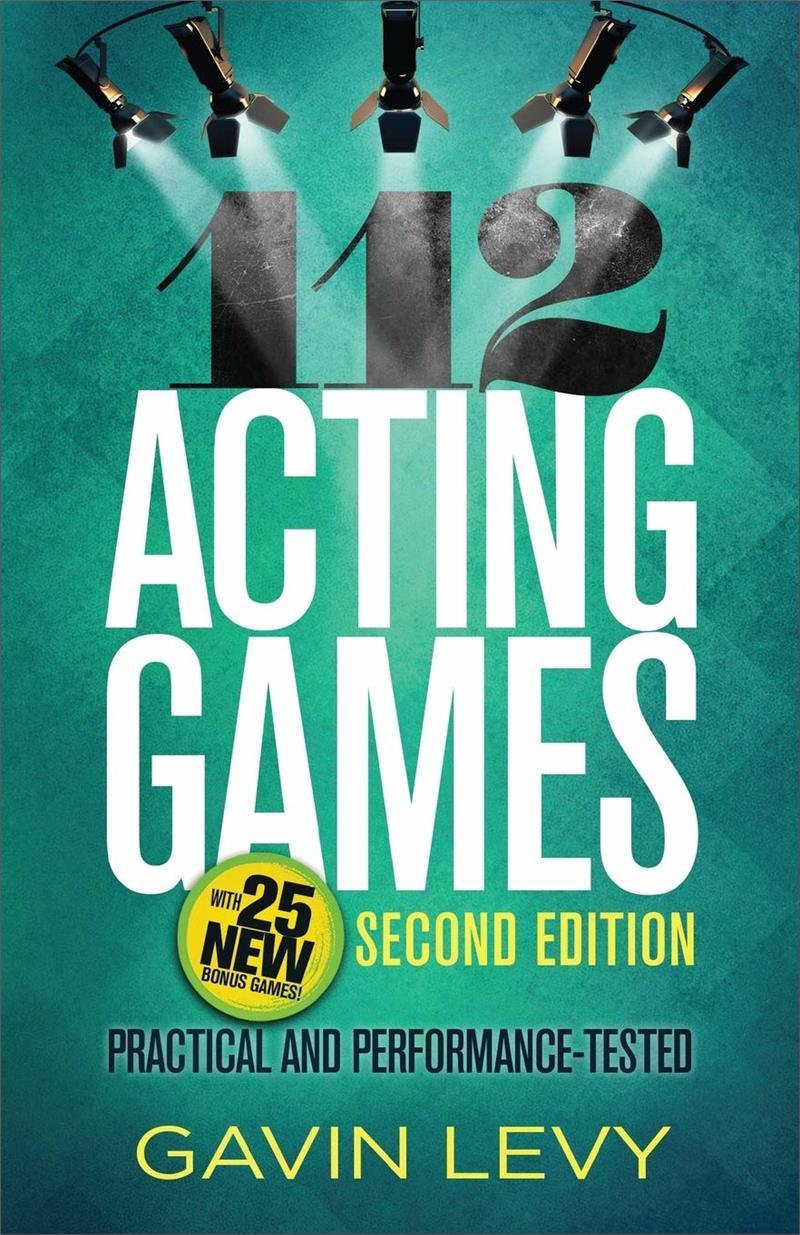
112 Acting Games
Gavin Levy
Theater Games for Rehearsal
Viola Spolin

You Can Teach Improv (Yes, You!)
The Ultimate Guide to Class Planning, Skill Building, and Helping Every Student Leave With a Win
Andrew Berkowitz

Drama Games and Improvs
Games for the Classroom and Beyond
Justine Jones; Mary Ann Kelley

Group Improvisation
The Manual of Ensemble Improv Games
Peter Campbell Gwinn; Charna Halpern
Theater Games for the Classroom
Viola Spolin
Related Exercises
Big Fish Small Fish
Big Fish Small Fish is a quick-reflex exercise in which players respond to commands by miming the opposite of what is called. When the leader says "big fish," players gesture small, and vice versa. The exercise trains the ability to process and invert information rapidly, building the mental agility needed for fast-paced improv.
Yes And
Yes And is the foundational improv exercise and philosophical principle in which performers practice accepting a partner's offer (the "yes") and adding new information that builds on it (the "and"). One player makes a statement; the partner responds by first affirming the reality of that statement and then contributing something new. The exercise trains the most essential skill in improvisation and has become the defining principle of the entire art form.
You
You is a circle exercise in which players point at another person and say "you," passing focus around the group with clear eye contact and decisive gestures. The exercise trains the habit of making specific, committed choices about who receives an offer. It builds directness and the ability to give and receive attention cleanly.
Listening Game
Listening Game is a category of applied improv exercises that use game structures -- rules, constraints, competitive elements, or playful formats -- to make the practice of active listening engaging and its requirements concrete. The Listening Game as a distinct entry encompasses the range of structured listening activities used in applied improv that do not fit a single specific technique but share the common feature of making listening the primary and explicitly tested skill of the activity.
Pass Yes
Pass Yes is a circle warm-up in which players attempt to say the word "yes" at the exact same moment as a partner. One player turns to a neighbor and both try to speak simultaneously, then the receiving player turns to the next person and repeats the process. The exercise trains listening, eye contact, and the willingness to synchronize with another person rather than lead or follow.
All Hands on Deck
All Hands on Deck is a group response exercise built around nautical commands. A caller shouts a series of shipboard orders and players must quickly perform the corresponding physical action or form the correct grouping. The exercise builds rapid-response focus, group coordination, and the ability to hold multiple rules simultaneously.
The Lineage
Explore the schools and structures that influenced or evolved from Fish Sticks.
112 Acting Games (Levy)
How to Reference This Page
The Improv Archive. (2026). Fish Sticks. Retrieved September 28, 2026, from https://improvarchive.org/exercises/fish-sticks
The Improv Archive. "Fish Sticks." The Improv Archive, 2026. https://improvarchive.org/exercises/fish-sticks.
The Improv Archive. "Fish Sticks." The Improv Archive, 2026, https://improvarchive.org/exercises/fish-sticks. Accessed September 28, 2026.
The Improv Archive is a systemically maintained repository. The archive itself acts as the corporate author.