I Like. I Wish. What If?
I Like, I Wish, What If is an applied feedback framework drawn from design thinking practice and used in applied improv contexts as a structured tool for giving constructive, forward-looking feedback on work in progress. Rather than open-ended critique, feedback is organized into three channels: what is working (I Like), what could be developed (I Wish), and generative possibilities (What If). The framework balances appreciation and aspiration, reducing the defensiveness that unstructured feedback often produces.
Structure
Setup
A piece of work is shared: a proposal, a prototype, an exercise performance, a creative product, or a team decision under review. Participants observe and prepare to give feedback using the three-channel structure.
I Like
Each participant names something specific that is working in the work -- a genuine observation of strength, not a generic compliment. Specificity is required: "I like how the opening creates urgency" rather than "I like it."
I Wish
Each participant names something they wish were different or further developed -- a gap, an underdeveloped element, or a direction the work has not yet explored. This is aspirational rather than critical: the wish implies the work could reach something more.
What If
Each participant offers a generative possibility: "What if the ending returned to the opening image?" or "What if the team had an advocate for the customer in the room?" The What If opens possibilities rather than diagnosing problems.
Conclusion
The creator or team receives the feedback and may respond. The facilitator may synthesize across participants or simply allow the structured feedback to stand.
How to Teach It
Objectives
I Like, I Wish, What If trains the discipline of specific, structured feedback -- balancing appreciation, aspiration, and generative thinking -- and reduces the defensiveness that comes when critique is delivered without acknowledgment of what is working.
How to Explain It
"Three kinds of feedback. Start with what you genuinely like -- be specific. Then a wish -- something you want more of or differently. Then a what if -- a possibility, not a prescription. The goal is to leave the creator with something to build on, not just things to fix."
Scaffolding
Model each channel with examples before participants use the framework. The Wish channel is the most likely to drift into evaluation or criticism without the forward-looking framing -- coach participants to phrase wishes as desires rather than deficits.
Common Pitfalls
Participants sometimes rush through the Like channel to reach the Wish, treating appreciation as a formality. The coaching note is that specific appreciation is the most important channel: it names what to preserve and build on, which is at least as useful as knowing what to change.
In Applied Settings
Learning Objectives
In applied settings, I Like, I Wish, What If develops the capacity to give feedback that is both honest and generative -- a combination that most professional feedback cultures fail to achieve. The framework prevents the two most common feedback failures: pure appreciation that provides no direction, and pure critique that provides no foundation.
Workplace Transfer
The exercise transfers directly to design reviews, creative critiques, project retrospectives, performance conversations, and any context where work needs to be evaluated and improved. Teams that adopt the structure often report that their feedback conversations become both more honest and less defensive, because the framework separates appreciation from aspiration and frames the critical channel as a wish rather than a judgment.
Facilitation Context
I Like, I Wish, What If is used in design thinking workshops, creative team development, agile retrospectives, product feedback sessions, and communication training. It works with any group size. The structure is simple enough to introduce in minutes and immediately applicable in professional settings.
Debrief Framing
Ask participants: "What made giving specific appreciation difficult? What made the What If different from just listing problems? Where in your work would this framework change the quality of your feedback conversations?"
Worth Reading
See all books →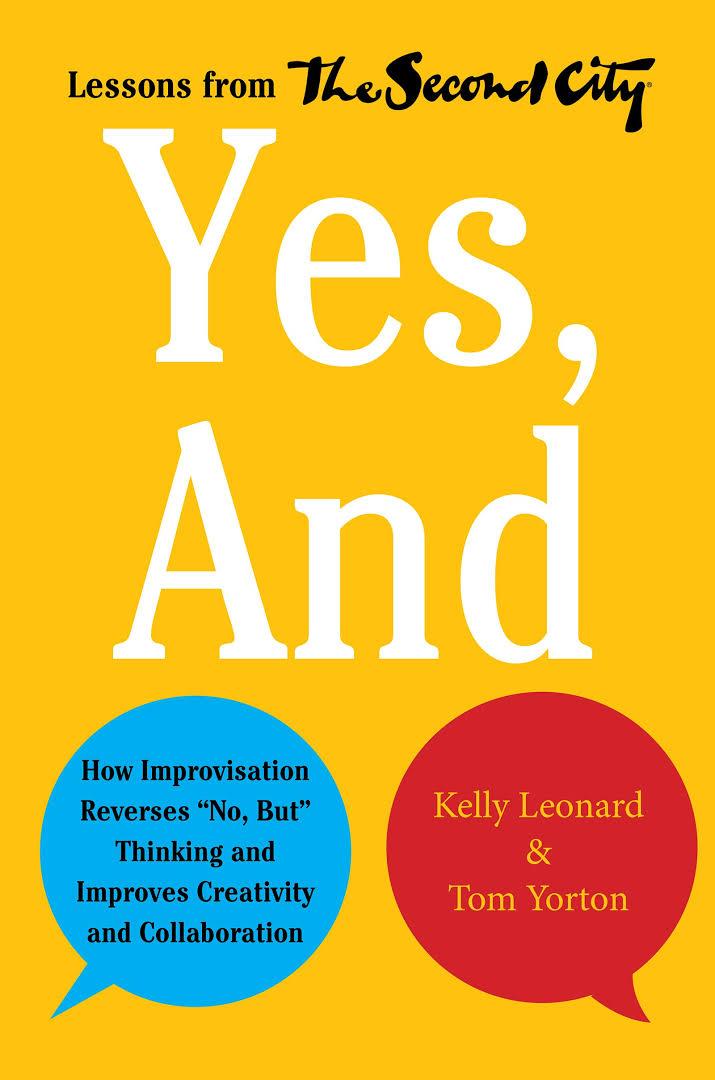
Yes, And
How Improvisation Reverses No, But Thinking and Improves Creativity and Collaboration
Kelly Leonard; Tom Yorton

The Applied Improvisation Mindset
Tools for Transforming Individuals, Organizations, and Communities
Theresa Robbins Dudeck; Caitlin McClure
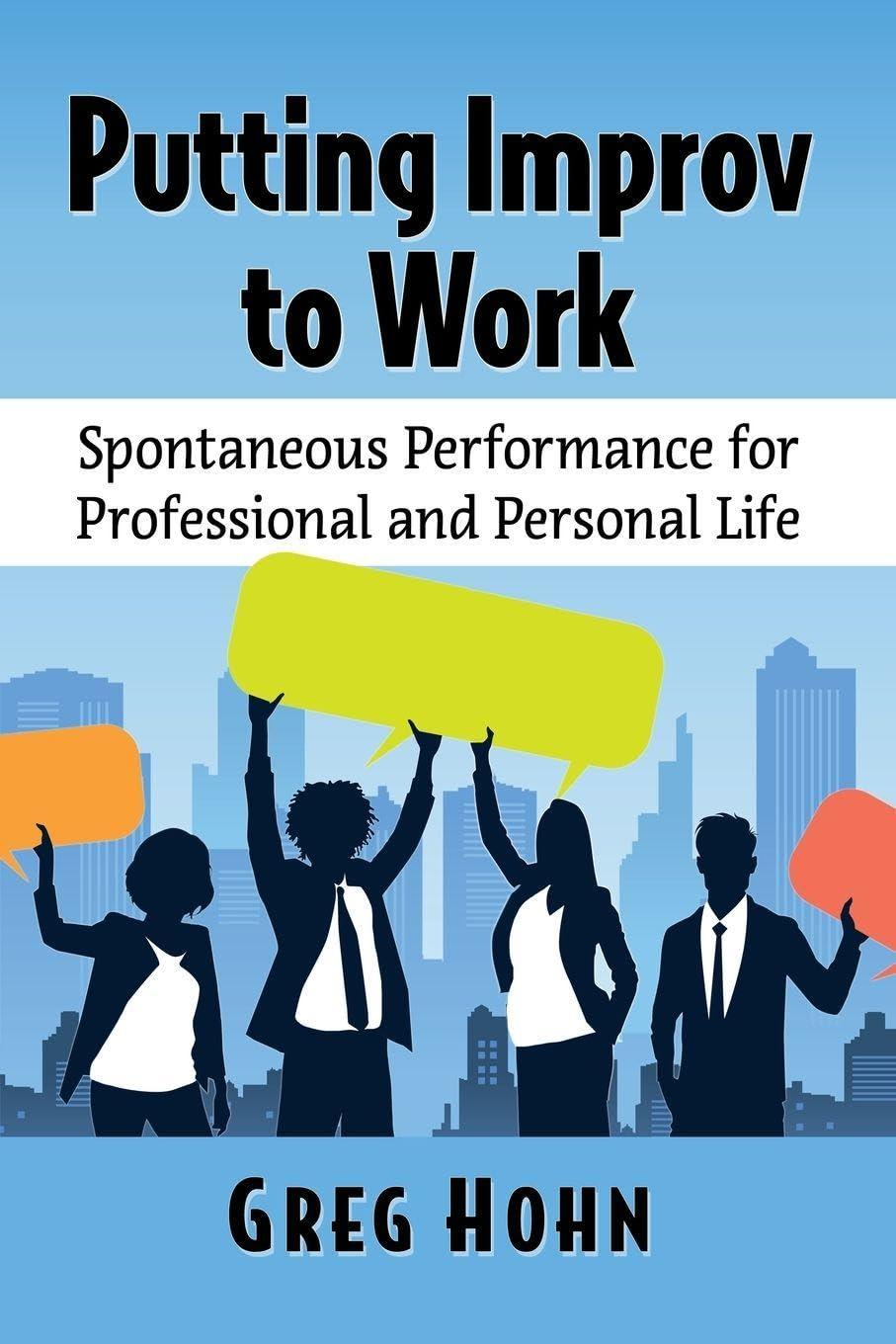
Putting Improv to Work
Spontaneous Performance for Leadership, Learning, and Life
Greg Hohn

Directing Improv
Asaf Ronen

The "Yes And" Business Evolution
Improv Skills for Leadership and Life
Tracy Shea-Porter

Theatrical Improvisation, Consciousness, and Cognition
Clayton D. Drinko
Related Exercises
Feedback
Feedback is an applied improv exercise in which participants construct conversations and letters one word at a time, practicing the principles of constructive feedback delivery and reception through a collaborative word-at-a-time structure. The constraint removes defensive preparation and forces participants to co-create the feedback conversation in real time, revealing the habits, avoidances, and instincts that govern how feedback is actually given and received in professional settings.
What If?
What If is an applied exercise in which participants generate hypothetical scenarios by completing the prompt 'What if...' and then exploring the implications of each scenario seriously, training divergent thinking, assumption challenging, and the capacity to follow speculative threads to useful conclusions.
What I Like about That
What I Like About That is an applied exercise in which participants respond to each other's contributions by naming a specific thing they genuinely appreciate about what was just said or done, training affirmative listening, specific positive feedback, and the habit of building on rather than redirecting ideas.
What I Like About That Is
What I Like About That Is is an applied affirmation exercise in which participants practice completing the sentence 'What I like about that is...' in response to ideas, proposals, or contributions, training the cognitive and verbal habit of specific positive engagement before evaluation.
Do It As If
Do It As If is an applied improvisation exercise in which participants perform a task "as if" they were in a particular emotional state, physical context, or character role. The exercise demonstrates concretely how framing, mindset, and context change behavior, communication, and perception. By performing the same activity in multiple different "as if" frames, participants experience firsthand the degree to which internal state and contextual assumption shape external behavior.
Breakfast of Champions
Frame feedback with: I am giving you these comments because I have high expectations of you and I am confident you can reach them. Research shows this framing makes feedback 40% more effective.
The Lineage
Explore the schools and structures that influenced or evolved from I Like. I Wish. What If?.
Improvise! (Max Dickins)
How to Reference This Page
The Improv Archive. (2026). I Like. I Wish. What If?. Retrieved September 28, 2026, from https://improvarchive.org/exercises/i-like-i-wish-what-if
The Improv Archive. "I Like. I Wish. What If?." The Improv Archive, 2026. https://improvarchive.org/exercises/i-like-i-wish-what-if.
The Improv Archive. "I Like. I Wish. What If?." The Improv Archive, 2026, https://improvarchive.org/exercises/i-like-i-wish-what-if. Accessed September 28, 2026.
The Improv Archive is a systemically maintained repository. The archive itself acts as the corporate author.