What If is an applied exercise in which participants generate hypothetical scenarios by completing the prompt 'What if...' and then exploring the implications of each scenario seriously, training divergent thinking, assumption challenging, and the capacity to follow speculative threads to useful conclusions.
Structure
The Prompt
The facilitator presents a challenge, system, or situation as the context. Participants are invited to generate 'What if...' questions about it.
The Generation
Participants call out 'What if...' completions rapidly, without filtering for plausibility or relevance. The goal is volume: what if the process ran backwards, what if the customer was the product, what if there were no budget.
The Exploration
Selected 'What if' scenarios are explored in pairs or small groups, following the implications of the scenario seriously for two to three minutes before reporting back.
How to Teach It
Objectives
What If trains the habit of questioning assumptions by making the questioning explicit and playful. The 'What if...' frame gives participants permission to challenge things that feel fixed without committing to actually changing them.
Facilitation Notes
Praise outrageous scenarios alongside plausible ones. The implausible scenarios often contain the most useful reframings.
Common Pitfalls
Participants generate 'What if' scenarios that are minor variations on the existing situation rather than genuine departures. Encourage wilder premises and trust participants to find the insight in them.
In Applied Settings
Strategy and Innovation Workshops
What If is used as an assumption-surfacing tool in strategic planning, helping teams identify which of their operating assumptions are load-bearing and which can be challenged to reveal new possibilities.
Product Development
Product teams use What If to reframe user problems: what if the user had no time, no budget, no technical knowledge. Each constraint surfaces a different design requirement.
Scenario Planning
Facilitators use What If to help organizations rehearse responses to disruption, building adaptive capacity by exploring alternative futures before they arrive.
Skills Developed
Worth Reading
See all books →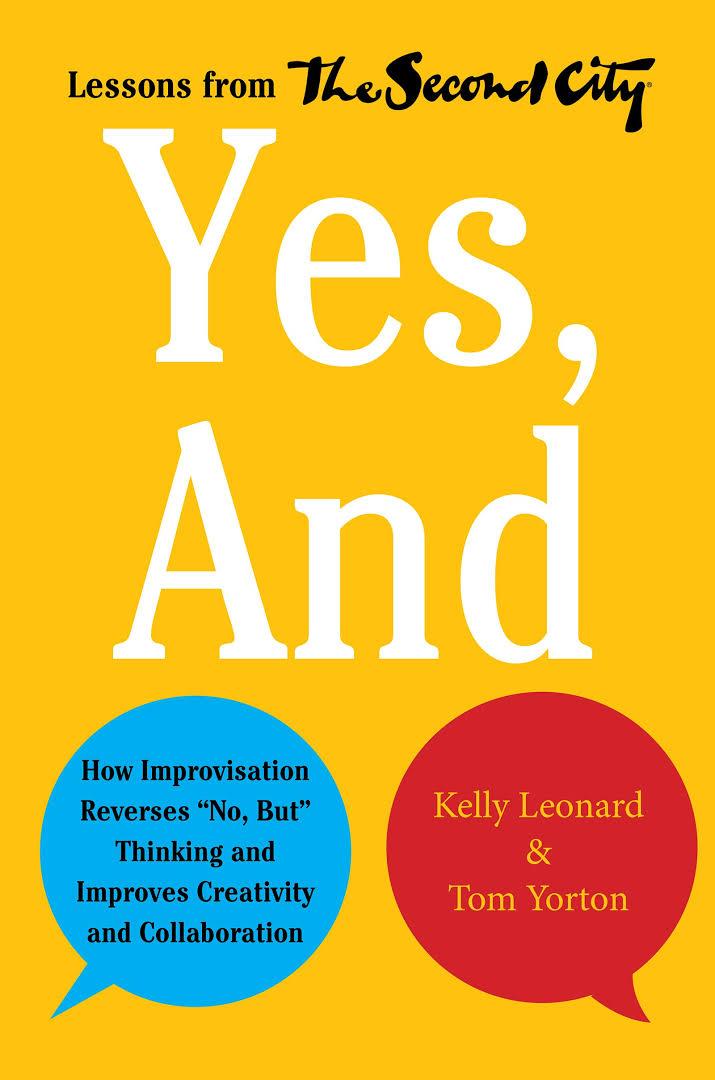
Yes, And
How Improvisation Reverses No, But Thinking and Improves Creativity and Collaboration
Kelly Leonard; Tom Yorton

The Applied Improvisation Mindset
Tools for Transforming Individuals, Organizations, and Communities
Theresa Robbins Dudeck; Caitlin McClure

Great Group Skits
50 Character-Building Scenarios for Teens
Lynn Grasberg; Gina Oldenburg

Brain Disruption
Radical Innovation in Business Through Improv
Bruce Montgomery; Gail Montgomery

When I Say This, Do You Mean That?
Enhancing Communication
Cherie Kerr; Julia Sweeney

The "Yes And" Business Evolution
Improv Skills for Leadership and Life
Tracy Shea-Porter
Related Exercises
Critical Thinking
Critical Thinking is a category of applied improvisation exercises that practice the suspension of assumptions and the discipline of questioning answers rather than answering questions. The exercises use improvisational scenarios to develop analytical thinking within a live, unscripted context: participants must evaluate information, identify hidden assumptions, consider alternative interpretations, and resist the impulse to accept the first plausible explanation that presents itself.
I Like. I Wish. What If?
I Like, I Wish, What If is an applied feedback framework drawn from design thinking practice and used in applied improv contexts as a structured tool for giving constructive, forward-looking feedback on work in progress. Rather than open-ended critique, feedback is organized into three channels: what is working (I Like), what could be developed (I Wish), and generative possibilities (What If). The framework balances appreciation and aspiration, reducing the defensiveness that unstructured feedback often produces.
Problem Solving
Problem Solving is an applied improvisation exercise from Business Improv in which teams tackle challenges using "Yes, And" principles and other improvisational techniques. Rather than following traditional analytical frameworks, participants generate solutions through rapid ideation, collaborative building, and the willingness to explore unconventional approaches.
Creative Solution Building
Creative Solution Building is an applied improvisation exercise in which participants use improvisational principles -- acceptance, building, and collaborative emergence -- to develop solutions to presented problems or scenarios. Rather than analyzing the problem and generating solutions individually, participants build solutions incrementally through a structured ensemble process, with each contribution extending and complying with what has already been offered.
Do It As If
Do It As If is an applied improvisation exercise in which participants perform a task "as if" they were in a particular emotional state, physical context, or character role. The exercise demonstrates concretely how framing, mindset, and context change behavior, communication, and perception. By performing the same activity in multiple different "as if" frames, participants experience firsthand the degree to which internal state and contextual assumption shape external behavior.
Adaptability
Exercises specifically designed to practice adapting to rapidly changing circumstances and unexpected developments.
The Lineage
Explore the schools and structures that influenced or evolved from What If?.
Improvise! (Max Dickins)
How to Reference This Page
The Improv Archive. (2026). What If?. Retrieved September 28, 2026, from https://improvarchive.org/exercises/what-if
The Improv Archive. "What If?." The Improv Archive, 2026. https://improvarchive.org/exercises/what-if.
The Improv Archive. "What If?." The Improv Archive, 2026, https://improvarchive.org/exercises/what-if. Accessed September 28, 2026.
The Improv Archive is a systemically maintained repository. The archive itself acts as the corporate author.