In-Out
In-Out is a scene exercise in which performers practice entering and leaving scenes with purpose and clarity. Each entrance must contribute something specific and each exit must feel earned. The exercise trains awareness of when a scene needs a new element and when a character has served their function.
Structure
Setup
- Two or more players work in the playing area.
- The exercise focuses on the moments of entering and exiting a scene: when to come in, how to come in, when to leave, and how to leave.
- Players may use a clearly defined threshold : a real or imagined door, a line on the floor, a tape marker : to physicalize the boundary of the scene.
Core Practice
- Players practice entering scenes with a specific offer: a clear who, what, or where established in the first three seconds.
- Players practice exiting scenes when their character has served their function: when the gift has been given, the information delivered, or the scene moment completed.
- The coach may call "in" to prompt a new entrance and "out" to prompt an exit at any moment.
What the Exercise Trains
- Purposeful entrances: each entrance should add something to the scene, not simply fill space.
- Clean exits: a character who leaves when their function is complete keeps the scene from growing cluttered.
- Awareness of when the scene needs a new element and when it needs to simplify.
Common Variations
- Run the exercise as a pure drill: performers enter, make one clear offer, then exit, cycling through entrances in rapid succession.
- Embed the exercise in a longer improvised scene, using it to train awareness of scene population without stopping the scene to discuss it.
How to Teach It
How to Explain It
"Your entrance is an offer. When you walk into this space, you are giving the scene something: a who, a relationship, a piece of information, a complication. Your exit says: that's what I had to give. When you've given it, go. Come in with purpose. Leave with purpose."
Common Notes
- Watch for entrances that are apologetic or vague. A performer who enters and waits for the scene to tell them who they are has not made an offer. The entrance is the offer.
- Watch for performers who overstay their welcome: continuing to occupy the scene after their contribution has been made and absorbed.
- The exercise benefits from coaching in the moment. Call out specific entrances and exits and name what worked: "That entrance landed : you gave them a relationship immediately." "That exit was early : you left before the scene had received what you brought."
Common Pitfalls
- Players enter and immediately defer to the scene, saying nothing and doing nothing specific. Every entrance needs a clear physical and verbal offer.
- Players exit only when they cannot find another line, not when their character has genuinely served their scene function.
- The exercise becomes mechanical, with players rotating in and out on a timer. The in-out decision should be scene-driven, not mechanical.
Worth Reading
See all books →
Improvise
Scene from the Inside Out
Mick Napier
Theater Games for Rehearsal
Viola Spolin
Improvisation for the Theater
A Handbook of Teaching and Directing Techniques
Viola Spolin
Theater Games for the Lone Actor
Viola Spolin
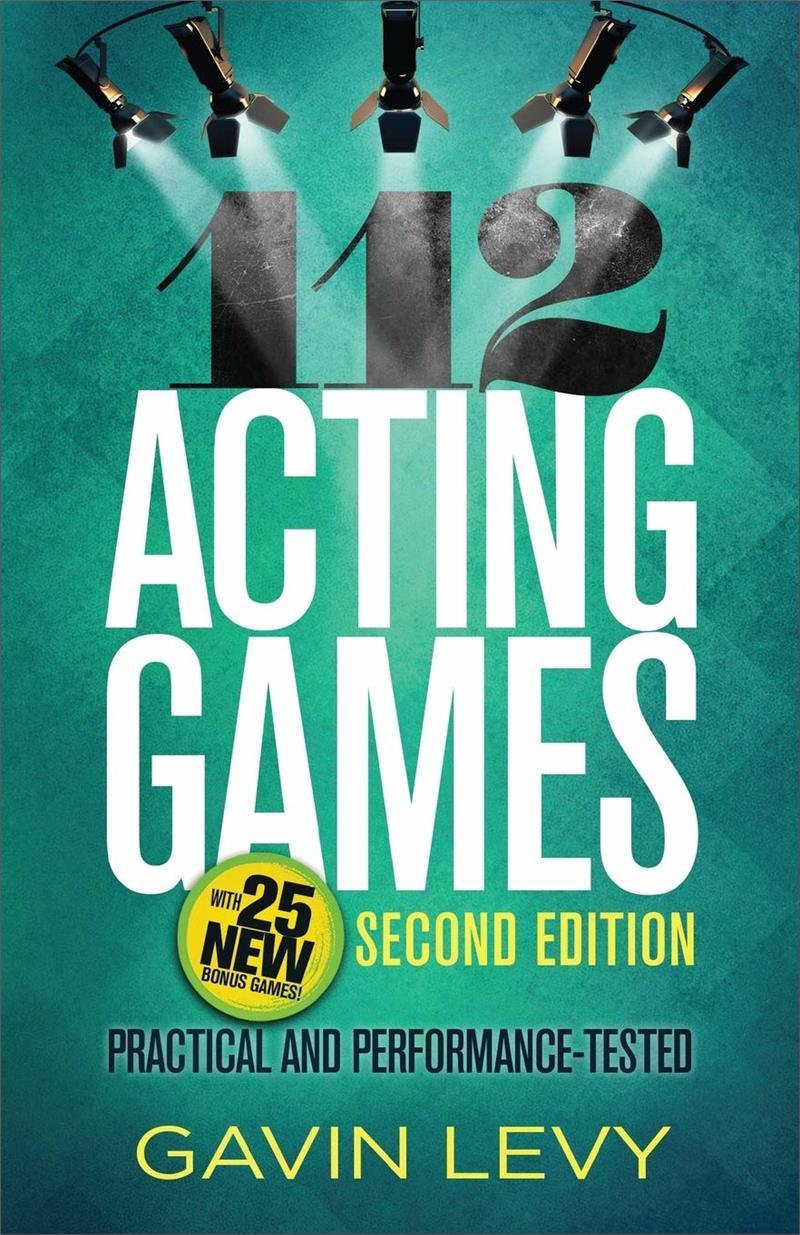
112 Acting Games
Gavin Levy

Acting Through Improv
Improv Through Theatresports
Lynda Belt; Rebecca Stockley
Related Exercises
Enter and Exit
Enter and Exit is a physical exercise in which performers practice making clear, purposeful entrances and exits from the stage. Each entry or departure must communicate character, intention, or emotional state without relying on dialogue. The exercise highlights how much information an audience reads from the simple act of walking on or off stage: pace, posture, direction of gaze, and physical tension all communicate story before a single word is spoken. Enter and Exit builds awareness of the stage as a defined space with its own rules and teaches performers that every entrance is an offer and every exit is an edit.
Character / Scene Walkabout
Character/Scene Walkabout is an exercise in which performers walk through the space and, on a signal, immediately enter a scene with whoever is nearest. The random pairing and instant commitment prevent over-planning. The exercise builds comfort with initiating scenes with any partner and develops quick character choices.
Scene / Character Walkabout
Scene/Character Walkabout is an exercise in which performers walk around the space embodying a character, then engage in brief scene interactions with other walking characters. The exercise develops character physicality, the ability to initiate scenes organically, and the skill of maintaining a character while simultaneously navigating an unstructured environment.
Leave for a Reason
Leave for a Reason is a scene-work exercise in which performers practice exiting a scene with a clear, character-driven motivation rather than leaving arbitrarily, being edited out by a director, or simply running out of things to say. The exercise trains performers to give every exit an active reason grounded in the world of the scene -- a destination, an impulse, an emotional necessity -- rather than treating exits as neutral or mechanical transitions.
Action and Entrance
Action and Entrance is an exercise in which a player enters the scene space performing a specific physical activity that establishes character and context before any dialogue begins. The emphasis on physical initiation teaches performers that action communicates faster than words. It reinforces the principle of entering a scene with a strong, clear choice.
How to Reference This Page
The Improv Archive. (2026). In-Out. Retrieved September 28, 2026, from https://improvarchive.org/exercises/in-out
The Improv Archive. "In-Out." The Improv Archive, 2026. https://improvarchive.org/exercises/in-out.
The Improv Archive. "In-Out." The Improv Archive, 2026, https://improvarchive.org/exercises/in-out. Accessed September 28, 2026.
The Improv Archive is a systemically maintained repository. The archive itself acts as the corporate author.