Janus Dance
Janus Dance is a physical awareness and space exercise named for the two-faced Roman god of transitions, in which participants move through the space while maintaining simultaneous awareness of what lies in front of them and behind them. The exercise trains the expanded spatial attention that performers need when navigating a stage populated by multiple scene partners, objects, and audience sightlines.
Structure
Setup
Participants stand and spread out across the room with ample space between them. The facilitator explains the basic premise: move through the space while keeping track of both your forward path and what is happening behind you.
Progression
Participants begin walking normally through the space. The facilitator asks them to extend their awareness to include the area directly behind them -- not by turning their head but by expanding their peripheral and kinesthetic sense of the room.
The facilitator may introduce a variation in which participants must alternate their primary direction of travel without losing track of the secondary direction. Stops, turns, and changes of pace are introduced at the facilitator's instruction or as part of a structured rhythm.
Conclusion
The exercise ends when participants demonstrate a looser, more relaxed sense of the full space around them rather than a narrow tunnel focus on the path directly ahead.
How to Teach It
Objectives
Janus Dance targets spatial awareness and the ability to hold multiple directional foci simultaneously. It addresses the common tendency for performers to develop tunnel vision on a single scene partner or a fixed area of the stage, leaving portions of the stage and ensemble untracked.
How to Explain It
"You know what's in front of you. Now know what's behind you too. Not by turning around -- just expand your awareness. The whole room is your stage, not just the part you can see."
Scaffolding
Start with simple forward walking before introducing directional reversals or the backward-awareness task. Allow participants to close their eyes briefly and orient to sound before re-entering the movement exercise with spatial memory.
Common Pitfalls
Participants who focus intensely on the backward-awareness task sometimes lose all forward awareness, creating a reversal of the original problem. Coach the group to hold both directions at once rather than trading one for the other.
Worth Reading
See all books →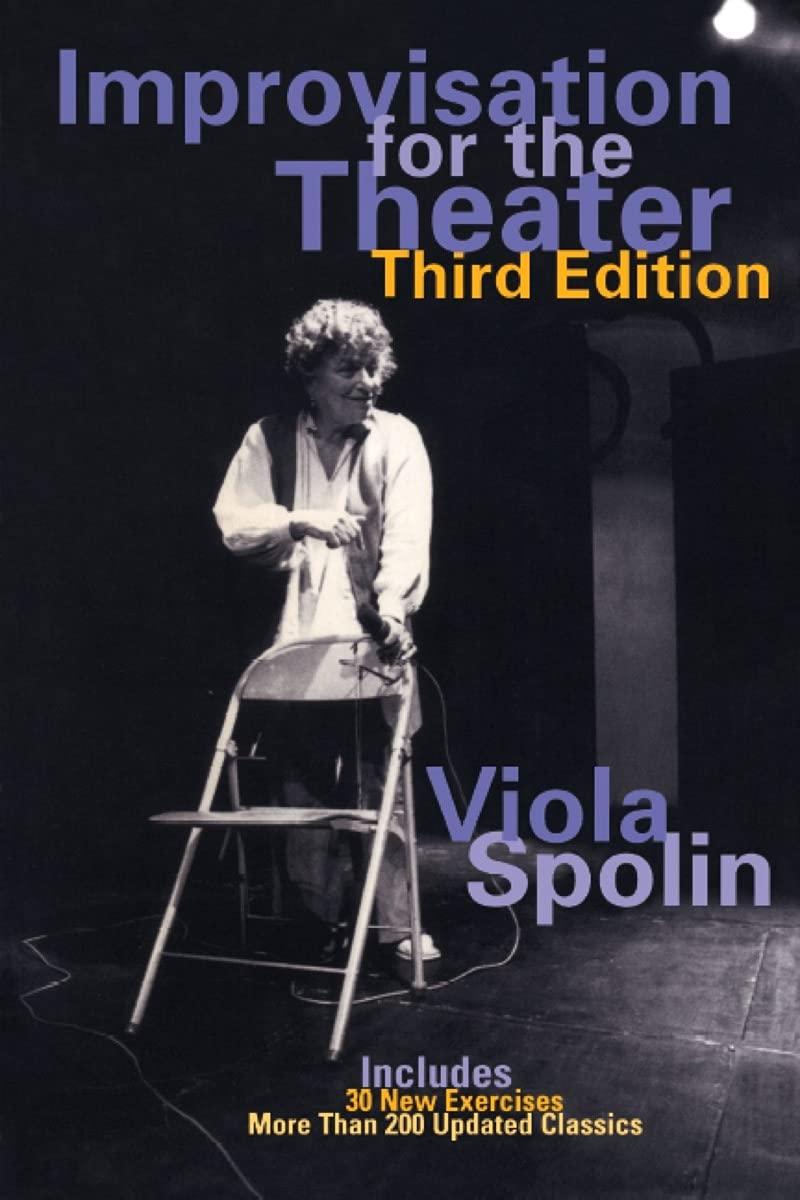
Improvisation for the Theater
A Handbook of Teaching and Directing Techniques
Viola Spolin
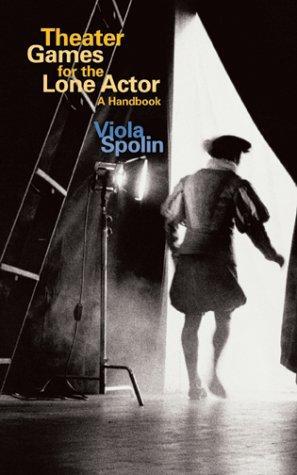
Theater Games for the Lone Actor
Viola Spolin

Action Theater
The Improvisation of Presence
Ruth Zaporah
Theater Games for Rehearsal
Viola Spolin

The Improv Illusionist
Using Object Work, Environment, and Physicality in Performance
David Raitt

Theatrical Improvisation, Consciousness, and Cognition
Clayton D. Drinko
Related Exercises
Triangles
Triangles is a movement exercise in which each player secretly selects two other people in the space and attempts to maintain an equilateral triangle with them as all players move simultaneously. Because everyone's target pairs are different and unknown to others, the formation shifts continuously with no fixed resolution. The exercise demonstrates how invisible individual choices produce complex collective patterns, and builds sustained spatial awareness and attention to others.
Synchronised Dance
Synchronised Dance is an exercise in which players attempt to move and dance together without choreography or a designated leader. The group must develop collective movement awareness, finding shared rhythm and motion through mutual observation and response.
Lugares
Lugares is a scene-building exercise drawn from Spanish-language improv traditions in which the physical location ("lugar") is established as the primary creative force driving the scene. Characters and situations emerge from the performers' relationship to the space. The exercise trains environment-first scene work and demonstrates how place shapes behavior.
Invisibility
Invisibility is a space work exercise and game in which one performer becomes invisible to the other characters in the scene. The invisible performer interacts with the environment and the other players, who cannot see them but must respond to the physical consequences of the invisible character's actions. The exercise trains object permanence, spatial consistency, and the discipline of honoring what has been established in the scene's physical world. It builds the ensemble's ability to maintain a shared reality that includes elements they cannot directly perceive.
Line Mirror
Line Mirror is a physical awareness and synchronization exercise in which participants stand in a line facing a partner line and mirror each other's movements simultaneously, without a designated leader. Unlike circle or pair mirror exercises, the line format creates additional complexity by requiring each participant to maintain synchronization with an immediate partner while also being observable by and influencing the rest of the line.
Alliances
Alliances is a spatial awareness exercise in which each player secretly selects one person in the group as their ally and another as their enemy, then moves through the space trying to keep the ally positioned between themselves and the enemy at all times. No one announces their choices, so the resulting group movement becomes complex, organic, and unpredictable as every participant simultaneously pursues their own spatial objective. The exercise produces a constantly shifting formation that resembles flocking behavior, with sudden accelerations, direction changes, and clusters forming and dissolving. Alliances develops spatial awareness, peripheral vision, and the ability to read and respond to group movement patterns without verbal communication. It also demonstrates how simple individual rules can generate complex group behavior, a principle that applies directly to ensemble scene work.
How to Reference This Page
The Improv Archive. (2026). Janus Dance. Retrieved September 28, 2026, from https://improvarchive.org/exercises/janus-dance
The Improv Archive. "Janus Dance." The Improv Archive, 2026. https://improvarchive.org/exercises/janus-dance.
The Improv Archive. "Janus Dance." The Improv Archive, 2026, https://improvarchive.org/exercises/janus-dance. Accessed September 28, 2026.
The Improv Archive is a systemically maintained repository. The archive itself acts as the corporate author.