Kitty in the Corner
Kitty in the Corner is a movement and spatial awareness exercise derived from the playground game in which participants simultaneously attempt to cross the space and claim open positions while a central player tries to occupy a vacated spot. The exercise trains physical decisiveness, reading group movement, and the ability to act quickly on an emerging opportunity before it closes.
Structure
Setup
Participants stand at marked or designated positions around the perimeter or at fixed points in the space. One participant stands in the center with no assigned spot.
Progression
The central player makes eye contact with one or more participants on the perimeter, initiating a signal to exchange positions. Participants who receive or observe the signal begin moving to a new spot. The central player simultaneously moves to claim an open spot.
As positions are vacated and claimed, multiple exchanges may cascade. Any player caught without a position becomes the new central player.
Conclusion
The exercise runs for a set time or number of rounds until all participants have experienced the central role. The facilitator may increase difficulty by requiring silent exchanges or by reducing the number of available spots.
How to Teach It
Objectives
Kitty in the Corner targets spatial decisiveness, the reading of group motion, and the ability to act on an available opportunity without hesitation. In improv terms, it trains the moment of commitment -- reading what is available in the scene and moving into it before the moment closes.
How to Explain It
"There are only so many spots. When someone moves, a spot opens up -- but only for a moment. Read the room, see what's available, and move into it. Hesitate and someone else takes it."
Scaffolding
Begin with slow, deliberate exchanges to allow participants to understand the spatial dynamics before increasing speed. Introduce the pressure of the central role gradually by reducing the number of available positions or requiring eye contact confirmation before movement.
Common Pitfalls
Participants often freeze in the moment of opportunity, watching an available spot rather than moving into it. This hesitation is the exercise's primary diagnostic moment. Coach participants to commit to the move the instant they identify the opening, trusting their read of the room rather than waiting for certainty.
Worth Reading
See all books →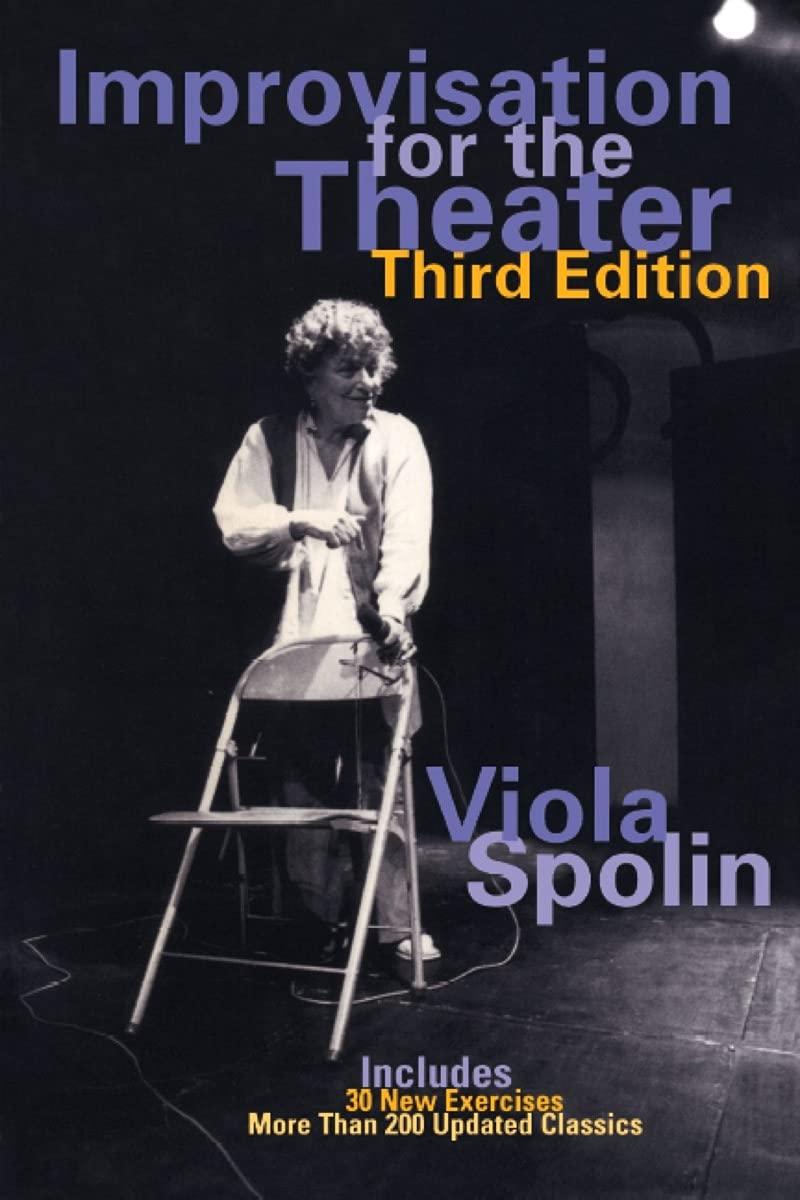
Improvisation for the Theater
A Handbook of Teaching and Directing Techniques
Viola Spolin

Playing Along
37 Group Learning Activities Borrowed from Improvisational Theater
Izzy Gesell
Theater Games for Rehearsal
Viola Spolin
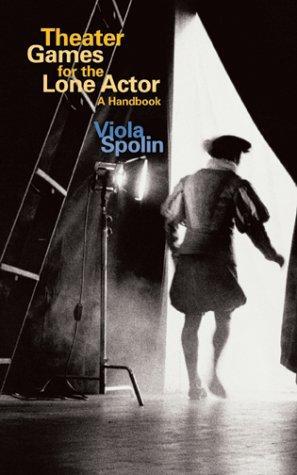
Theater Games for the Lone Actor
Viola Spolin
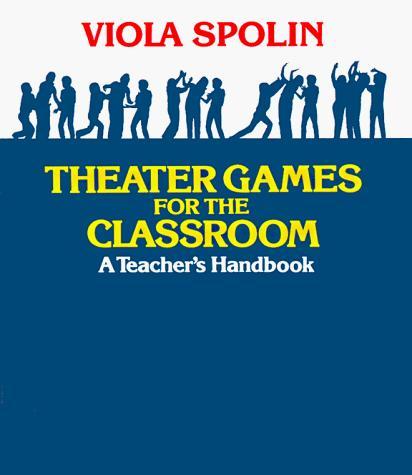
Theater Games for the Classroom
Viola Spolin

Drama Games and Improvs
Games for the Classroom and Beyond
Justine Jones; Mary Ann Kelley
Related Exercises
Alliances
Alliances is a spatial awareness exercise in which each player secretly selects one person in the group as their ally and another as their enemy, then moves through the space trying to keep the ally positioned between themselves and the enemy at all times. No one announces their choices, so the resulting group movement becomes complex, organic, and unpredictable as every participant simultaneously pursues their own spatial objective. The exercise produces a constantly shifting formation that resembles flocking behavior, with sudden accelerations, direction changes, and clusters forming and dissolving. Alliances develops spatial awareness, peripheral vision, and the ability to read and respond to group movement patterns without verbal communication. It also demonstrates how simple individual rules can generate complex group behavior, a principle that applies directly to ensemble scene work.
Run Around
Run Around is a physical warm-up exercise in which players move through the space and respond to commands called by the facilitator. The exercise builds spatial awareness, group attentiveness, and physical readiness by requiring participants to shift direction, speed, or movement quality on cue.
Triangles
Triangles is a movement exercise in which each player secretly selects two other people in the space and attempts to maintain an equilateral triangle with them as all players move simultaneously. Because everyone's target pairs are different and unknown to others, the formation shifts continuously with no fixed resolution. The exercise demonstrates how invisible individual choices produce complex collective patterns, and builds sustained spatial awareness and attention to others.
Point to Things in the Room
Point to Things in the Room is a warm-up exercise in which players walk around the space and point at objects while calling out their names. In progressive variations, players deliberately mislabel objects, pointing at a chair while saying "lamp," training the brain to separate observation from habitual naming and building comfort with the disorientation that fuels improvisation.
Elephant
Elephant is a high-energy circle exercise in which a center player points to someone in the circle and calls out an animal name. The targeted player and their two immediate neighbors must quickly form a three-person physical representation of that animal before the center player finishes a count. Different animals require different configurations: the center player forms the trunk for an elephant while the neighbors create the ears, or the center player mimes holding a fishing rod while the neighbors become the fish. Incorrect or slow responses send a player to the center. The exercise builds reaction speed, peripheral awareness, physical commitment, and comfort with looking foolish.
Bunny
Bunny is a high-energy circle exercise in which players pass a rhythmic pattern around the group through a combination of chanted sounds and synchronized gestures. The player designated as the bunny performs a central action, typically holding both hands beside the head like ears while chanting "bunny bunny," while the two players on either side perform complementary supporting gestures. The bunny then passes to another player across the circle, and the pattern repeats with increasing speed. The exercise builds group rhythm, peripheral awareness, and comfort with looking foolish. It is widely used as a warm-up in both theatrical and corporate training contexts, valued for its ability to lower inhibitions, demand focus, and generate collective energy through structured silliness.
How to Reference This Page
The Improv Archive. (2026). Kitty in the Corner. Retrieved September 29, 2026, from https://improvarchive.org/exercises/kitty-in-the-corner
The Improv Archive. "Kitty in the Corner." The Improv Archive, 2026. https://improvarchive.org/exercises/kitty-in-the-corner.
The Improv Archive. "Kitty in the Corner." The Improv Archive, 2026, https://improvarchive.org/exercises/kitty-in-the-corner. Accessed September 29, 2026.
The Improv Archive is a systemically maintained repository. The archive itself acts as the corporate author.