Run Around
Run Around is a physical warm-up exercise in which players move through the space and respond to commands called by the facilitator. The exercise builds spatial awareness, group attentiveness, and physical readiness by requiring participants to shift direction, speed, or movement quality on cue.
Structure
Setup
Participants spread out in a large open space. The facilitator stands where they can be heard and seen by all players.
Exercise
The facilitator calls commands and participants respond immediately. Basic commands include instructions to run, walk, freeze, change direction, and vary speed. More complex variations add target-based instructions (move toward a named person, find a partner, form a group of a specific size) or movement-quality shifts (move as if the floor is hot, move as if underwater).
The exercise continues as a sustained series of commands with little or no pause between transitions. Players are expected to respond without hesitation or negotiation.
Pacing
The facilitator controls energy through the speed of command delivery. A rapid sequence of commands elevates physical arousal and focus. Slowing the sequence allows the group to settle and reconnect with the room. The exercise can be used to open a session or to reset the group's attention midway through a workshop.
How to Teach It
How to Explain It
"Everyone is moving through the space. When I call out a command, you do it immediately and keep moving. No stopping, no preparation. Just respond and keep going."
Objectives
Run Around builds physical readiness and group attentiveness. Because participants must listen continuously and respond immediately, the exercise trains the habit of active listening that underlies ensemble improvisation. It also gives the facilitator a direct tool for managing group energy at the start of a session.
Facilitating Commands
Commands should follow each other quickly enough that participants cannot fully settle or predict what comes next. Introduce movement-quality variations (heavy, light, fearful, joyful) after basic spatial commands are established; this bridges the physical warm-up into character and emotional work.
For groups new to physical warm-ups, begin with simple directional commands before adding more complex social commands (find a partner, form a group of three). This sequence allows participants to acclimate to the exercise before social coordination is required.
Space Requirements
Large open spaces are necessary; Levy specifically notes the exercise works best with substantial room to move. Standard classroom furniture must be cleared. If the space is small, reduce the number of participants running simultaneously by using sub-groups.
History
Brian Levy documents Run Around as Exercise 106 in 112 Acting Games (2005), noting that it derives from a game show he watched as a child in London. Levy adapted the television format into a drama and movement warm-up suitable for classroom and workshop use.
Worth Reading
See all books →
Creating Improvised Theatre
Tools, Techniques, and Theories
Mark Jane

Acting Through Improv
Improv Through Theatresports
Lynda Belt; Rebecca Stockley

When I Say This, Do You Mean That?
Enhancing Communication
Cherie Kerr; Julia Sweeney

Something from Nothing
The Technique of Improvisation
Richard Goteri
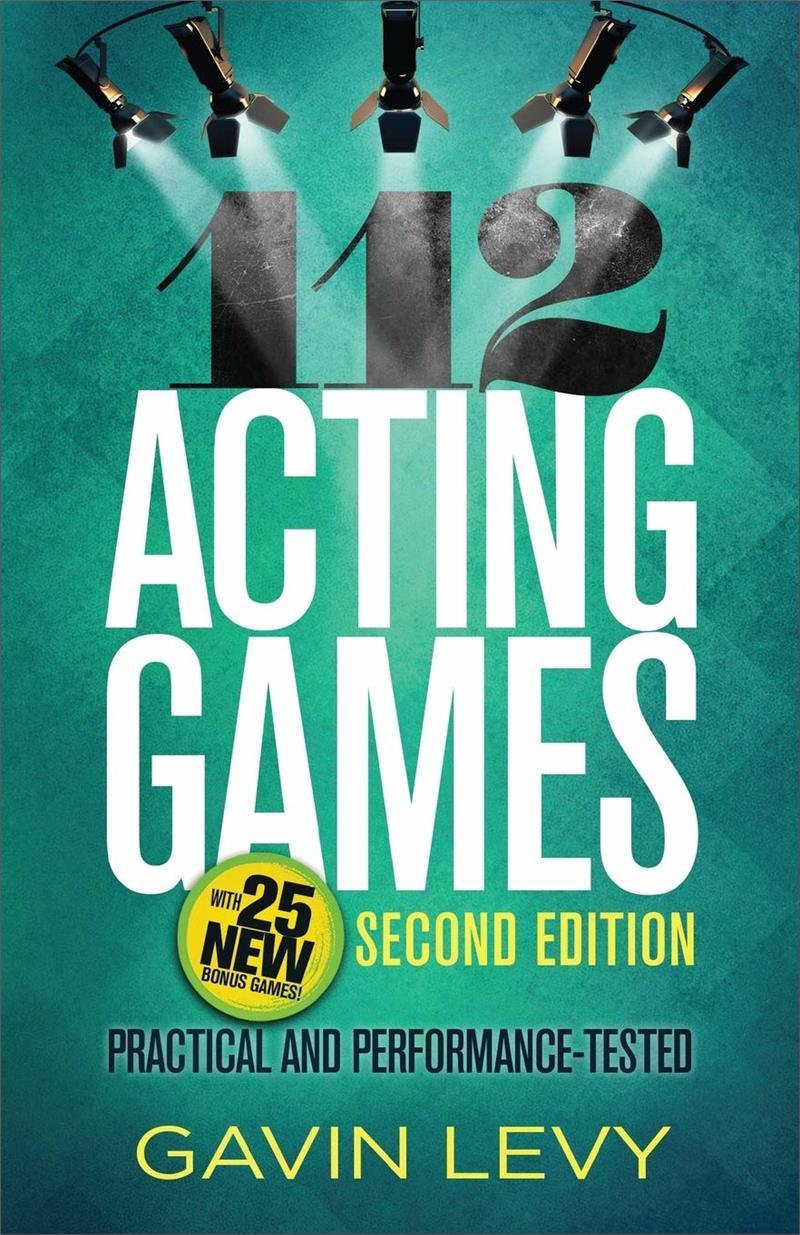
112 Acting Games
Gavin Levy

Playing Along
37 Group Learning Activities Borrowed from Improvisational Theater
Izzy Gesell
Related Exercises
Barney
Barney is an energy and movement warm-up exercise in which players adopt an exaggerated, lumbering physical character and interact with the group through simple, playful commands. The exercise asks participants to embody a large, slow, friendly creature (often described as a dinosaur or monster) and move through the space with maximum physical commitment and minimum self-consciousness. The inherent silliness of the character lowers inhibitions quickly, making Barney effective as an early warm-up for groups that are new to physical work or uncomfortable with large physical choices. The exercise builds comfort with exaggerated movement, vocal projection, and the willingness to look ridiculous in front of others, all foundational skills for improv performance.
Shuffle
Shuffle is a physical warm-up exercise in which players mill through the space and must quickly form groups of a called-out number when the facilitator gives the signal. Players who cannot find a complete group in time are eliminated or take a forfeit. The exercise builds physical energy, spatial awareness, and the habit of actively and immediately seeking connection with other players.
Activity Starter
Activity Starter is a group exercise in which one player begins a physical activity and other players gradually enter to mirror or extend it. The exercise builds ensemble attunement and physical awareness by requiring players to read and respond to a shared movement rather than a verbal cue.
Passing Around Objects
Passing Around Objects is a circle exercise in which players create imaginary objects with distinct physical properties and pass them to their neighbors, who must receive and reproduce each object faithfully before sending it on. When objects return to their creators, the group examines what changed along the way. The exercise develops object work consistency, observation, and the discipline of treating a partner's physical choices as real.
Bobsledding Bodies
Bobsledding Bodies is a physical warm-up exercise in which players form a tight line and navigate the space together, shifting direction and speed as a unit. The exercise builds group awareness, physical coordination, and the ability to respond as an ensemble to subtle changes in momentum.
Follow the Leaver
Follow the Leaver is a group movement exercise in which players move freely through the space and, when one player decides to leave the room or move to a specific location, all other players notice and follow -- without verbal communication or explicit announcement. The exercise develops peripheral awareness, ensemble attunement, and the ability to read and respond to a subtle behavioral cue rather than waiting for an explicit instruction.
The Lineage
Explore the schools and structures that influenced or evolved from Run Around.
112 Acting Games (Levy)
How to Reference This Page
The Improv Archive. (2026). Run Around. Retrieved September 28, 2026, from https://improvarchive.org/exercises/run-around
The Improv Archive. "Run Around." The Improv Archive, 2026. https://improvarchive.org/exercises/run-around.
The Improv Archive. "Run Around." The Improv Archive, 2026, https://improvarchive.org/exercises/run-around. Accessed September 28, 2026.
The Improv Archive is a systemically maintained repository. The archive itself acts as the corporate author.