Listen to Understand, Not to Respond
Listen to Understand, Not to Respond is an applied improv exercise that directly targets the most common pattern of inadequate listening in professional settings: the habit of spending the duration of another person's speaking turn formulating a response rather than receiving what is being said. The exercise creates a structured constraint -- participants may not respond until they have first reflected back what they heard to the speaker's satisfaction -- making the response-preparation habit visible and interrupting it through practice.
Structure
Setup
Participants work in pairs. The facilitator introduces the rule: after the speaker finishes, the listener must reflect back the substance of what was said -- not paraphrased, not evaluated, but accurately captured -- before they are permitted to respond. The speaker confirms or corrects the reflection before the listener proceeds.
Progression
One partner speaks for one to two minutes on a topic with some complexity or personal significance. The listener attends without any response preparation. When the speaker finishes, the listener reflects back what they heard: the main point, the feeling if apparent, and any key details. The speaker indicates whether the reflection was accurate and complete.
Only after an accurate reflection is confirmed does the listener offer a response or continue the conversation.
Roles switch after each round.
Conclusion
The exercise concludes after multiple rounds, followed by a group debrief on what the reflection requirement changed about the quality of the listening.
How to Teach It
Objectives
Listen to Understand, Not to Respond trains the ability to receive and accurately capture another person's communication before reacting to it. The reflection requirement makes premature response preparation literally counterproductive -- a listener who was not attending must return to the speaker for correction, creating direct and immediate feedback.
How to Explain It
"Before you respond to anything, you have to prove you heard it. Not by agreeing -- by telling them back what they said well enough that they say 'yes, that's it.' If you can't do that, you weren't listening -- you were waiting."
Scaffolding
Begin with topics that have clear, factual content before moving to topics with emotional or interpersonal complexity where the reflection task includes not only content but tone and feeling. For very distracted groups, allow note-taking during the listening phase before requiring it to be retained from memory.
Common Pitfalls
Listeners frequently paraphrase the speaker's content in a way that subtly reframes, evaluates, or reduces it -- reflecting their interpretation rather than the speaker's actual message. Coach listeners to reflect what they heard, not what they think it meant.
In Applied Settings
Learning Objectives
Listen to Understand, Not to Respond trains accurate comprehension of another person's communication before reacting to it. The exercise directly addresses the most damaging form of professional listening failure: the confirmation-and-response cycle in which a listener captures only the portions of a speaker's message that fit their existing framework and responds to those portions while the rest of the message goes unreceived.
Workplace Transfer
In meetings, feedback sessions, client conversations, and negotiations, the quality of listening determines the quality of the information available for decision-making. A manager who interprets a team member's concern through the lens of a pre-formed response does not have the full picture of what the team member is experiencing. A negotiator who listens for openings rather than for the other party's actual position does not know what they are negotiating against. The Listen to Understand, Not to Respond exercise creates a direct feedback mechanism -- the reflection requirement -- that makes inadequate listening immediately visible and creates repeated practice in genuine comprehension before response.
Facilitation Context
The exercise is used in active listening training, conflict resolution workshops, feedback and coaching skills programs, negotiation training, and leadership development. It is most effective with groups that have already named the problem -- meetings where people talk past each other, feedback that does not land, negotiations that produce misunderstanding -- and are seeking a concrete practice to address it. Groups of any size can participate in pairs.
Debrief Framing
After the exercise, ask: How accurate was your first reflection? What were you doing during the speaking phase when the reflection was inaccurate? Where in your actual professional conversations do you find yourself formulating a response before the other person has finished? What would change in those conversations if you were required to reflect before responding?
Skills Developed
Worth Reading
See all books →
Business Improv
Experiential Learning Exercises to Train Employees
Val Gee

Improv to Improve Your Leadership Team
Tear down Walls and Build Bridges
Candy Campbell

Improv Wisdom
Don't Prepare, Just Show Up
Patricia Ryan Madson

The Applied Improvisation Mindset
Tools for Transforming Individuals, Organizations, and Communities
Theresa Robbins Dudeck; Caitlin McClure

The Improvisation Game
Discovering the Secrets of Spontaneous Performance
Chris Johnston
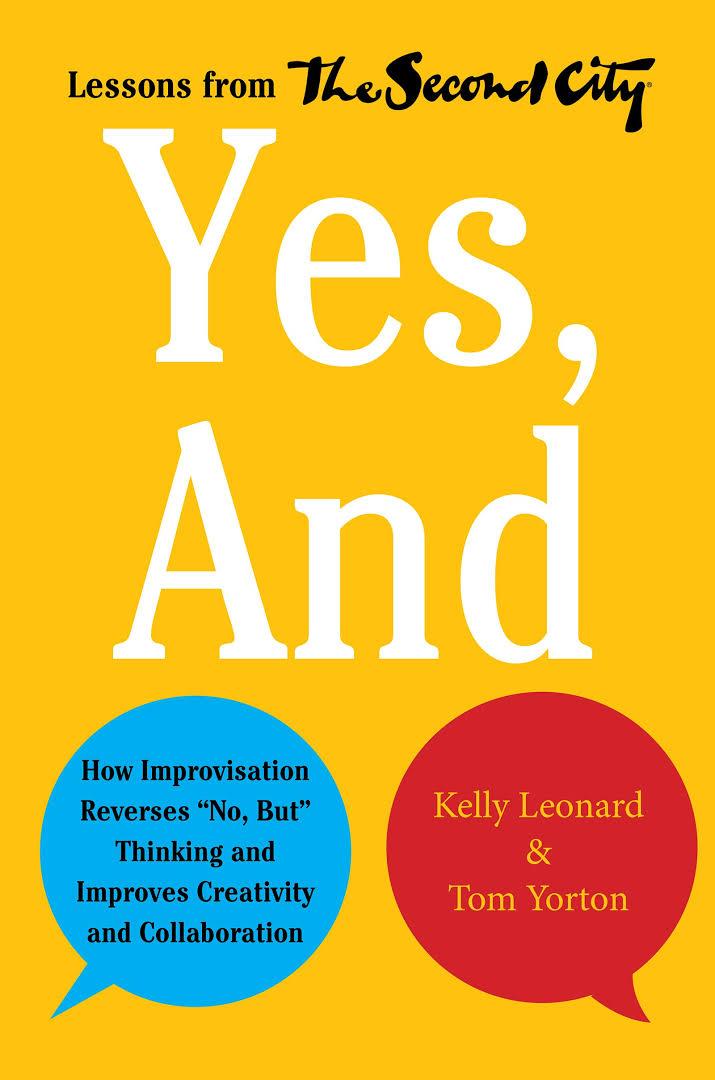
Yes, And
How Improvisation Reverses No, But Thinking and Improves Creativity and Collaboration
Kelly Leonard; Tom Yorton
Related Exercises
Listen to Learn
Listen to Learn is an applied improv exercise in which participants practice listening with the explicit purpose of gaining new information rather than confirming what they already believe, preparing a rebuttal, or identifying opportunities to speak. The exercise reframes the goal of listening as learning -- arriving at the end of an exchange knowing something that was not known before -- and trains the kind of open, genuinely curious attention that this purpose requires.
Listen Up ... Listen!
Listen Up, Listen is an applied improv listening exercise structured in two stages: a priming phase in which participants direct their attention outward to environmental sounds and the voices of others, followed by a partner-listening phase in which they practice full-body, full-attention listening without preparing a response. The two-stage structure creates a deliberate transition from ambient environmental awareness to focused interpersonal listening.
Last Word Response
Last Word Response is an applied improv listening exercise in which each participant must begin their response with the last word spoken by the previous participant. The constraint enforces genuine end-of-utterance listening by making it physically impossible to begin a response until the previous speaker has completed their sentence. The exercise is used in applied improv to develop active listening skills in workplace and organizational settings.
Repetition
Repetition is a paired listening exercise in which participants hold a conversation one sentence at a time, with each person required to repeat their partner's last statement before responding. The exercise forces genuine listening by making the repetition a prerequisite for the reply.
Listening Exercise (Eyes Closed)
Listening Exercise, Eyes Closed is an applied improv exercise in which participants close their eyes and attend to the full auditory environment -- ambient sounds, partner voices, silence -- without the organizing and filtering influence of visual input. By removing vision, the exercise isolates the auditory channel and trains a more complete, unmediated form of listening that can be difficult to access when visual processing is active.
Last Word, First Word
Last Word First Word is an applied improv listening exercise in which each participant must begin their sentence with the last word spoken by the previous participant, carrying the conversation forward through this chain of shared language. The constraint makes end-of-utterance attention mandatory and creates a visible, audible record of how carefully each participant tracked their partner's contribution before responding.
The Lineage
Explore the schools and structures that influenced or evolved from Listen to Understand, Not to Respond.
Business Improv (Gee & Gee)
How to Reference This Page
The Improv Archive. (2026). Listen to Understand, Not to Respond. Retrieved September 29, 2026, from https://improvarchive.org/exercises/listen-to-understand-not-to-respond
The Improv Archive. "Listen to Understand, Not to Respond." The Improv Archive, 2026. https://improvarchive.org/exercises/listen-to-understand-not-to-respond.
The Improv Archive. "Listen to Understand, Not to Respond." The Improv Archive, 2026, https://improvarchive.org/exercises/listen-to-understand-not-to-respond. Accessed September 29, 2026.
The Improv Archive is a systemically maintained repository. The archive itself acts as the corporate author.