Paraphrase
Paraphrase is a partnered exercise in which each line of dialogue must first reiterate the essence of the scene partner's previous statement before adding new information. The reiteration functions as a literal version of "yes" and the new information serves as the "and." The exercise trains active listening by making it structurally impossible to ignore what a partner has just said, and it reveals how much richer scenes become when performers genuinely hear and acknowledge each other's contributions.
Structure
Setup
Participants pair up. Each pair will create a scene using the paraphrase constraint. The facilitator may provide a simple scenario or let pairs choose their own starting situation.
Progression
Player A begins with an opening line that includes a specific detail or offer: "It is a beautiful day for a picnic. I just happen to have the perfect picnic blanket." Player B must first reiterate or paraphrase the essence of what Player A said before adding new information: "The perfect picnic blanket? You will not believe that I have a basket already packed."
The reiteration does not need to repeat the partner's exact words. It can shift emphasis, change pronouns, abbreviate, or reframe. The key requirement is that the partner's contribution is clearly acknowledged before anything new is introduced. The conversation continues with each line following the same pattern: acknowledge first, then add.
Reiterations do not need to be cumulative. Each player paraphrases only the most recent line from their partner, not every previous line in the scene.
Conclusion
Scenes run for three to five minutes. The facilitator stops the exercise and leads a brief discussion about how the paraphrasing constraint affected the quality of listening and the development of the scene.
How to Teach It
Objectives
Paraphrase isolates the listening component of Yes And by making the "yes" explicit and audible. Performers cannot paraphrase something they were not paying attention to. The exercise reveals whether a performer is genuinely listening to their partner or simply waiting for their turn to speak.
How to Explain It
"Before you say anything new in this scene, you must first show your partner that you heard what they just said. Repeat it back in your own words, then add your own idea. Every single line follows this pattern: acknowledge what they said, then build on it."
Scaffolding
Begin with simple scenarios that have clear, concrete offers to paraphrase: planning a trip, cooking a meal, shopping for a gift. These give performers tangible details to latch onto. As the group becomes comfortable, move to more emotionally complex scenarios where the content being paraphrased carries subtext or weight.
Coach performers to deliver their reiterations with genuine emotional investment rather than treating them as obligatory filler. A paraphrase spoken with surprise, delight, or concern adds to the scene. A flat recitation of the partner's words just slows the scene down.
Common Pitfalls
The most common issue is performers who paraphrase mechanically, using the same structure every time: "So you are saying that..." Coach them to vary how they acknowledge their partner's contribution. A raised eyebrow and a single repeated word can serve as a reiteration as effectively as a full sentence.
A second pitfall is performers who paraphrase so thoroughly that they never get to the "and." Remind them that the new information is just as important as the acknowledgment. The paraphrase should be brief enough to leave room for genuine contribution.
In Applied Settings
Learning Objectives
Participants practice confirming understanding before responding, building the habit of acknowledging a colleague's input before adding their own perspective. The exercise demonstrates how many workplace conversations skip the acknowledgment step entirely, leading to misalignment and the feeling of not being heard.
Workplace Transfer
Paraphrase directly supports meeting facilitation, client conversations, conflict resolution, and any context where stakeholders need to feel genuinely heard before moving forward. Teams that practice explicit acknowledgment before response report fewer misunderstandings, less repetition of points already made, and faster convergence on shared decisions. The technique is foundational in active listening training and mediator certification programs.
Facilitation Context
Best used in communication skills workshops, leadership development programs, or team-building sessions focused on listening and collaboration. Works well after a brief discussion about what active listening looks like in practice. Groups of any size work since participants pair up independently. Keep rounds short and debrief between rounds.
Debrief Framing
Ask: "What was different about this conversation compared to how you normally talk? Did paraphrasing change how you listened? Did you notice moments where you wanted to skip the acknowledgment and jump straight to your own idea? What would happen if you used this technique in your next team meeting?"
Skills Developed
Worth Reading
See all books →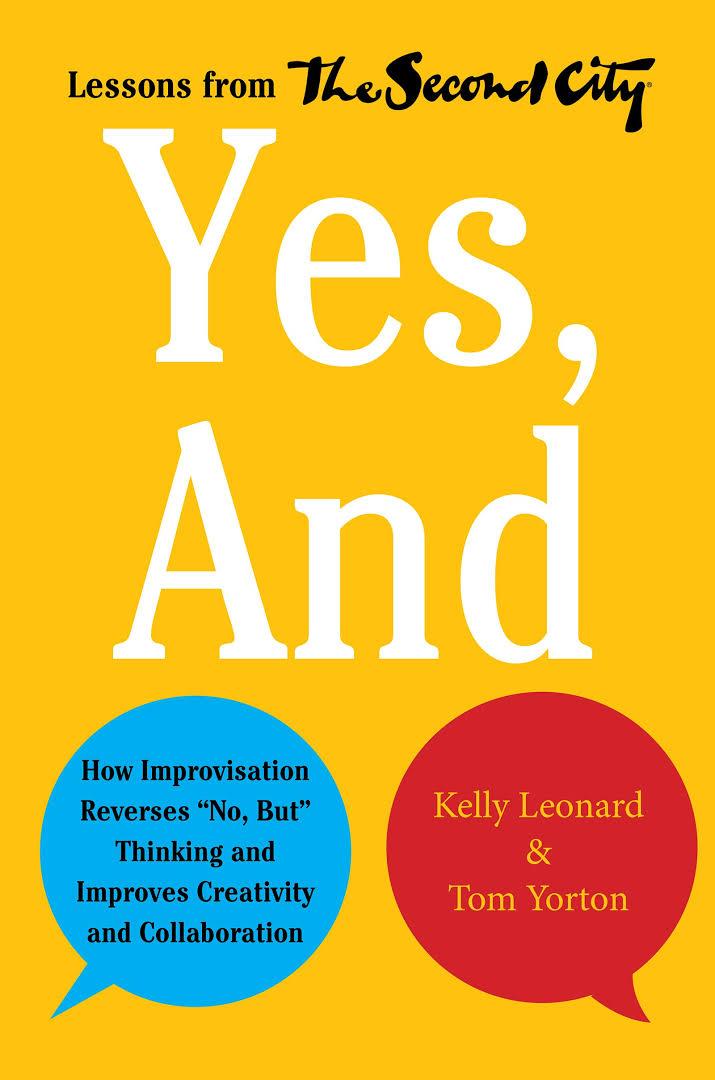
Yes, And
How Improvisation Reverses No, But Thinking and Improves Creativity and Collaboration
Kelly Leonard; Tom Yorton

Business Improv
Experiential Learning Exercises to Train Employees
Val Gee

Comedy and Distinction
The Cultural Currency of a 'Good' Sense of Humour
Sam Friedman

Theatrical Improvisation
Short Form, Long Form, and Sketch-Based Improv
Jeanne Leep

Mask Improvisation for Actor Training and Performance
the compelling image
Sears A. Eldredge

The Improv Handbook
The Ultimate Guide to Improvising in Comedy, Theatre, and Beyond
Tom Salinsky; Deborah Frances-White
Related Exercises
Repetition
Repetition is a paired listening exercise in which participants hold a conversation one sentence at a time, with each person required to repeat their partner's last statement before responding. The exercise forces genuine listening by making the repetition a prerequisite for the reply.
What They Said
What They Said is an applied listening exercise in which participants must accurately paraphrase or repeat back what the previous speaker said before contributing their own point, training active listening, retention under pressure, and the discipline of understanding before responding.
I Love You
This exercise takes its name from the three-word declaration at the heart of every scene it generates. Performers say the title phrase to each other in as many contexts, relationships, and emotional registers as possible, discovering the vast range of meaning the words carry depending on delivery, history, and circumstance. The same phrase spoken between parent and child, between rivals, between strangers, or between lifelong partners produces entirely different scenes. The exercise builds emotional range, comfort with vulnerability onstage, and the ability to invest familiar words with specific, truthful feeling.
Yes And
Yes And is the foundational improv exercise and philosophical principle in which performers practice accepting a partner's offer (the "yes") and adding new information that builds on it (the "and"). One player makes a statement; the partner responds by first affirming the reality of that statement and then contributing something new. The exercise trains the most essential skill in improvisation and has become the defining principle of the entire art form.
Copy Line
Copy Line is a scene exercise in which one performer repeats back the exact words their partner just said before delivering their own new line. The mandatory echo forces performers to genuinely hear what was said before responding, building the habit of listening-before-speaking and preventing the common improv drift of planning the next line while the partner is still talking.
Non Sequitor
Non Sequitur is a hybrid game and exercise in which performers deliberately break logical connections between lines of dialogue, forcing each new statement to have no apparent relationship to the one before it. The exercise trains performers to let go of the need to make sense, builds comfort with absurdity, and paradoxically reveals how audiences will construct meaning even from disconnected material.
The Lineage
Explore the schools and structures that influenced or evolved from Paraphrase.
Business Improv (Gee & Gee)
How to Reference This Page
The Improv Archive. (2026). Paraphrase. Retrieved September 28, 2026, from https://improvarchive.org/exercises/paraphrase
The Improv Archive. "Paraphrase." The Improv Archive, 2026. https://improvarchive.org/exercises/paraphrase.
The Improv Archive. "Paraphrase." The Improv Archive, 2026, https://improvarchive.org/exercises/paraphrase. Accessed September 28, 2026.
The Improv Archive is a systemically maintained repository. The archive itself acts as the corporate author.