To the Point is an applied exercise in which participants practice communicating a central message in the fewest possible words, stripping away preamble, qualifications, and filler to deliver a clear, direct statement. The exercise builds the habit of leading with the point rather than building to it.
Structure
The Draft
Each participant writes or speaks a statement they need to communicate: a request, a position, a piece of feedback, or a piece of information. They write it as they would naturally say it.
The Reduction
Participants identify the single core message in their statement and reduce it to one sentence that contains only that message, with no preamble, softening, or appended justification.
The Delivery
Participants deliver the reduced statement to a partner who provides only a yes or no response: did the point land immediately? Was the core message clear on the first sentence?
The Iteration
Participants revise and deliver again until the partner can confirm immediate clarity. The group discusses what was removed and what the removal revealed about communication habits.
How to Teach It
Objectives
To the Point addresses the professional habit of burying the point in context, qualifications, and throat-clearing. Many communicators believe the setup is necessary; the exercise demonstrates that the point is almost always stronger without it.
Facilitation Notes
Have participants identify the single most important word in their statement. Ask them to build outward from that word. Starting from the word rather than trimming from the outside produces cleaner results.
Common Pitfalls
Participants often resist eliminating qualifications, believing they are necessary for accuracy or diplomacy. Acknowledge this tension and point out that qualifications are often management of the speaker's anxiety rather than genuine precision.
In Applied Settings
Executive Communication
To the Point is used in leadership and communication programs to train direct, high-confidence communication in settings where attention is scarce and clarity is a competitive advantage.
Email and Written Communication
Facilitators use the exercise as a gateway to written communication training, demonstrating that the same principles that make spoken communication clear apply to professional writing.
Feedback Training
Managers practice leading with specific feedback rather than context, discovering that recipients receive direct feedback better than feedback buried in setup.
Skills Developed
Worth Reading
See all books →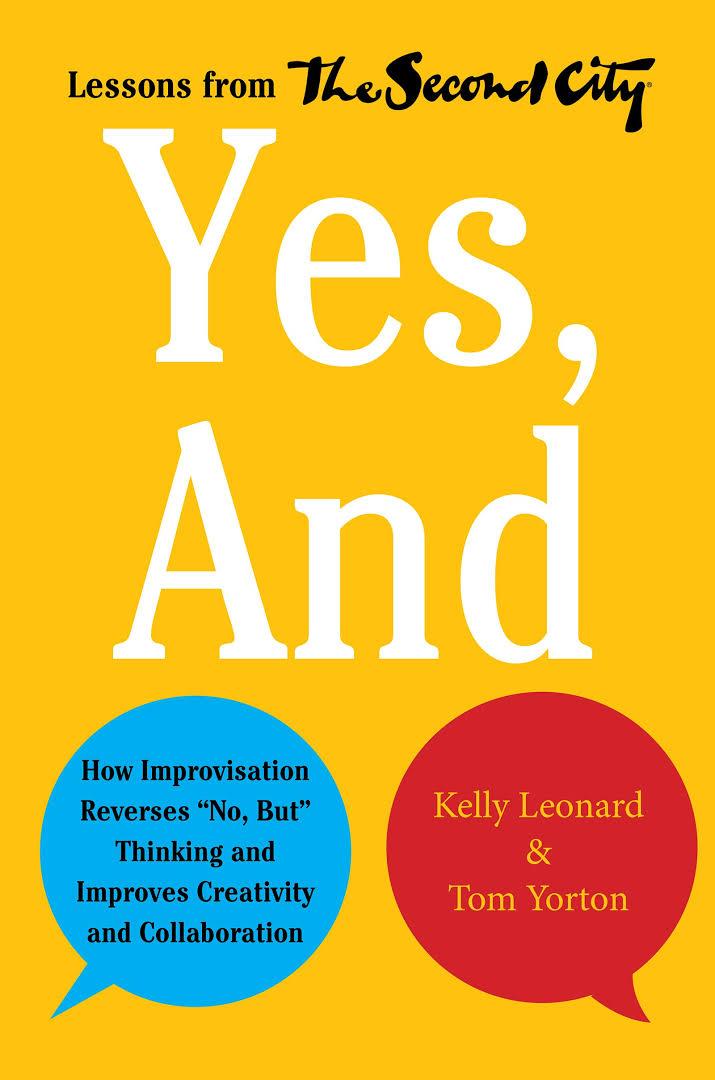
Yes, And
How Improvisation Reverses No, But Thinking and Improves Creativity and Collaboration
Kelly Leonard; Tom Yorton

Business Improv
Experiential Learning Exercises to Train Employees
Val Gee
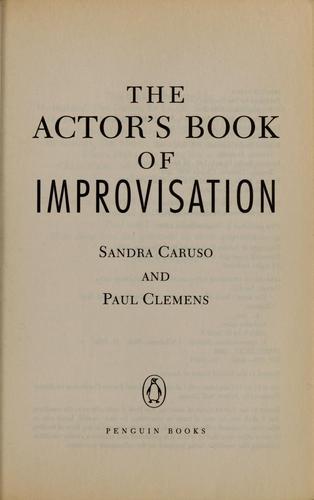
The Actor's Book of Improvisation
Sandra Caruso; Paul Clemens

Legislative Theatre
Using Performance to Make Politics
Augusto Boal

Theatrical Improvisation
Short Form, Long Form, and Sketch-Based Improv
Jeanne Leep

Devising Performance
A Critical History
Deirdre Heddon; Jane Milling
Related Exercises
Pointing Story
Pointing Story is an applied improvisation exercise from Joseph A. Keefe's Improv Yourself in which a partner reads a news story aloud, omitting each noun. They point to the other player, who must instantly supply a replacement word. The resulting story becomes a surreal, often comic narrative that trains rapid association and the willingness to contribute without planning.
Word Choice
Word Choice is an applied exercise in which participants reframe the same message using different word selections, discovering how specific word choices alter perception, emotional tone, and implicit authority, training precise language awareness and the ability to select words with intention rather than habit.
What They Said
What They Said is an applied listening exercise in which participants must accurately paraphrase or repeat back what the previous speaker said before contributing their own point, training active listening, retention under pressure, and the discipline of understanding before responding.
Point to Things in the Room
Point to Things in the Room is a warm-up exercise in which players walk around the space and point at objects while calling out their names. In progressive variations, players deliberately mislabel objects, pointing at a chair while saying "lamp," training the brain to separate observation from habitual naming and building comfort with the disorientation that fuels improvisation.
Drawing the Line
Drawing the Line is an applied improvisation exercise in which participants explore personal and group boundaries through physical and verbal activities. Using the stage space and structured improvisational scenarios, participants develop practical awareness of where their own comfort limits are, how to name and communicate those limits clearly, and how to recognize and respect the limits of others. The exercise is used in ensemble-building, trust work, and applied settings focused on consent and professional boundary-setting.
90-Second Elevator Pitch
Participants describe who they are in two minutes without referencing their resume, reduce to one minute, then bulk back to 90 seconds with passion. Finally distill to one sentence.
The Lineage
Explore the schools and structures that influenced or evolved from To the Point.
Business Improv (Gee & Gee)
How to Reference This Page
The Improv Archive. (2026). To the Point. Retrieved September 28, 2026, from https://improvarchive.org/exercises/to-the-point
The Improv Archive. "To the Point." The Improv Archive, 2026. https://improvarchive.org/exercises/to-the-point.
The Improv Archive. "To the Point." The Improv Archive, 2026, https://improvarchive.org/exercises/to-the-point. Accessed September 28, 2026.
The Improv Archive is a systemically maintained repository. The archive itself acts as the corporate author.