Location, Relationship, Escalate, End
Location, Relationship, Escalate, End is a scene construction exercise in which performers build a scene through four discrete, progressive stages: first establishing a specific physical location, then establishing the specific relationship between the characters, then escalating the scene through increasing stakes or emotional intensity, and finally bringing it to a definitive end. The exercise provides a structured scaffold for scene construction and trains performers to execute each element with commitment and specificity before moving to the next.
Structure
Setup
Two or more performers take the stage. The facilitator may offer a suggestion or allow the scene to begin without one. The four stages are known to the performers before the scene begins.
Progression
Location: Performers establish where they are through physical behavior, object work, and environmental interaction before any relationship information is offered. The location is specific, not generic.
Relationship: Once the location is clear, performers establish who these two people are to each other -- their history, their dynamic, their unspoken familiarity -- through behavior, reference, and interaction rather than exposition.
Escalate: With location and relationship established, the scene moves toward increasing stakes or emotional intensity. The escalation grows from the specific relationship and location rather than from an external arbitrary event.
End: The scene reaches a definitive conclusion -- a resolution, a departure, a moment of completion that makes the scene feel finished rather than stopped.
Conclusion
After the scene, the facilitator debriefs each stage: what was established in each phase and how clearly the transition between stages was executed.
How to Teach It
Objectives
Location, Relationship, Escalate, End trains performers to build scenes systematically rather than beginning with escalation before the foundational elements are in place. It addresses the common improv pattern of jumping to conflict or action before the audience has been given enough information to care about what is happening.
How to Explain It
"Don't rush. Before you can escalate something, the audience needs to know where they are and who these people are to each other. Do the work of establishing the world first. Then build on what you've made."
Scaffolding
Run the exercise as a directed sequence initially, with the facilitator calling each stage explicitly before allowing performers to manage the transitions themselves. Once the sequence is internalized, let the scene find its own pacing within the four-stage structure.
Common Pitfalls
Performers often skip or thin out the location and relationship stages to get to escalation. The resulting escalation carries no weight because the audience has no attachment to the people or place. Coach performers to resist the impulse to escalate until the earlier stages feel genuinely complete.
Worth Reading
See all books →
Improvisation for the Theater
A Handbook of Teaching and Directing Techniques
Viola Spolin
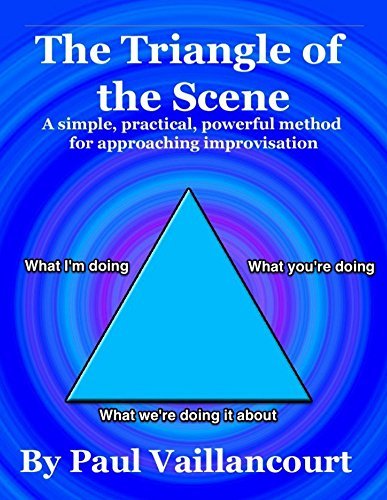
The Triangle of the Scene
A Simple, Practical, Powerful Method for Approaching Improvisation
Paul Vaillancourt

Improvisation Starters
A Collection of 900 Improvisation Situations for the Theater
Philip Bernardi

The Young Actor's Book of Improvisation
Dramatic Situations
Sandra Caruso; Susan Kosoff

Theater Games for Rehearsal
Viola Spolin

Something from Nothing
The Technique of Improvisation
Richard Goteri
Related Exercises
Step on Stage to Build a Relationship
Step on Stage to Build a Relationship is an exercise in which two performers enter the stage with the sole objective of establishing a genuine connection between their characters. The exercise strips away plot, games, and gimmicks, focusing entirely on how two people relate to each other.
Location
Location is the archive label for foundational exercises that train players to establish where a scene takes place through physical behavior, object work, and spatial detail. Across the confirmed source base, the core demand stays consistent: the audience should understand the setting from what the players do in the space, not from a quick verbal label. The exercise develops environmental clarity, specificity, and the habit of treating the setting as an active part of the scene.
Lets Not
Let's Not is a scene-work exercise in which performers practice recognizing and resisting the impulsive move -- the immediate next step that seems obvious after an offer is made -- and instead exploring what already exists in the scene before building further. The exercise counters the improv tendency to pile offer onto offer and trains performers to dwell productively in established scene reality.
Elevator
Elevator is a short scene exercise in which participants create brief improvised scenes set inside a moving elevator. The confined space, limited social options, and brief shared time create a pressure cooker for social dynamics: characters must navigate a stranger, an acquaintance, or a colleague in the specific awkwardness of elevator proximity. In applied settings the exercise develops quick character establishment, social reading, and the use of constraint as a creative resource.
Agreement Scenes
Agreement Scenes is an exercise in which performers practice fully agreeing with every offer their scene partner makes. By removing all conflict and negation, the exercise reveals how scenes can build through mutual enthusiasm and escalating shared reality. It reinforces the "yes, and" principle at its most fundamental level.
Move a Player
Move a Player is an applied improv directing and scene-work exercise in which performers practice physically repositioning a scene partner -- with clear intention and the partner's full agreement -- to alter the scene's staging, visual composition, or relational dynamic. The exercise trains the awareness that physical position in space communicates meaning, and develops the confidence to actively shape a scene's spatial reality rather than accepting the first staging that emerges.
How to Reference This Page
The Improv Archive. (2026). Location, Relationship, Escalate, End. Retrieved September 28, 2026, from https://improvarchive.org/exercises/location-relationship-escalate-end
The Improv Archive. "Location, Relationship, Escalate, End." The Improv Archive, 2026. https://improvarchive.org/exercises/location-relationship-escalate-end.
The Improv Archive. "Location, Relationship, Escalate, End." The Improv Archive, 2026, https://improvarchive.org/exercises/location-relationship-escalate-end. Accessed September 28, 2026.
The Improv Archive is a systemically maintained repository. The archive itself acts as the corporate author.