My Fault
The exercise named for its title phrase trains performers to take full responsibility for everything that happens in a scene, regardless of who caused the problem. After any mistake, miscommunication, dropped offer, or scene failure, the responding performer says the title phrase rather than blaming a scene partner. The exercise breaks the habit of externalizing responsibility and builds a supportive ensemble culture in which every member treats the group's work as their own. It reinforces the principle that strong improvisers own their contributions unconditionally and approach failures as shared rather than individual.
Structure
The facilitator explains the exercise's principle: in this work, every problem belongs to everyone. There is no such thing as a mistake that is someone else's fault.
Performers play scenes as usual. Whenever something goes wrong (a missed cue, a confusing initiation, a dropped object, a scene that stalls), the first performer to notice says the title phrase and takes ownership of the moment. The scene continues without pause.
The phrase applies regardless of actual responsibility. If a performer makes a confusing offer and the scene partner cannot parse it, the scene partner says the phrase rather than saying "that did not make sense." If both performers reach for the same initiation and collide, both say the phrase simultaneously.
The exercise extends beyond scene work into the full session. During notes, warm-ups, and transitions, the same principle applies. Any friction, confusion, or dropped ball is met with the phrase and immediate ownership.
Variations include group fault (after any scene problem, the entire ensemble says the phrase in unison, reinforcing collective responsibility), silent fault (performers take ownership through physical behavior rather than words: a nod, a hand on the heart, a brief bow), and positive fault (performers claim responsibility not just for mistakes but for successes: "the reason that scene worked is because of what my partner did").
The exercise runs for a full session or becomes a permanent ensemble practice.
How to Teach It
How to Explain It
"In this exercise, whenever anything goes wrong in the scene, no matter who caused it or why, you say 'my fault.' Own it completely. The exercise is about taking responsibility without negotiation. Whatever happened: your fault."
The exercise addresses one of improv's most destructive habits: blame. Performers who externalize responsibility ("the scene died because my partner did not listen") create a culture of defensiveness that undermines risk-taking and trust. The exercise replaces blame with ownership, and the shift in language produces a shift in ensemble dynamics.
Coach for genuine ownership rather than performative apology. Saying the phrase with a shrug and an eye roll misses the point. The exercise requires sincere acknowledgment that the performer is part of everything that happens onstage, including the moments that do not work.
The exercise reveals how often performers unconsciously blame their partners. Students who track how many times they catch themselves thinking "that was not my problem" discover how deeply the blame habit runs. The exercise makes the internal habit visible and provides a concrete alternative.
The exercise connects to the foundational improv principle that scenes are collaborative creations. No single performer is responsible for a scene's success or failure. The ensemble shares both credit and responsibility equally. Groups that internalize this principle produce bolder, more supportive work.
Worth Reading
See all books →
Mask Improvisation for Actor Training and Performance
the compelling image
Sears A. Eldredge

Improvisation for the Spirit
Live a More Creative, Spontaneous, and Courageous Life
Katie Goodman

The Ultimate Improv Book
A Complete Guide to Comedy Improvisation
Edward J. Nevraumont; Kurt Smeaton; Nicholas P. Hanson

Improv Ideas
A Book of Games and Lists
Mary Ann Kelley; Justine Jones
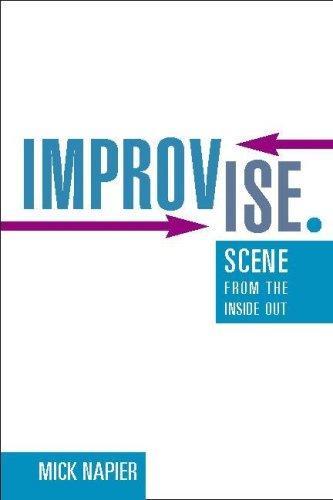
Improvise
Scene from the Inside Out
Mick Napier
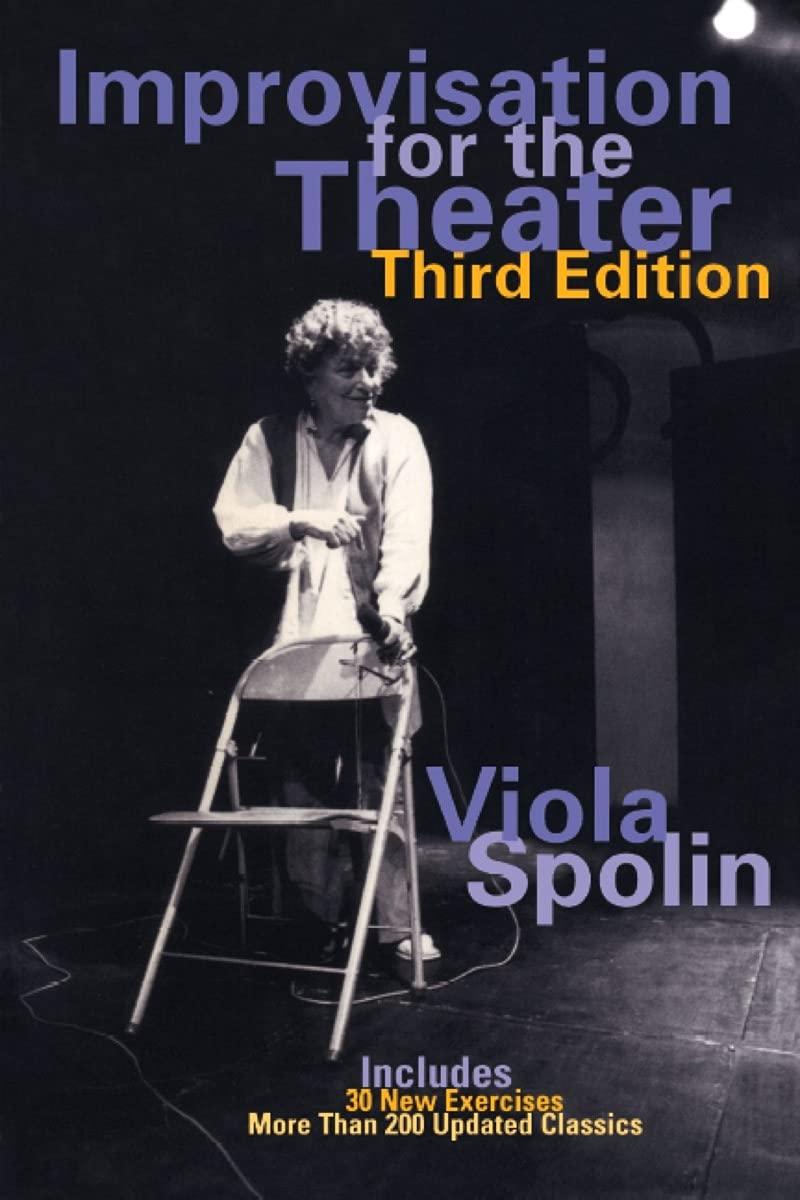
Improvisation for the Theater
A Handbook of Teaching and Directing Techniques
Viola Spolin
Related Exercises
Flatmates Just Do Nothing
Flatmates Just Do Nothing is a scene exercise in which performers play roommates engaged in completely mundane, low-stakes activity -- watching television, eating cereal, folding laundry -- with no dramatic agenda imposed from outside. The exercise trains the ability to be fully present in an ordinary moment, to find authentic relationship texture in ordinary behavior, and to trust that genuine connection and specificity are sufficient engines for scene without the need for conflict or event.
I Love You
This exercise takes its name from the three-word declaration at the heart of every scene it generates. Performers say the title phrase to each other in as many contexts, relationships, and emotional registers as possible, discovering the vast range of meaning the words carry depending on delivery, history, and circumstance. The same phrase spoken between parent and child, between rivals, between strangers, or between lifelong partners produces entirely different scenes. The exercise builds emotional range, comfort with vulnerability onstage, and the ability to invest familiar words with specific, truthful feeling.
I Made a Mistake!
I Made a Mistake is an applied exercise in which participants practice celebrating mistakes by announcing "I made a mistake!" with enthusiasm, taking a bow, and receiving group celebration. The exercise physically and socially reframes failure from something to minimize or hide into something to acknowledge and move through quickly. Drawn from improv's culture of treating mistakes as offers, the exercise builds psychological safety and reduces the performance anxiety that inhibits learning and risk-taking.
Trust Exercise
Trust Exercise is an ensemble warm-up in which players practice physical vulnerability and mutual support through structured trust-fall and trust-lift configurations. One player allows their body to be caught, supported, or passed by the group, developing the physical and psychological openness that ensemble ensemble work requires. The exercise builds ensemble cohesion by making reliance on others literal and concrete.
Pivot
Pivot is a scene exercise in which performers identify the moment when a scene needs to shift direction and make a deliberate choice to change it. The facilitator may call "Pivot" to signal the moment, or players practice identifying pivot points themselves. The exercise develops editorial awareness and trains the skill of knowing when a scene needs to evolve rather than repeat.
Take That Back
Take That Back is an exercise in which players improvise a scene and when the leader rings a bell, the speaking actor must replace their last line with something different. The exercise trains performers to generate multiple possibilities for any moment and demonstrates that the first idea is rarely the best.
How to Reference This Page
The Improv Archive. (2026). My Fault. Retrieved September 29, 2026, from https://improvarchive.org/exercises/my-fault
The Improv Archive. "My Fault." The Improv Archive, 2026. https://improvarchive.org/exercises/my-fault.
The Improv Archive. "My Fault." The Improv Archive, 2026, https://improvarchive.org/exercises/my-fault. Accessed September 29, 2026.
The Improv Archive is a systemically maintained repository. The archive itself acts as the corporate author.