One-Word Sentence
One Word Sentence is an applied improvisation exercise in which a group constructs sentences collaboratively, with each participant contributing exactly one word at a time. The exercise trains deep listening, the ability to release individual control over direction, and the practice of building shared meaning one unit at a time.
Structure
Setup
Participants stand or sit in a circle. The facilitator explains that the group will build sentences together, with each person contributing one word in sequence around the circle. A clear signal -- such as a clap or a raised hand -- marks the end of each sentence.
Progression
The first participant says a single word. The next participant adds a word that extends the emerging sentence. The sentence builds one word at a time around the circle. When the sentence reaches a natural conclusion, the participant who recognizes the ending signals the period and the next participant begins a new sentence.
The exercise continues for several minutes, building a series of connected or unconnected sentences. The facilitator may add constraints: the sentences must tell a story, the sentences must relate to a specific topic, or each sentence must be exactly five words long.
Conclusion
The exercise ends when the facilitator calls time or when the group has sustained a coherent story or series of sentences for a full round. A debrief follows on how it felt to build meaning one word at a time.
How to Teach It
Objectives
One Word Sentence trains the ability to listen to what has been established, accept it, and extend it meaningfully -- all within the smallest possible unit of contribution. The exercise reveals how much control people normally exert over direction and how much they must release to build collaboratively.
How to Explain It
"We are going to build sentences together. Each person adds one word. Listen to the sentence that is forming and add the word that serves it, not the word that steers it where you want it to go."
Scaffolding
Begin with free-form sentence building before adding story or topic constraints. For groups that struggle with awkward grammar, allow a "the" or "and" to be added by any participant without counting as their turn. Advanced groups can build complete paragraphs or tell a multi-sentence story, maintaining narrative coherence across many contributors.
Common Pitfalls
The most common failure is participants who use their word to redirect the sentence -- inserting a conjunction or a "not" to reverse direction. Coach them to extend rather than redirect. A second pitfall is sentences that never end, growing into run-ons because no participant wants to be the one who closes the thought; encourage participants to feel the sentence's natural conclusion and signal it confidently.
In Applied Settings
Learning Objectives
One Word Sentence develops collaborative construction, deep listening, release of individual control, and the ability to contribute to shared output at the smallest possible scale. These capacities underpin effective brainstorming, collaborative writing, and team decision-making.
Workplace Transfer
The exercise mirrors the dynamics of collaborative projects in which many contributors must build on each other's work without imposing their own agenda on the whole. Teams that practice this exercise report greater comfort with collaborative document creation, meeting facilitation, and shared decision-making. The experience of building something meaningful one word at a time demonstrates that shared ownership requires trust and restraint.
Facilitation Context
One Word Sentence is used in team-building, communication workshops, creative collaboration sessions, and leadership development. It works with groups of 6 to 20 and scales by running multiple circles simultaneously for larger groups. The exercise can be directly applied to workplace tasks: build a one-word-at-a-time team mission statement, project name, or meeting summary.
Debrief Framing
Ask participants: "When did you want to steer the sentence, and what happened when you let go of that impulse?" and "What made some sentences work better than others?" Follow with: "Where in your work do you need to contribute without controlling?" The debrief should make visible the tension between individual direction and collective emergence.
Skills Developed
Worth Reading
See all books →
Improv Yourself
Business Spontaneity at the Speed of Thought
Joseph A. Keefe

Improv to Improve Your Leadership Team
Tear down Walls and Build Bridges
Candy Campbell
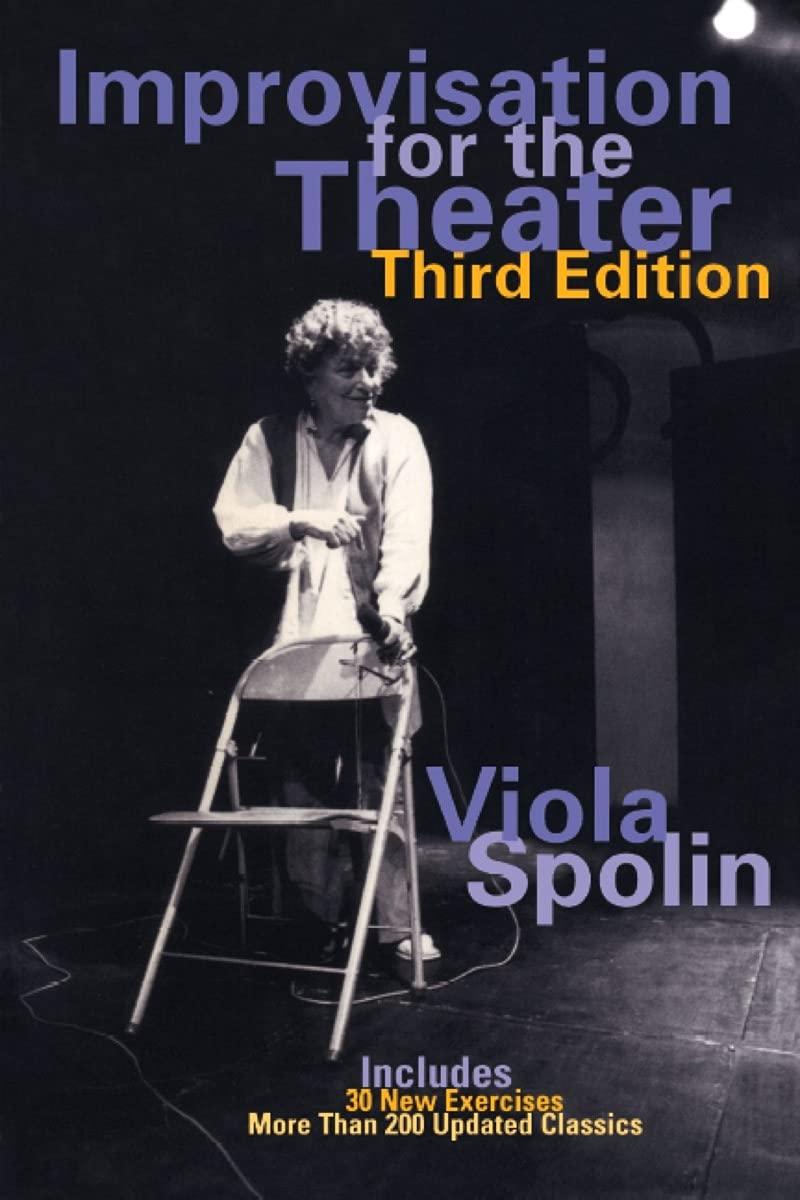
Improvisation for the Theater
A Handbook of Teaching and Directing Techniques
Viola Spolin

Group Improvisation
The Manual of Ensemble Improv Games
Peter Campbell Gwinn; Charna Halpern

Business Improv
Experiential Learning Exercises to Train Employees
Val Gee
The Improvisation Game
Discovering the Secrets of Spontaneous Performance
Chris Johnston
Related Exercises
One Line at a Time
One Line at a Time is an applied improvisation exercise in which a group constructs a story, plan, or document collaboratively, with each participant contributing exactly one line before passing to the next person. The strict rotation ensures equal participation, prevents any single voice from dominating, and trains the group to build coherently on each other's contributions rather than steering toward individual agendas.
Three Sentence Story
Three Sentence Story is an exercise in which participants construct a complete narrative using exactly three sentences, one person contributing each sentence in sequence. The constraint forces immediate narrative commitment and trains the skill of building a satisfying story arc without the luxury of extended setup.
One Line Scene
One Line Scene is a scene-building exercise in which two or more performers create a complete scene using only one line of dialogue each. The constraint forces performers to make every word count, to communicate volumes through subtext, physicality, and relationship, and to find the essence of a scene without the luxury of extended dialogue.
Just Seven Words
Just Seven Words is an applied improv exercise that constrains each participant to responding with exactly seven words -- no more, no fewer. The constraint forces deliberate word choice, disrupts habitual overexplanation, and trains the ability to communicate precisely and completely within a tight limit. The exercise is used in applied improv to develop conciseness, clarity, and the discipline of editing thought before speaking.
Word-at-a-Time Story
Word at a Time Story is a foundational ensemble exercise in which participants collectively build a story by each contributing one word at a time. The exercise develops group attunement, the ability to surrender individual narrative control, and trust in collective intelligence.
Two Players -- One Voice
Two Players One Voice is an applied exercise in which two participants speak simultaneously as a single character, committing to matching word choices, rhythm, and volume in real time, training deep listening, surrender of individual agenda, and the construction of shared voice.
The Lineage
Explore the schools and structures that influenced or evolved from One-Word Sentence.
Improv to Improve Your Leadership Team (Campbell)
How to Reference This Page
The Improv Archive. (2026). One-Word Sentence. Retrieved September 28, 2026, from https://improvarchive.org/exercises/one-word-sentence
The Improv Archive. "One-Word Sentence." The Improv Archive, 2026. https://improvarchive.org/exercises/one-word-sentence.
The Improv Archive. "One-Word Sentence." The Improv Archive, 2026, https://improvarchive.org/exercises/one-word-sentence. Accessed September 28, 2026.
The Improv Archive is a systemically maintained repository. The archive itself acts as the corporate author.