Performing Curiosity
Performing Curiosity is an applied improvisation exercise in which participants practice embodying genuine curiosity through three specific conversational directions: listening for what is new, asking open questions, and focusing attention outward. The core insight is that performing curiosity, even when it feels like pretending, generates genuine curiosity. The exercise develops listening, empathy, and the ability to shift attention away from internal judgment and toward a conversation partner.
Structure
Setup
Participants pair up for a conversation. No special materials are needed.
Progression
The facilitator introduces three curiosity performance directions that participants must follow during the conversation.
The first direction is to listen for what is new. After each exchange, participants ask themselves what new information just arrived. This trains attentive listening by giving the mind a specific task rather than letting it wander toward rehearsing a response.
The second direction is to ask open questions. Questions must be open-ended, connected to what the partner just said, and genuinely exploratory. Questions that can be answered with yes or no do not count. Statements disguised as questions do not count.
The third direction is to focus attention outward. Participants consciously shift their awareness away from their own thoughts, judgments, and agenda toward their partner's words, expressions, and meaning.
Participants hold a conversation using these three directions for a set period, typically three to five minutes. Even if the curiosity feels performed rather than felt at first, participants are encouraged to commit to the performance.
Debrief
Partners discuss how the conversation felt compared to a typical exchange. Most participants discover that performing curiosity quickly becomes genuine curiosity. The facilitator draws out observations about what shifted in the conversation when attention moved outward.
How to Teach It
Objectives
Performing Curiosity trains participants to redirect anxiety and self-consciousness into genuine interest in other people. The exercise demonstrates that curiosity is a performable action, not a feeling that must arrive on its own. By giving participants concrete directions rather than abstract encouragement, the exercise makes curiosity teachable and repeatable.
How to Explain It
"You are going to have a conversation with your partner. I am going to give you three directions. First, listen for what is new in everything your partner says. Second, ask open questions that connect to what they just told you. Third, focus your attention outward, on your partner, not inward on your own thoughts. Even if it feels like you are pretending to be curious, commit to the performance."
Scaffolding
Introduce the directions one at a time across multiple rounds rather than all three at once. In the first round, participants practice only listening for what is new. In the second round, they add open questions. In the third round, they add outward focus. This layered approach prevents overwhelm and lets participants feel the effect of each direction individually before combining them.
Common Pitfalls
The most common issue is participants who ask closed questions or questions that are thinly disguised statements. Coach them to notice the difference between a question that opens a door and one that leads the witness.
A second issue is participants who report that the curiosity felt fake. Acknowledge that the performance may feel artificial at first. The research behind the exercise shows that performed curiosity and genuine curiosity produce the same conversational results. The feeling of authenticity often arrives after the behavior, not before it.
In Applied Settings
Performing Curiosity has been used in healthcare (oncology nursing teams at Johns Hopkins), corporate sales training (teaching salespeople to accept conversational offers rather than push scripts), business education (MBA collaboration labs), and leadership development. The exercise transfers directly to any professional context where active listening and genuine engagement improve outcomes. Facilitators use it to demonstrate that soft skills like curiosity and empathy can be practiced and developed through specific behavioral directions rather than treated as fixed personality traits.
Skills Developed
History
Performing Curiosity was developed by Cathy Salit, CEO emerita of Performance of a Lifetime, as part of her work applying improvisation to professional development. The exercise emerged from her program with oncology nurses at Johns Hopkins Hospital in 2008, where she delivered fifteen intensive half-day performance and improvisation workshops to approximately 250 nurses. The concept draws on the Becoming Principle from performative psychology: by performing as the person you are becoming, you develop the capacities you are performing. Salit published the exercise as Workbook 3.3 in her chapter for Applied Improvisation: Leading, Collaborating, and Creating Beyond the Theatre (Dudeck and McClure, 2018) and explored the underlying ideas further in her book Performance Breakthrough: A Radical Approach to Success at Work (2016).
Worth Reading
See all books →
Applied Improvisation
Leading, Collaborating, and Creating Beyond the Theatre
Theresa Robbins Dudeck; Caitlin McClure

The Applied Improvisation Mindset
Tools for Transforming Individuals, Organizations, and Communities
Theresa Robbins Dudeck; Caitlin McClure

Improvising Real Life
Personal Story in Playback Theatre
Jo Salas
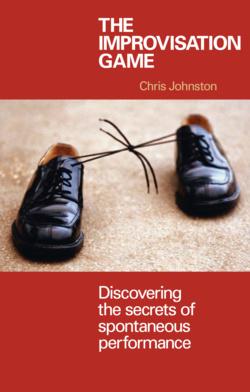
The Improvisation Game
Discovering the Secrets of Spontaneous Performance
Chris Johnston

Playing Along
37 Group Learning Activities Borrowed from Improvisational Theater
Izzy Gesell
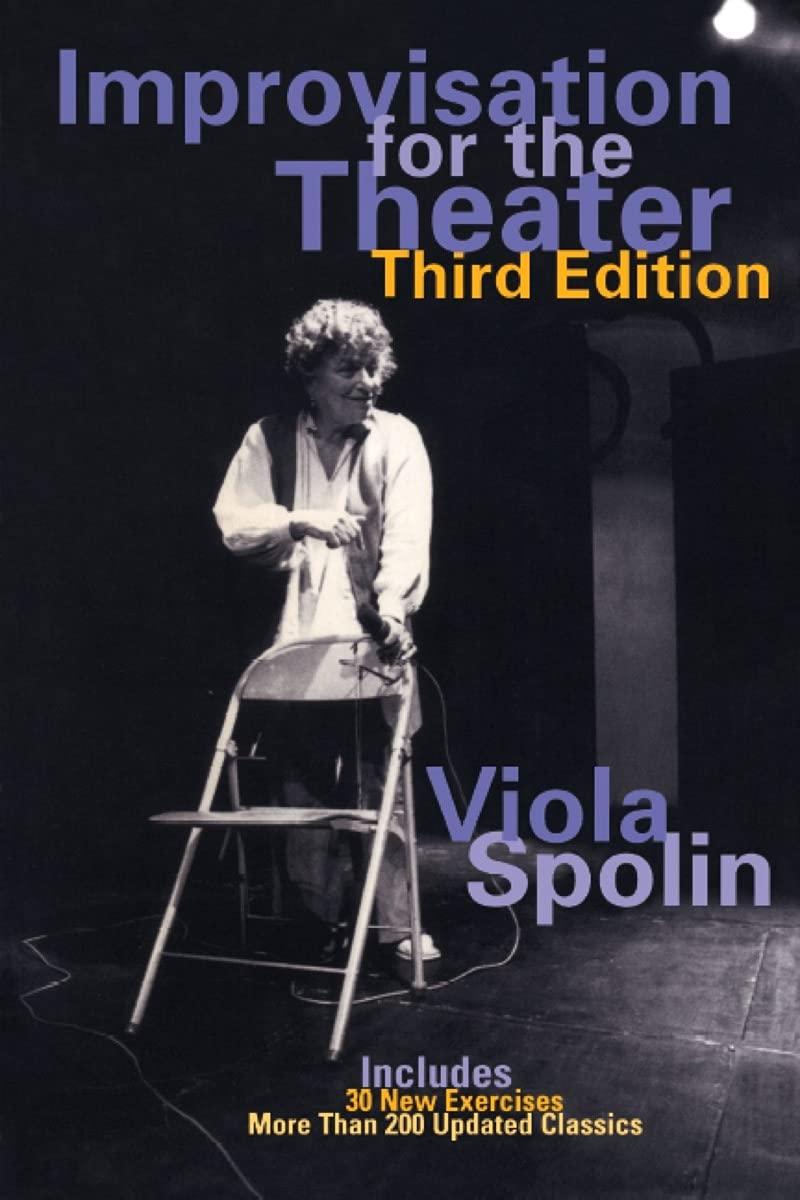
Improvisation for the Theater
A Handbook of Teaching and Directing Techniques
Viola Spolin
Related Exercises
Performance of an Audience
Performance of an Audience is an applied improvisation exercise that explores the reciprocal relationship between performer and spectator. Participants experience both roles, discovering how the quality of attention an audience gives shapes the performer's experience and how conscious, engaged witnessing differs from passive spectating. The exercise builds awareness that presence and attention are active contributions to any group interaction.
The Interviewing Process
The Interviewing Process is an applied exercise in which participants practice the dynamics of job interviews from both sides, using improvisational techniques to develop genuine presence, spontaneous response, and the ability to communicate under evaluation. The exercise treats the interview as a mutual scene with stakes for both parties.
Observe
Observe is an applied improvisation exercise in which participants practice deliberate, sustained observation of their environment, other people, or a group dynamic without intervening, interpreting, or acting. The exercise trains the foundational skill of seeing clearly before responding -- a capacity that underpins effective leadership, facilitation, and collaborative work.
Portrait
Portrait is an applied improvisation exercise from The Applied Improvisation Mindset in which one participant poses while others describe what they observe. The exercise develops skills of attention, descriptive precision, and the ability to notice details without projecting assumptions onto another person.
Motivation
Motivation is an applied improv exercise that explores the distinction between intrinsic and extrinsic motivation by having participants play characters or engage in tasks driven by different types of motivational fuel. The exercise reveals how motivation quality affects group behavior, creative engagement, and collaborative generosity -- making the difference between performed participation and genuine contribution visible and discussable.
Acting Natural
Acting Natural is an observation exercise that reveals what performers do with their bodies when they think the room is listening to content instead of watching behavior. Players enter one at a time, share simple facts about themselves, and are then confronted with detailed observations about their body language. The exercise builds body awareness and helps actors notice habits that can quietly drain clarity onstage.
The Lineage
Explore the schools and structures that influenced or evolved from Performing Curiosity.
Applied Improvisation (Dudeck & McClure)
How to Reference This Page
The Improv Archive. (2026). Performing Curiosity. Retrieved September 28, 2026, from https://improvarchive.org/exercises/performing-curiosity
The Improv Archive. "Performing Curiosity." The Improv Archive, 2026. https://improvarchive.org/exercises/performing-curiosity.
The Improv Archive. "Performing Curiosity." The Improv Archive, 2026, https://improvarchive.org/exercises/performing-curiosity. Accessed September 28, 2026.
The Improv Archive is a systemically maintained repository. The archive itself acts as the corporate author.