What?
What? is an exercise in which performers respond to each offer with genuine curiosity, exploring rather than accepting at face value. The exercise teaches the difference between blocking and curious investigation, building the habit of digging deeper into a partner's offers.
Structure
Setup
- Two players work in a scene.
- One player makes an offer: a statement, an action, a piece of information.
- The second player responds with genuine curiosity rather than acceptance or denial.
The Curiosity Response
- Instead of "yes, and," the receiving player asks: "What do you mean?" "What does that look like?" "What happens when you do that?" "What would make that different?"
- The questions are not challenges or rejections. They are genuine investigations.
- The exercise trains the habit of digging deeper into a partner's offer before moving past it.
The Difference from Blocking
- Blocking refuses or ignores an offer. What questions do not refuse anything.
- What questions slow down scene development to deepen the current moment rather than advance to the next one.
- A question that investigates the content of an offer is different from a question that avoids committing to it.
How Curiosity Changes Scenes
- Scenes that move through offers without investigating them tend to be thin and eventful but not meaningful.
- Scenes that pause to investigate one offer in depth tend to be rich and specific.
- The exercise does not advocate for constant questioning in scene work. It develops the capacity to slow down when slowing down would serve the scene.
Application
- After the exercise, the director can coach "what?" moments in scene work: places where deeper investigation of an offer would have served the scene.
How to Teach It
How to Explain It
"When your partner says something, don't accept it and move on. Get curious about it. What do they mean? What does it look like? What are the details they haven't told you yet? Don't block. Don't deflect. Just dig into what they just said."
Common Notes
- The curiosity must be genuine. Questions that are rhetorical, hostile, or performed as a technique produce nothing useful.
- The partner making the offer must also stay present: they should be discovering the details as they answer the questions, not retrieving pre-planned information.
- The exercise is corrective rather than prescriptive: it addresses the tendency to move through scene beats too quickly.
Common Pitfalls
- Questions become interrogation rather than exploration. The tone of genuine curiosity is collaborative, not confrontational.
- Players ask one question and then accept the answer and move on. The exercise is about sustained curiosity, not a single question.
- The scene stalls entirely in the investigation of one offer without building anything from what is discovered.
Worth Reading
See all books →
When I Say This, Do You Mean That?
Enhancing Communication
Cherie Kerr; Julia Sweeney
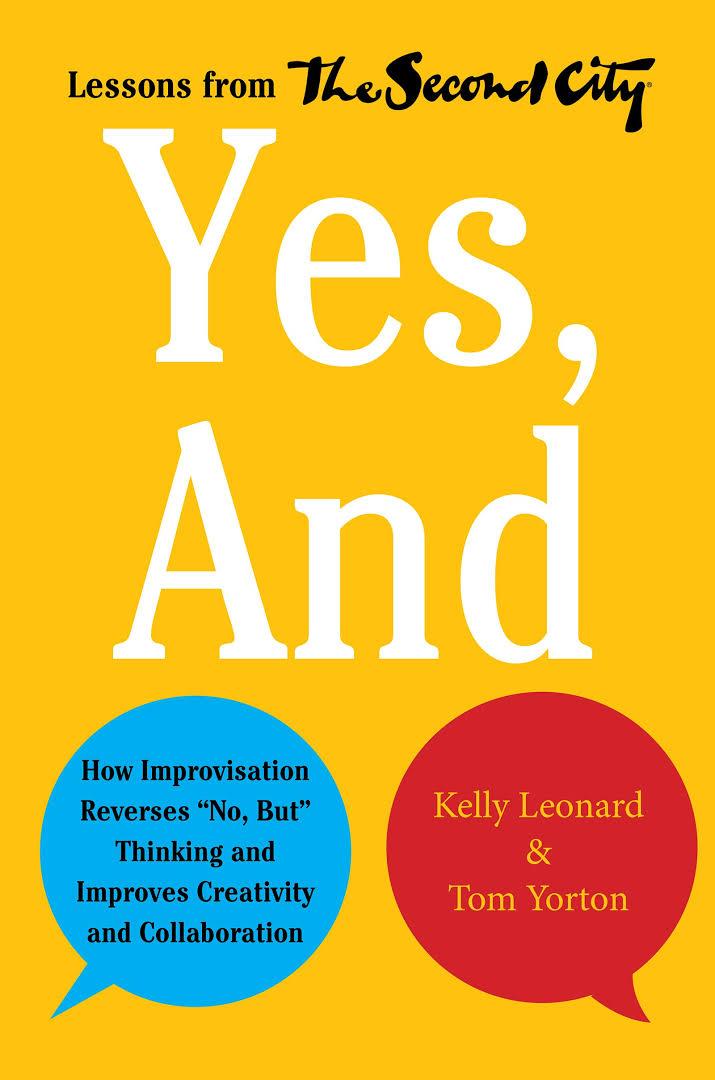
Yes, And
How Improvisation Reverses No, But Thinking and Improves Creativity and Collaboration
Kelly Leonard; Tom Yorton

Improvisation
Use What You Know, Make Up What You Don't
Brad Newton

Business Improv
Experiential Learning Exercises to Train Employees
Val Gee

Something from Nothing
The Technique of Improvisation
Richard Goteri

Playing Along
37 Group Learning Activities Borrowed from Improvisational Theater
Izzy Gesell
Related Exercises
The Power of Questions
The Power of Questions is an applied exercise in which participants practice formulating genuinely open, curiosity-driven questions and experience how the quality of a question shapes the depth and direction of a conversation. The exercise trains the habit of asking questions that open rather than close, explore rather than confirm.
Play With
Play With is a scene exercise in which performers are directed to explore and heighten whatever elements have already emerged in a scene rather than driving toward a predetermined outcome. The coaching directive -- "play with it" -- asks players to treat each established detail, character behavior, or game pattern as material to revisit, expand, and discover rather than move past. The exercise trains the improv muscle of finding satisfaction in the present moment of a scene.
Fish Sticks
Fish Sticks is a circle exercise in which players ask simple "Do you ... ?" questions while everyone tracks their own answers by lowering fingers. The round quickly reveals shared experiences, differences inside the group, and how honestly participants are listening to the question being asked.
Yes And
Yes And is the foundational improv exercise and philosophical principle in which performers practice accepting a partner's offer (the "yes") and adding new information that builds on it (the "and"). One player makes a statement; the partner responds by first affirming the reality of that statement and then contributing something new. The exercise trains the most essential skill in improvisation and has become the defining principle of the entire art form.
Performing Curiosity
Performing Curiosity is an applied improvisation exercise in which participants practice embodying genuine curiosity through three specific conversational directions: listening for what is new, asking open questions, and focusing attention outward. The core insight is that performing curiosity, even when it feels like pretending, generates genuine curiosity. The exercise develops listening, empathy, and the ability to shift attention away from internal judgment and toward a conversation partner.
How to Reference This Page
The Improv Archive. (2026). What?. Retrieved September 28, 2026, from https://improvarchive.org/exercises/what
The Improv Archive. "What?." The Improv Archive, 2026. https://improvarchive.org/exercises/what.
The Improv Archive. "What?." The Improv Archive, 2026, https://improvarchive.org/exercises/what. Accessed September 28, 2026.
The Improv Archive is a systemically maintained repository. The archive itself acts as the corporate author.