Pointing Story
Pointing Story is an applied improvisation exercise from Joseph A. Keefe's Improv Yourself in which a partner reads a news story aloud, omitting each noun. They point to the other player, who must instantly supply a replacement word. The resulting story becomes a surreal, often comic narrative that trains rapid association and the willingness to contribute without planning.
Structure
Setup
Participants pair up. One partner selects a short news article, press release, or written passage. This partner will read aloud, serving as the Reader. The other partner is the Responder.
Progression
The Reader begins reading the passage aloud but drops every noun, pausing and pointing at the Responder at each gap. The Responder immediately says the first word that comes to mind. The Reader incorporates the word and continues reading without commentary or reaction to the substitution.
The result is a recognizable story structure filled with unexpected content. A news report about city council proceedings might become a story about a penguin debating spaghetti policy. The exercise continues through the entire passage.
Afterward, the pair discusses the experience. The Responder reflects on what it felt like to supply words without time to think. The Reader reflects on the challenge of maintaining flow while incorporating surprises.
Variations
A verb version drops verbs instead of nouns, producing different surreal effects. An advanced version drops both nouns and verbs. A group version has the Reader point at different participants around a circle for each missing word.
How to Teach It
Objectives
Pointing Story develops rapid verbal association, comfort with spontaneity, and the ability to contribute without self-editing. The exercise demonstrates that the brain can generate useful material much faster than the conscious mind believes possible.
How to Explain It
"Your partner is going to read a story out loud, but every noun will be missing. When they point at you, say the first word that pops into your head. Do not try to be clever or funny. Speed is more important than quality."
Scaffolding
Start with passages that have frequent but simple nouns, producing a manageable pace. As pairs gain confidence, use denser passages or increase reading speed to push the Responder past their comfort zone.
Common Pitfalls
The most common issue is Responders who hesitate, trying to think of a good word. Coach them that the first word is always the right word. Hesitation breaks the flow and increases self-consciousness.
A second pitfall is Readers who react to the substituted words with laughter or commentary. The Reader must maintain a neutral, journalistic delivery regardless of what the Responder says. This deadpan quality amplifies the comedy.
In Applied Settings
Pointing Story is used in creativity workshops and communication training to demonstrate how quickly the brain generates associations when given permission to be imperfect. Facilitators use the exercise to lower the barrier to participation in brainstorming sessions, showing that speed and volume of ideas matter more than immediate quality. The exercise also builds comfort with public contribution in group settings.
Skills Developed
Worth Reading
See all books →
Improv Yourself
Business Spontaneity at the Speed of Thought
Joseph A. Keefe
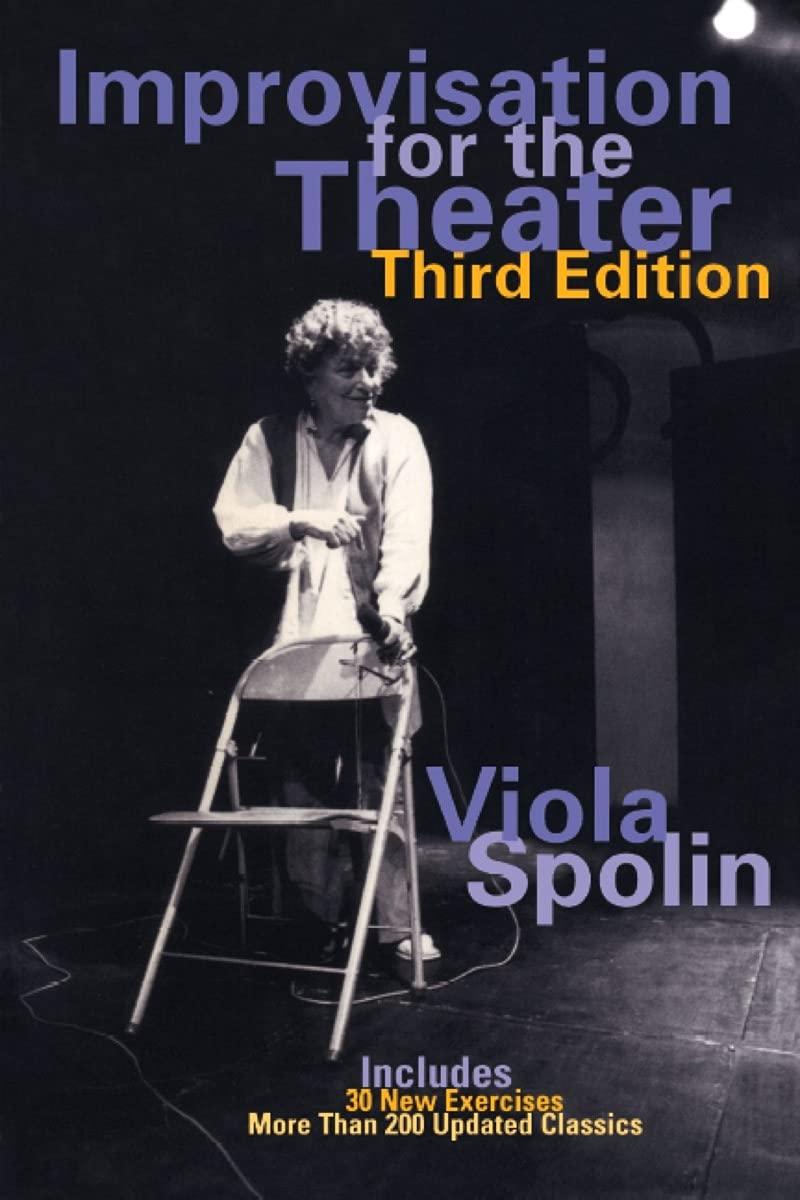
Improvisation for the Theater
A Handbook of Teaching and Directing Techniques
Viola Spolin
Impro for Storytellers
Keith Johnstone
The Improvisation Book
How to Conduct Successful Improvisation Sessions
John S.C. Abbott

The 5 Elements of Improv
How to Take Your Improv to the Next Level
Andrew M. Spragge; Karen L. Eichler
The Improvisation Game
Discovering the Secrets of Spontaneous Performance
Chris Johnston
Related Exercises
Point to Things in the Room
Point to Things in the Room is a warm-up exercise in which players walk around the space and point at objects while calling out their names. In progressive variations, players deliberately mislabel objects, pointing at a chair while saying "lamp," training the brain to separate observation from habitual naming and building comfort with the disorientation that fuels improvisation.
Random Words
Random Words is an applied improvisation exercise from Joseph A. Keefe's Improv Yourself in which partners each place ten dissimilar, unrelated words in a random pattern on paper and then compose an original story, poem, or monologue incorporating all ten words. The exercise builds the creative muscle of forging connections between unrelated concepts under constraint.
Point of View Post-It Notes
Point of View Post-It Notes is a scene exercise in which performers receive sticky notes with written character perspectives, attitudes, or emotional stances that they must embody throughout an improvised scene. The exercise separates point of view from plot, training performers to let a strong perspective drive their choices rather than relying on narrative invention.
Picture Story
Picture Story is an applied improvisation exercise in which participants create and share stories inspired by images. Players receive a photograph, illustration, or abstract image and must construct a narrative from what they see, developing the ability to find story in unexpected places and communicate ideas through vivid description.
Story Circles
Story Circles is a collaborative storytelling exercise in which small groups sit in circles and build stories together, with each person contributing a segment before passing to the next. The exercise develops listening, narrative awareness, and the ability to build on others' contributions.
Anecdotes
Anecdotes is an exercise in which players take turns telling short true or fictional stories in response to a theme, prompt, or partner's contribution. The practice develops narrative structure, personal voice, active listening, and the ability to find the essential shape in real experience. In its paired version, as documented by Max Dickins in Improvise, two players build a shared fictional memory using "Yes, And" to co-construct the narrative. In its solo version, players practice distilling personal experiences into concise, engaging stories with clear beginnings, middles, and ends. Strong anecdote skills feed directly into monologue-based long-form formats such as the Armando and the Evente, where a performer's personal story serves as the source material for subsequent scenes. The exercise is also widely used in applied improvisation settings for developing communication, listening, and storytelling skills in professional contexts.
The Lineage
Explore the schools and structures that influenced or evolved from Pointing Story.
Improv Yourself (Joseph A. Keefe)
How to Reference This Page
The Improv Archive. (2026). Pointing Story. Retrieved September 28, 2026, from https://improvarchive.org/exercises/pointing-story
The Improv Archive. "Pointing Story." The Improv Archive, 2026. https://improvarchive.org/exercises/pointing-story.
The Improv Archive. "Pointing Story." The Improv Archive, 2026, https://improvarchive.org/exercises/pointing-story. Accessed September 28, 2026.
The Improv Archive is a systemically maintained repository. The archive itself acts as the corporate author.