Last Word Response
Last Word Response is an applied improv listening exercise in which each participant must begin their response with the last word spoken by the previous participant. The constraint enforces genuine end-of-utterance listening by making it physically impossible to begin a response until the previous speaker has completed their sentence. The exercise is used in applied improv to develop active listening skills in workplace and organizational settings.
Structure
Setup
Participants sit or stand in a circle or in pairs. The facilitator establishes the rule: every response must begin with the exact last word of the previous speaker's statement.
Progression
A conversation begins on a given topic -- either a neutral prompt or a work-relevant scenario. Each participant listens through to the final word of the previous statement and starts their own response with that word, building naturally from it into a complete, coherent sentence.
The conversation continues in rotation or open-floor style. Participants who begin responding before the previous speaker has finished are gently corrected and asked to wait for the final word.
Conclusion
The exercise concludes after multiple rounds through the group, or when participants are demonstrating consistent end-of-utterance listening without prompting.
How to Teach It
Objectives
Last Word Response trains the habit of listening to completion -- staying present through the final word of a speaker's sentence rather than preparing a response during the middle of it. It makes premature response formulation physically impossible and creates direct feedback when a participant fails to listen to the end.
How to Explain It
"You can't start talking until you hear the very last word. Not the last idea -- the actual last word. Then you start your response with it. This sounds simple, but most of us start preparing our response somewhere in the middle of the other person's sentence. This exercise makes that visible."
Scaffolding
Begin with simple one-sentence exchanges before moving to longer statements. Allow participants to explicitly identify the word they are starting from before building their response, so the group can confirm full listening before the constraint is internalized.
Common Pitfalls
Participants often try to pick up the last word before the speaker has quite finished, anticipating the sentence's end from its trajectory. This is precisely the habit the exercise is designed to surface. Coach the group to wait for silence before beginning.
In Applied Settings
Learning Objectives
Last Word Response trains end-of-utterance listening -- the ability to stay present and absorptive through the final moment of another person's contribution before beginning to respond. The exercise makes visible how frequently participants begin formulating responses during a speaker's sentence rather than after it ends, a pattern that degrades the quality of listening and signals to speakers that they are not being fully heard.
Workplace Transfer
In meetings, negotiations, feedback conversations, and collaborative problem-solving, the habit of mid-sentence response preparation produces two consistent outcomes: participants misunderstand key details contained in the final portion of a speaker's statement, and speakers receive the signal that their listener has already moved on. Both outcomes reduce the quality of collaboration. The Last Word Response constraint replicates the behavioral requirement of full-sentence attention and gives participants direct, immediate feedback when their listening stops early.
Facilitation Context
The exercise is used in active listening training, communication skills workshops, leadership development programs, and team-building sessions where listening quality has been identified as a friction point. It works well in groups where meetings, brainstorming sessions, or feedback conversations have been described as environments where people talk past each other. Groups of any size can participate in pairs or as a circle.
Debrief Framing
After the exercise, ask participants: Where did you feel the urge to start talking before the other person finished? What did you notice in the last words of sentences that you might have missed if you had started talking sooner? In your actual conversations at work -- in meetings, on calls, during handoffs -- when do you start preparing your response? The debrief should help participants connect the exercise's constraint to specific moments in their professional communication where early response formulation costs them information or signals inattention.
Skills Developed
Worth Reading
See all books →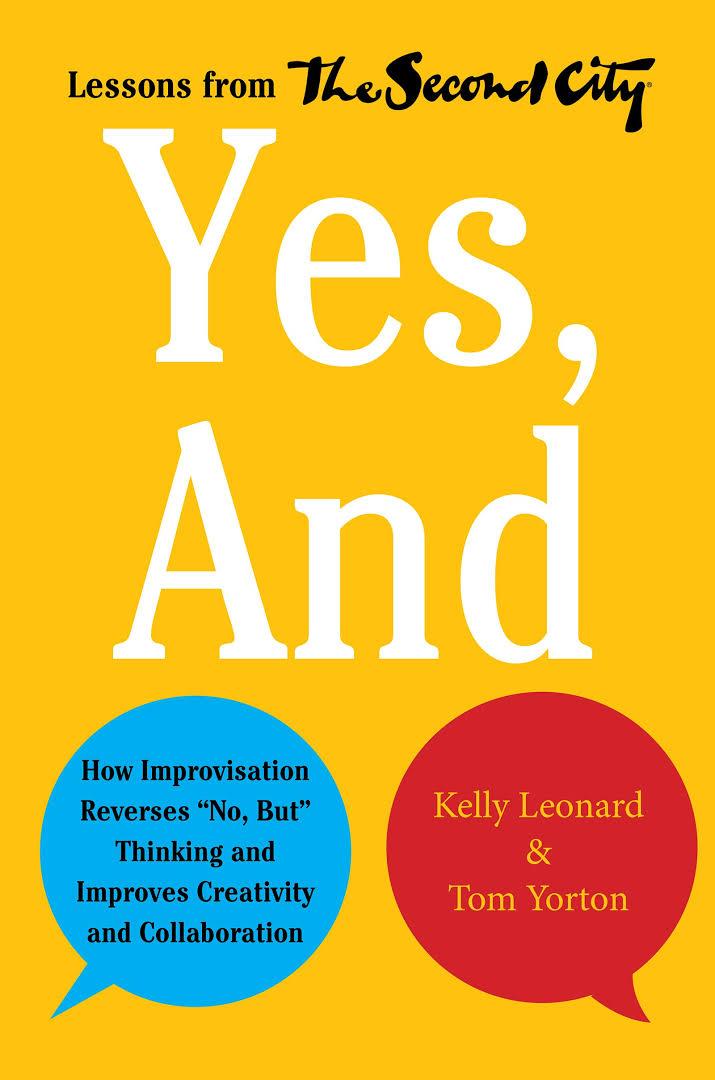
Yes, And
How Improvisation Reverses No, But Thinking and Improves Creativity and Collaboration
Kelly Leonard; Tom Yorton

You Can Teach Improv (Yes, You!)
The Ultimate Guide to Class Planning, Skill Building, and Helping Every Student Leave With a Win
Andrew Berkowitz
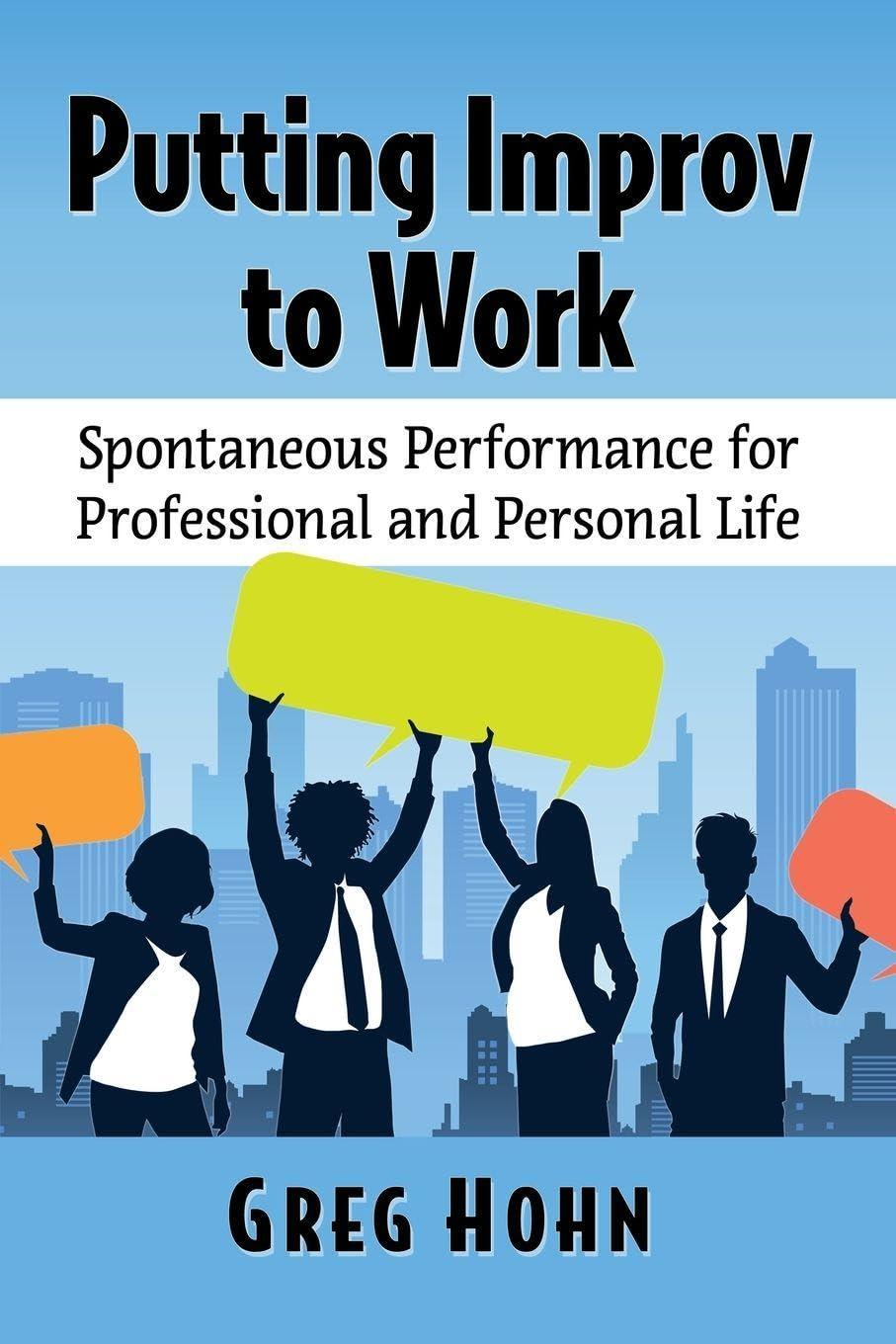
Putting Improv to Work
Spontaneous Performance for Leadership, Learning, and Life
Greg Hohn

Improvising Now
A Practical Guide to Modern Improv
Rob Norman

Business Improv
Experiential Learning Exercises to Train Employees
Val Gee

The 5 Elements of Improv
How to Take Your Improv to the Next Level
Andrew M. Spragge; Karen L. Eichler
Related Exercises
Last Word, First Word
Last Word First Word is an applied improv listening exercise in which each participant must begin their sentence with the last word spoken by the previous participant, carrying the conversation forward through this chain of shared language. The constraint makes end-of-utterance attention mandatory and creates a visible, audible record of how carefully each participant tracked their partner's contribution before responding.
Just Seven Words
Just Seven Words is an applied improv exercise that constrains each participant to responding with exactly seven words -- no more, no fewer. The constraint forces deliberate word choice, disrupts habitual overexplanation, and trains the ability to communicate precisely and completely within a tight limit. The exercise is used in applied improv to develop conciseness, clarity, and the discipline of editing thought before speaking.
Listen to Understand, Not to Respond
Listen to Understand, Not to Respond is an applied improv exercise that directly targets the most common pattern of inadequate listening in professional settings: the habit of spending the duration of another person's speaking turn formulating a response rather than receiving what is being said. The exercise creates a structured constraint -- participants may not respond until they have first reflected back what they heard to the speaker's satisfaction -- making the response-preparation habit visible and interrupting it through practice.
Last Letter Scene
Last Letter Scene is a hybrid game and exercise in which each line of dialogue must begin with the last letter of the previous line. The constraint forces performers to listen with acute precision -- not to the general content of what is said but to the exact final sound of each utterance -- while maintaining scene coherence, character, and forward momentum simultaneously.
Last Letter
Last Letter is a verbal agility exercise in which each player must begin their word or sentence with the last letter of the previous player's word or sentence. The constraint forces constant attention to word endings and beginnings, preventing performers from pre-planning their responses. The exercise trains verbal awareness, the ability to think and speak simultaneously, and the habit of listening all the way to the end of a partner's contribution before formulating a response.
Repetition
Repetition is a paired listening exercise in which participants hold a conversation one sentence at a time, with each person required to repeat their partner's last statement before responding. The exercise forces genuine listening by making the repetition a prerequisite for the reply.
The Lineage
Explore the schools and structures that influenced or evolved from Last Word Response.
Yes, And (Kelly Leonard & Tom Yorton)
How to Reference This Page
The Improv Archive. (2026). Last Word Response. Retrieved September 28, 2026, from https://improvarchive.org/exercises/last-word-response
The Improv Archive. "Last Word Response." The Improv Archive, 2026. https://improvarchive.org/exercises/last-word-response.
The Improv Archive. "Last Word Response." The Improv Archive, 2026, https://improvarchive.org/exercises/last-word-response. Accessed September 28, 2026.
The Improv Archive is a systemically maintained repository. The archive itself acts as the corporate author.