Roller Coaster
Roller Coaster is a physical ensemble exercise in which players mime riding a roller coaster together, reacting as a group to the imagined drops, climbs, sharp turns, and loops. The exercise requires coordinated physical and vocal response to a shared imaginary experience and functions as an energizer that builds ensemble synchronization through committed physical play.
Structure
Setup
The group arranges themselves in rows as if seated in a roller coaster car: chairs or the floor, one behind another. Players should be close enough to feel the group's physical response.
Exercise
A facilitator or one player narrates or initiates the ride. As the coaster climbs, players lean forward, hands gripping imaginary bars, building anticipation physically. At the drop, all players react simultaneously: the body goes with the fall, the arms may fly up, the voice reacts involuntarily. Turns press all bodies in the same direction; loops invert and return.
The group does not choreograph the reactions in advance. The goal is spontaneous, committed, simultaneous response to the imaginary physical stimulus. Players who hold back or react independently from the group break the ensemble illusion.
Gavin Levy documents a variation in which a single actor in the playing area performs the full roller coaster experience in mime, while the rest of the group sits in the center and observes. In this version, the exercise develops solo physical storytelling , the audience must understand the ride entirely from the performer's physical reactions.
What to Observe
The debrief question after the group version: did the group move as one body? If some players reacted a half-second before or after the others, the group synchronization was incomplete. The quality of the physical commitment, not the drama of the reactions, is the measure of success.
How to Teach It
How to Explain It
"We are all on a roller coaster together. It starts moving. React as a group: lean together, hold together, scream together. The ride takes us somewhere. Let your body lead your reaction. Everything follows from what the coaster does."
Objectives
Roller Coaster develops physical commitment, spontaneous ensemble reaction, and the capacity to fully inhabit an imaginary physical experience. Performers who resist the exercise typically protect their dignity at the expense of the ensemble: they react minimally, observe what others are doing rather than genuinely experiencing the ride, or break the fourth wall by smiling knowingly.
The solo version develops a different skill: the ability to make an imaginary physical experience legible to an observer through body and face alone. The performer must be genuinely experiencing the ride for the audience to believe it.
Facilitation
For the group version: call the ride specifically. "The car is climbing now. You can feel the vibration of the track. The view below you. The chain is about to release." Give enough detail that the group has something real to react to, not just an abstract instruction to react.
For the solo version: give the performer a full 60-90 seconds minimum. A short ride does not allow the physical arc to develop.
Common Coaching Notes
- "Your whole body goes, not just your head."
- "Don't watch what everyone else is doing. Experience it yourself."
- "The group rides as one. If you see a gap, you're ahead of or behind the car."
- "Let the sound happen. You don't have to decide to make noise."
History
Roller Coaster appears in physical warm-up and ensemble-building curricula as a group synchronization exercise. Gavin Levy documents a solo mime version as Exercise 13 in 112 Acting Games, placing it among exercises focused on inner emotional reality and physical expression.
The exercise belongs to a broad category of shared-imaginary-experience warm-ups, which includes airplane rides, ocean waves, and other scenarios that require a group to respond simultaneously to an identical physical stimulus that is entirely mimed. These exercises appear across acting, improv, and drama education curricula without a documented single origin.
Worth Reading
See all books →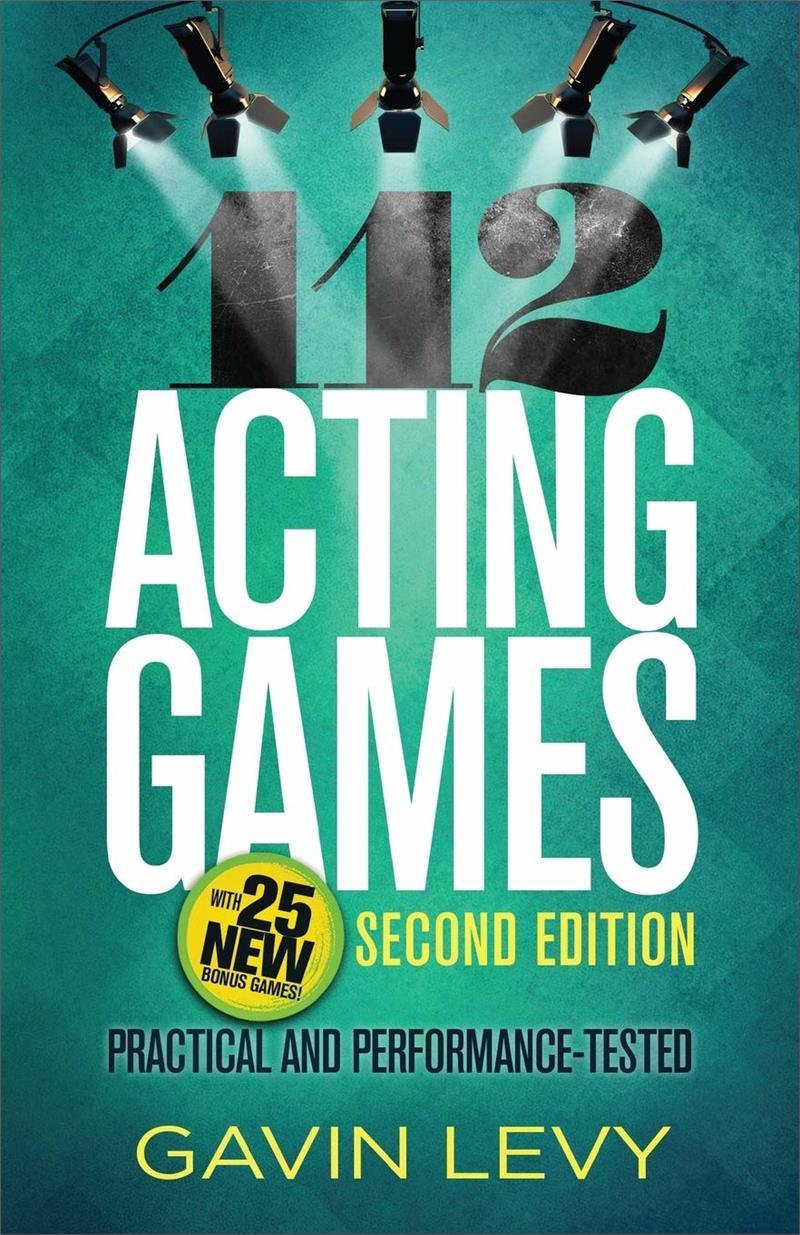
112 Acting Games
Gavin Levy

Theatrical Improvisation, Consciousness, and Cognition
Clayton D. Drinko
Improvisation for the Theater
A Handbook of Teaching and Directing Techniques
Viola Spolin

The Improv Illusionist
Using Object Work, Environment, and Physicality in Performance
David Raitt
Theater Games for Rehearsal
Viola Spolin

The Young Actor's Book of Improvisation
Dramatic Situations
Sandra Caruso; Susan Kosoff
Related Exercises
Virus
Virus is a physical ensemble exercise in which one player begins with a specific behavior, sound, or movement that spreads to others through proximity or contact, eventually infecting the whole group. The exercise demonstrates how energy and impulse propagate through an ensemble and trains players to notice and respond to the influence of their partners.
Popcorn
Popcorn is an ensemble energy exercise in which players crouch on the ground and pop up one at a time to shout a word, sound, or short phrase before dropping back down. The group must self-regulate so that pops do not overlap and the rhythm stays dynamic. The exercise builds group awareness, spontaneity, and the instinct to fill empty space without stepping on others.
Barney
Barney is an energy and movement warm-up exercise in which players adopt an exaggerated, lumbering physical character and interact with the group through simple, playful commands. The exercise asks participants to embody a large, slow, friendly creature (often described as a dinosaur or monster) and move through the space with maximum physical commitment and minimum self-consciousness. The inherent silliness of the character lowers inhibitions quickly, making Barney effective as an early warm-up for groups that are new to physical work or uncomfortable with large physical choices. The exercise builds comfort with exaggerated movement, vocal projection, and the willingness to look ridiculous in front of others, all foundational skills for improv performance.
The Wave
The Wave is a group exercise in which players send a wave of movement or energy around a circle, each person picking up and passing on the previous player's motion. The exercise trains group rhythm, physical sensitivity, and the instinct to receive and transmit energy without breaking the chain. It is accessible to players of all ages and experience levels.
On the Beach
On the Beach is a relaxation and guided visualization exercise in which participants lie on the floor and are led through an imagined experience at a beach. The exercise uses sensory imagery to help performers release physical tension and access a state of focused calm before beginning scene work or performance. The beach setting provides a shared imaginative space that most participants can inhabit without specialized knowledge.
The Magnet
The Magnet is a physical ensemble exercise in which one player acts as a magnet moving through the space while other players respond as if they are iron filings, drawn toward or pushed away depending on the magnet's orientation. The exercise develops physical responsiveness, spatial sensitivity, and ensemble attunement through non-verbal interaction.
The Lineage
Explore the schools and structures that influenced or evolved from Roller Coaster.
112 Acting Games (Levy)
How to Reference This Page
The Improv Archive. (2026). Roller Coaster. Retrieved September 28, 2026, from https://improvarchive.org/exercises/roller-coaster
The Improv Archive. "Roller Coaster." The Improv Archive, 2026. https://improvarchive.org/exercises/roller-coaster.
The Improv Archive. "Roller Coaster." The Improv Archive, 2026, https://improvarchive.org/exercises/roller-coaster. Accessed September 28, 2026.
The Improv Archive is a systemically maintained repository. The archive itself acts as the corporate author.