The Wave
The Wave is a group exercise in which players send a wave of movement or energy around a circle, each person picking up and passing on the previous player's motion. The exercise trains group rhythm, physical sensitivity, and the instinct to receive and transmit energy without breaking the chain. It is accessible to players of all ages and experience levels.
Structure
Setup
All players form a circle. One player begins a simple physical movement: a sway, a sweep of the arms, a rise onto the toes, or any other motion that can be clearly passed to the next person. The wave direction (clockwise or counterclockwise) is established before beginning.
Gameplay
Gavin Levy in 112 Acting Games documents The Wave as exercise 118, noting that he played this game with five- and six-year-olds but that it is just as rewarding for any age. Each player receives the movement from the person next to them, briefly absorbs it, and passes it to the next player. The wave travels around the circle continuously.
Variations include changing the speed of the wave (starting slow and accelerating, or vice versa), reversing the direction when the wave has completed a full revolution, changing the wave's physical quality (from sharp to smooth, from large to small), or allowing the wave to transform: each player may slightly modify the movement as it passes through them, so the wave evolves as it travels.
A sound version has players pass a sound or rhythm instead of (or in addition to) a physical gesture. A combined version pairs a physical gesture with a vocalization that travels together.
Debrief
After the exercise, players discuss the experience of receiving and transmitting: moments where the wave arrived clearly versus moments where it arrived ambiguously, and what made the difference. Players often identify that clarity of initiation and physical commitment at the moment of passing are the key variables.
How to Teach It
How to Explain It
"Stand in a circle. One person starts a movement: a gesture, a stretch, a physical action. The person next to them picks it up, carries it forward, maybe lets it change slightly, and passes it on. The wave travels around the circle. You are not copying exactly. You are catching what is there and letting it move through you."
Objectives
The Wave develops the physical listening instinct: the capacity to receive a partner's physical offer and transmit it clearly before adding individual variation. Players who modify the wave before receiving it fully interrupt the group rhythm; players who transmit the wave too passively fail to keep it alive. The exercise develops the narrow window between reception and transmission that ensemble physical work requires.
Scaffolding
Begin with a large, simple gesture (a full arm sweep) that is easy to see and receive across the circle. Once the wave is traveling cleanly, reduce the gesture size to test players' attentiveness. Small waves require more precise attention than large ones.
Introduce the reversal only after the wave is traveling cleanly in one direction. A premature reversal interrupts the group rhythm before it has been established. Once the group can pass the wave in both directions and switch fluently, add the transformation variant.
For the transformation variant, give players explicit permission to change one quality of the movement each time it passes through them, with the instruction that the change must be gradual enough that observers can track the evolution. This prevents abrupt discontinuities that break the wave's unity.
Common Coaching Notes
- "Receive it fully before you pass it. Don't skip the receiving."
- "Clearer is better than bigger. The person next to you needs to see it, not the whole room."
- "If the wave breaks, restart without stopping. Find it again."
- "The wave has momentum. Let it carry you."
History
Gavin Levy documents The Wave as exercise 118 in 112 Acting Games (2005), placing it in his curriculum as a physical group awareness exercise appropriate for all ages. Levy's note that he played this game with very young children reflects the exercise's accessibility and the simplicity of its core mechanic.
The Wave belongs to a broad family of physical energy-passing exercises that appear across theatrical training traditions. Circle exercises that pass energy, gesture, or sound around a group are among the most widely used ensemble warm-ups in improv, physical theatre, and drama education curricula. The specific structural feature of a wave (unidirectional travel that can be reversed or transformed) makes The Wave a useful progression from simpler mirroring exercises.
Worth Reading
See all books →
Theatrical Improvisation
Short Form, Long Form, and Sketch-Based Improv
Jeanne Leep
Improv Nation
How We Made a Great American Art
Sam Wasson
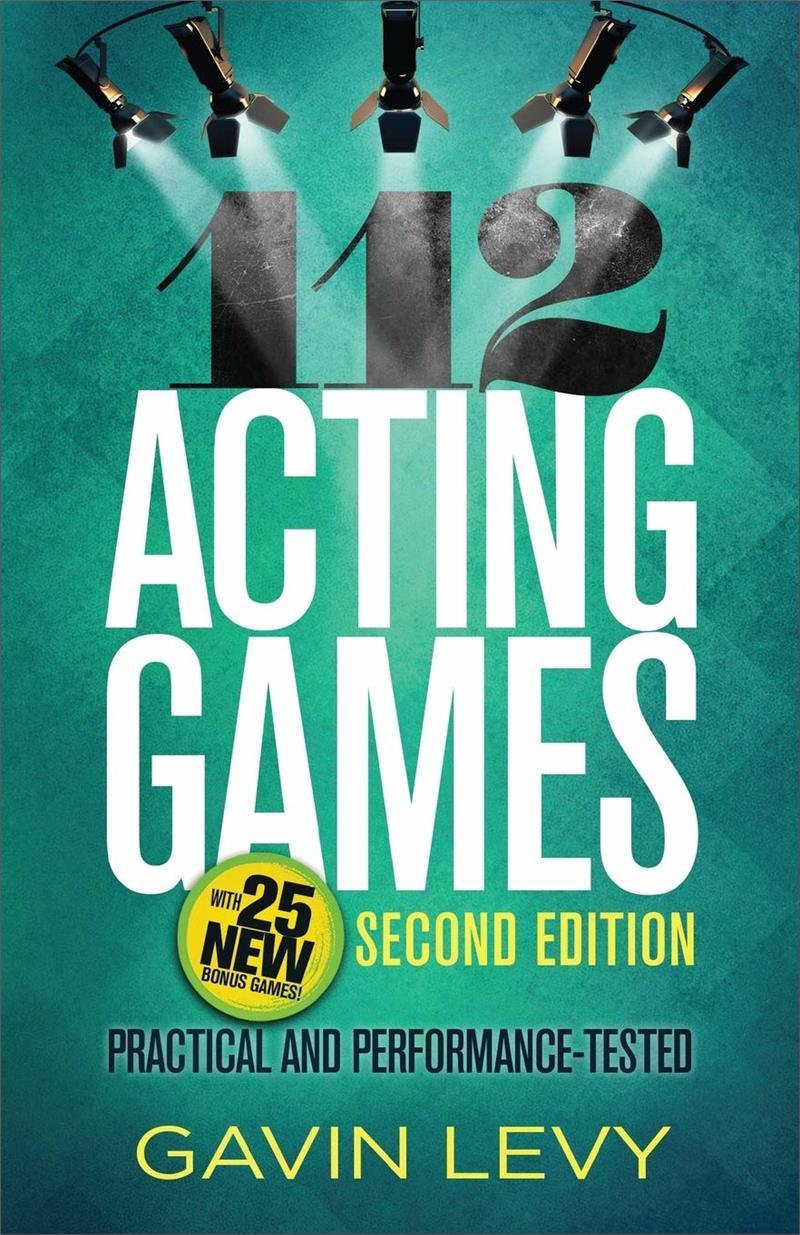
112 Acting Games
Gavin Levy
Improvisation for the Theater
A Handbook of Teaching and Directing Techniques
Viola Spolin
Theater Games for Rehearsal
Viola Spolin
Theater Games for the Lone Actor
Viola Spolin
Related Exercises
On the Beach
On the Beach is a relaxation and guided visualization exercise in which participants lie on the floor and are led through an imagined experience at a beach. The exercise uses sensory imagery to help performers release physical tension and access a state of focused calm before beginning scene work or performance. The beach setting provides a shared imaginative space that most participants can inhabit without specialized knowledge.
Roller Coaster
Roller Coaster is a physical ensemble exercise in which players mime riding a roller coaster together, reacting as a group to the imagined drops, climbs, sharp turns, and loops. The exercise requires coordinated physical and vocal response to a shared imaginary experience and functions as an energizer that builds ensemble synchronization through committed physical play.
Popcorn
Popcorn is an ensemble energy exercise in which players crouch on the ground and pop up one at a time to shout a word, sound, or short phrase before dropping back down. The group must self-regulate so that pops do not overlap and the rhythm stays dynamic. The exercise builds group awareness, spontaneity, and the instinct to fill empty space without stepping on others.
Virus
Virus is a physical ensemble exercise in which one player begins with a specific behavior, sound, or movement that spreads to others through proximity or contact, eventually infecting the whole group. The exercise demonstrates how energy and impulse propagate through an ensemble and trains players to notice and respond to the influence of their partners.
Samurai
Samurai is an energetic warm-up exercise in which players stand in a circle and pass an imaginary sword strike to each other using a sharp downward motion and a vocalized sound. The recipient and their two neighbors must react in coordinated unison before the strike is redirected to another player. The exercise builds group energy, physical focus, and responsive ensemble awareness. It exists in multiple versions ranging from circle energy-passing to competitive elimination formats.
Play Tag
Play Tag is a physical warm-up exercise that adapts the universal children's game of tag for an improv workshop setting. One player is designated as "it" and pursues others within the defined playing space; tagged players become "it" and must pursue the next player. The exercise builds physical energy, spatial awareness, and the embodied experience of ensemble interdependence before scene work begins.
The Lineage
Explore the schools and structures that influenced or evolved from The Wave.
112 Acting Games (Levy)
How to Reference This Page
The Improv Archive. (2026). The Wave. Retrieved September 28, 2026, from https://improvarchive.org/exercises/the-wave
The Improv Archive. "The Wave." The Improv Archive, 2026. https://improvarchive.org/exercises/the-wave.
The Improv Archive. "The Wave." The Improv Archive, 2026, https://improvarchive.org/exercises/the-wave. Accessed September 28, 2026.
The Improv Archive is a systemically maintained repository. The archive itself acts as the corporate author.