The Lawyer is an applied exercise in which participants practice defending any position assigned to them regardless of their personal view, developing the skills of argument construction, flexible perspective-taking, and the separation of personal belief from effective advocacy. The exercise trains the capacity to argue persuasively without attachment to outcome.
Structure
The Assignment
Each participant receives a position to defend: it may be an opinion, a policy, a choice, or a point of view. The position is assigned randomly and may or may not match the participant's actual views.
The Defense
The participant has one to two minutes to present the strongest possible case for their assigned position. They may not hedge, qualify, or signal disagreement. The goal is full commitment to the argument.
The Response
Other participants may ask questions or present counterarguments. The defender holds their position and responds to challenges.
The Debrief
After all participants have defended, the group discusses what it felt like to argue for positions not their own, what the exercise revealed about the structure of persuasion, and what transferred to their own communication.
How to Teach It
Objectives
The Lawyer builds the skill of committed advocacy independent of personal conviction. This is useful for negotiators, managers presenting unpopular decisions, and anyone who must represent a position beyond their own preference.
Facilitation Notes
The quality of the exercise depends on participants fully committing rather than ironizing their position. Signal that the skill being trained is the commitment itself, not the content of the argument.
Common Pitfalls
Participants often break frame to signal that they do not personally hold the assigned position. This undermines the exercise. The productive discomfort of fully embodying a contrary view is where the learning occurs.
In Applied Settings
Negotiation and Sales Training
The Lawyer is used to build the capacity to advocate strongly for a client's position or a product's value, even when the advocate has reservations. Committed advocacy is a trainable skill.
Leadership Development
Managers practice presenting organizational decisions they did not make and may not endorse, developing the capacity to communicate with conviction rather than ambivalence.
Debate and Communication Programs
Facilitators use the exercise to develop the structural thinking that underlies persuasive argument: evidence, logic, anticipation of counterarguments, and consistent framing.
Skills Developed
Worth Reading
See all books →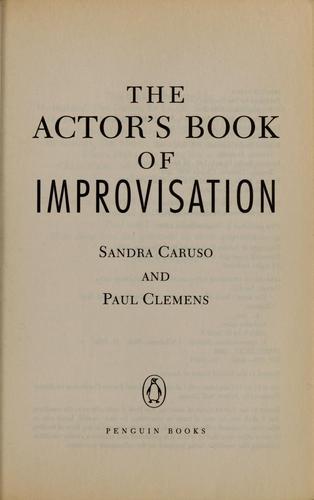
The Actor's Book of Improvisation
Sandra Caruso; Paul Clemens

Legislative Theatre
Using Performance to Make Politics
Augusto Boal

Theatrical Improvisation
Short Form, Long Form, and Sketch-Based Improv
Jeanne Leep

The Improv Handbook
The Ultimate Guide to Improvising in Comedy, Theatre, and Beyond
Tom Salinsky; Deborah Frances-White

The Applied Improvisation Mindset
Tools for Transforming Individuals, Organizations, and Communities
Theresa Robbins Dudeck; Caitlin McClure

Business Improv
Experiential Learning Exercises to Train Employees
Val Gee
Related Exercises
Arguments
Three players: one in center, two on sides taking opposite positions. The center player must maintain logical and emotional agreement with both simultaneously.
Argue like a Philosopher
Partners practice constructive argumentation following philosophical principles, exploring how to disagree productively while maintaining respect.
Constructive Debate
Constructive Debate is an applied improvisation exercise in which participants practice building on opposing viewpoints rather than dismissing or refuting them. Each contribution requires the speaker to first restate the previous speaker's position accurately and locate something valid in it before introducing their own perspective. The exercise develops the discipline of genuine engagement with competing views as a prerequisite to productive disagreement.
Red Teaming
Red Teaming assigns specific team members the role of critics and challengers during a meeting or brainstorming session. By making the adversarial role explicit and sanctioned, the exercise removes the social risk of disagreement and surfaces objections that would otherwise remain unspoken.
Persuade
Persuade is an applied improvisation exercise in which participants practice influencing others through active listening, building on offers, and authentic communication rather than scripted techniques. Drawing on the improv principle that agreement creates rapport, the exercise develops the ability to read an audience, adapt a message in real time, and lead through connection rather than pressure.
Opposite Side Speech
Opposite Side Speech is a communication exercise in which participants argue for the opposite of their actual position on a topic. One person states a belief or preference, then must immediately switch to advocating passionately for the contrary viewpoint. The exercise builds cognitive flexibility, empathy, and the ability to genuinely inhabit perspectives that differ from one's own.
The Lineage
Explore the schools and structures that influenced or evolved from The Lawyer.
The Applied Improvisation Mindset (Dudeck & McClure)
How to Reference This Page
The Improv Archive. (2026). The Lawyer. Retrieved September 28, 2026, from https://improvarchive.org/exercises/the-lawyer
The Improv Archive. "The Lawyer." The Improv Archive, 2026. https://improvarchive.org/exercises/the-lawyer.
The Improv Archive. "The Lawyer." The Improv Archive, 2026, https://improvarchive.org/exercises/the-lawyer. Accessed September 28, 2026.
The Improv Archive is a systemically maintained repository. The archive itself acts as the corporate author.