Turning Circle
Turning Circle is a physical ensemble exercise in which participants move in a circle and execute turns triggered by eye contact, sound, or touch cues, training physical precision, peripheral awareness, and synchronized group movement.
Structure
The Setup
Participants stand in a circle with enough space to turn comfortably. The facilitator designates a cue type: eye contact, a clap, or a touch on the shoulder.
The Turns
When a participant receives the designated cue from the person next to them, they execute a precise turn and pass the cue to the next person. The cue travels around the circle.
Variations
Multiple cues can travel simultaneously in opposite directions. Speed can increase. Participants may add a sound or gesture to their turn to develop individual physicality within the ensemble.
How to Teach It
Objectives
Turning Circle trains peripheral attention, precise physical execution, and the ability to receive and transmit a group impulse cleanly.
Facilitation Notes
Insist on clean execution over speed. Sloppy turns that come fast are less useful than precise turns that are slightly slower.
Common Pitfalls
Participants rush their turn to keep the circle moving, losing physical specificity. Slow the exercise down until precision is achieved before increasing speed.
Worth Reading
See all books →
Playing Along
37 Group Learning Activities Borrowed from Improvisational Theater
Izzy Gesell
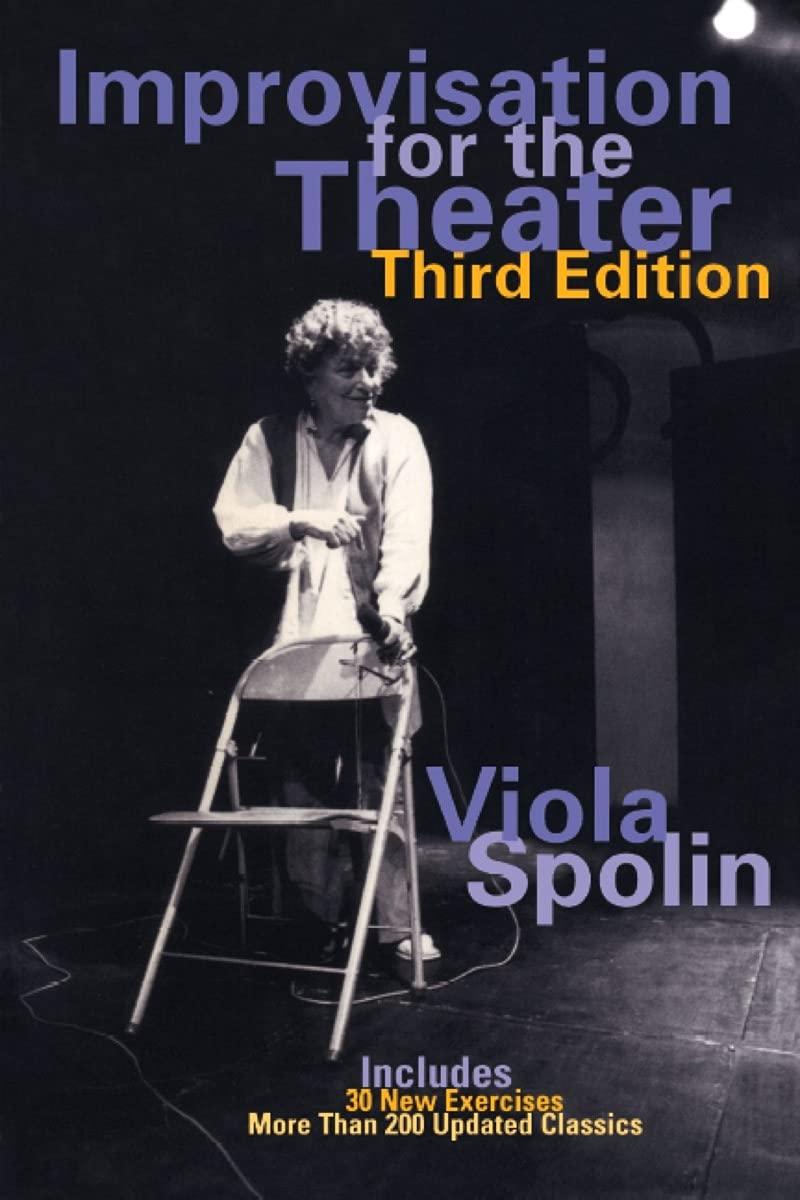
Improvisation for the Theater
A Handbook of Teaching and Directing Techniques
Viola Spolin
Theater Games for Rehearsal
Viola Spolin

Business Improv
Experiential Learning Exercises to Train Employees
Val Gee

Group Improvisation
The Manual of Ensemble Improv Games
Peter Campbell Gwinn; Charna Halpern

Directing Improv
Asaf Ronen
Related Exercises
Hands in Circles
Hands in Circles is an applied group exercise in which participants stand in a circle and connect hands palm-to-palm with their neighbors. One person initiates a tap on a neighbor's palm, and the tap travels around the circle from person to person. The exercise builds basic group rhythm, shared attention, and the experience of something collectively maintained that would collapse if any one person dropped focus.
Gesture Circle
Gesture Circle is a movement and listening exercise in which each player in a circle creates an abstract, personally meaningful gesture, teaches it to the player beside them, and receives a gesture from the other side. The exercise passes gestures around the circle so that each gesture travels from person to person, being received, held, and handed on. The exercise develops listening through the body, the capacity for genuine repetition rather than imitation, and a quality of full physical attention to another person's movement.
Object Circle
Object Circle is a warm-up exercise in which participants stand in a circle and pass physical or mimed objects to each other, transforming each object through imagination as it travels. One participant sends an object with a specific size, weight, and character; the next participant receives it, uses it briefly, then transforms it into something new before passing it on. The exercise develops physical specificity, collaborative imagination, and the habit of accepting and building on what a partner offers.
Flow Circle
Flow Circle is a movement and listening exercise related to Gesture Circle, in which each player takes up the movement from where the previous player's gesture ended and creates a new movement that flows from that ending point. Rather than simply repeating or exaggerating what was received, the player begins from the physical endpoint of the previous gesture and invents a new movement that starts there. The exercise develops listening through the body, continuity of physical offer, and the creative skill of transformation rather than repetition.
Sound and Motion
Sound and Motion is a circle exercise in which participants pass abstract sounds with accompanying movements around a circle or across the space, building spontaneity, physical expressiveness, and the willingness to take creative risks without planning or rehearsing.
Alphabet Circle
Alphabet Circle is a focus exercise in which players stand in a circle and take turns reciting letters of the alphabet, one per person. The pace increases until errors occur, revealing lapses in concentration. Variations add physical gestures, direction changes, or simultaneous counting to increase difficulty.
How to Reference This Page
The Improv Archive. (2026). Turning Circle. Retrieved September 28, 2026, from https://improvarchive.org/exercises/turning-circle
The Improv Archive. "Turning Circle." The Improv Archive, 2026. https://improvarchive.org/exercises/turning-circle.
The Improv Archive. "Turning Circle." The Improv Archive, 2026, https://improvarchive.org/exercises/turning-circle. Accessed September 28, 2026.
The Improv Archive is a systemically maintained repository. The archive itself acts as the corporate author.