Action Charades
Action Charades is a timed team guessing game in which one player mimes a short list of verbs while teammates try to identify all of them before time runs out. The actor can choose the order of the verbs, so the game is not just about mime skill. It also trains quick tactics, persistence, and team problem-solving under pressure.
Structure
Setup
- Prepare note cards in advance.
- Each card contains five verbs.
- Split the class into two teams.
- Choose a player to go first and hand that player one card.
Core Rule
- The actor silently performs the verbs from the card.
- The actor's team tries to guess all five verbs.
- The actor may perform the verbs in any order.
- The round is timed, usually for one or two minutes.
How the Round Moves
- One player from Team One takes a card and starts miming.
- Their teammates call out guesses.
- If a verb is too hard, the actor can move to another verb and return later.
- When the time ends or all five verbs are guessed, record the result and switch teams.
- After the agreed number of rounds, add up the total times to see which team won.
What Keeps It Clear
- The verbs should be simple enough to keep the round fast.
- The actor has to communicate action physically rather than fall back on vague gestures.
- The team has to listen, adjust, and recognize when a new tactic is needed.
Common Variations
- Change the number of verbs on each card.
- Shorten or lengthen the round time depending on the group's level.
How to Teach It
Objectives
- develop clearer physical communication through mime
- encourage players to discover their own tactics instead of waiting for instructions
- train persistence when the first idea does not solve the problem
How to Explain It
You will get a card with five verbs on it. Mime them for your team, and they must guess all five before the time runs out. You can do the verbs in any order, so work smart, not just hard.
Teaching Notes
- Do not tell players the order can change unless they ask. Levy uses that hidden freedom to force them to think for themselves.
- If a team gets stuck, coach the actor to try a different verb and come back later.
- Keep the card vocabulary playable. The game should be fast and furious, not clogged by obscure words.
- Use the timer to create urgency, but not so much pressure that players stop experimenting.
Common Pressure Points
- Players assume they must mime the verbs in the written order and get trapped on a hard one.
- The actor gives up on a difficult verb instead of changing tactics.
- The mime becomes too vague because the actor is rushing without committing physically.
- Teams stop collaborating and wait for one person to solve everything.
Notes That Appear Directly in Source Material
- Levy explicitly says the actor can choose any order for the five verbs, though students are not told this unless they ask.
- The discussion section asks what tactics could help and in what way the team must work as an ensemble.
- The purpose section links the exercise to persistence, changing tactics when something is not working, and thinking independently.
How to Perform It
One-Line Audience Intro
Our player has five actions on a card, and the team has to guess all of them before the clock runs out.
Playing Notes
- Keep the verbs simple so the round stays fast.
- Let the actor change order when one verb is stalling the team.
- The audience or opposing team should be able to track the time pressure clearly.
- The energy comes from speed and adjustment, not from making the mime impossible to read.
Wrap-Up Logic
- End the round when all five verbs are guessed or the time expires.
- Compare team times after the agreed number of rounds.
History
Levy documents Action Charades in 112 Acting Games as a timed team mime-and-guess exercise built around verb cards. The current source base confirms the published classroom version and its teaching rationale, but it does not identify an earlier inventor beyond Levy's documented use.
Worth Reading
See all books →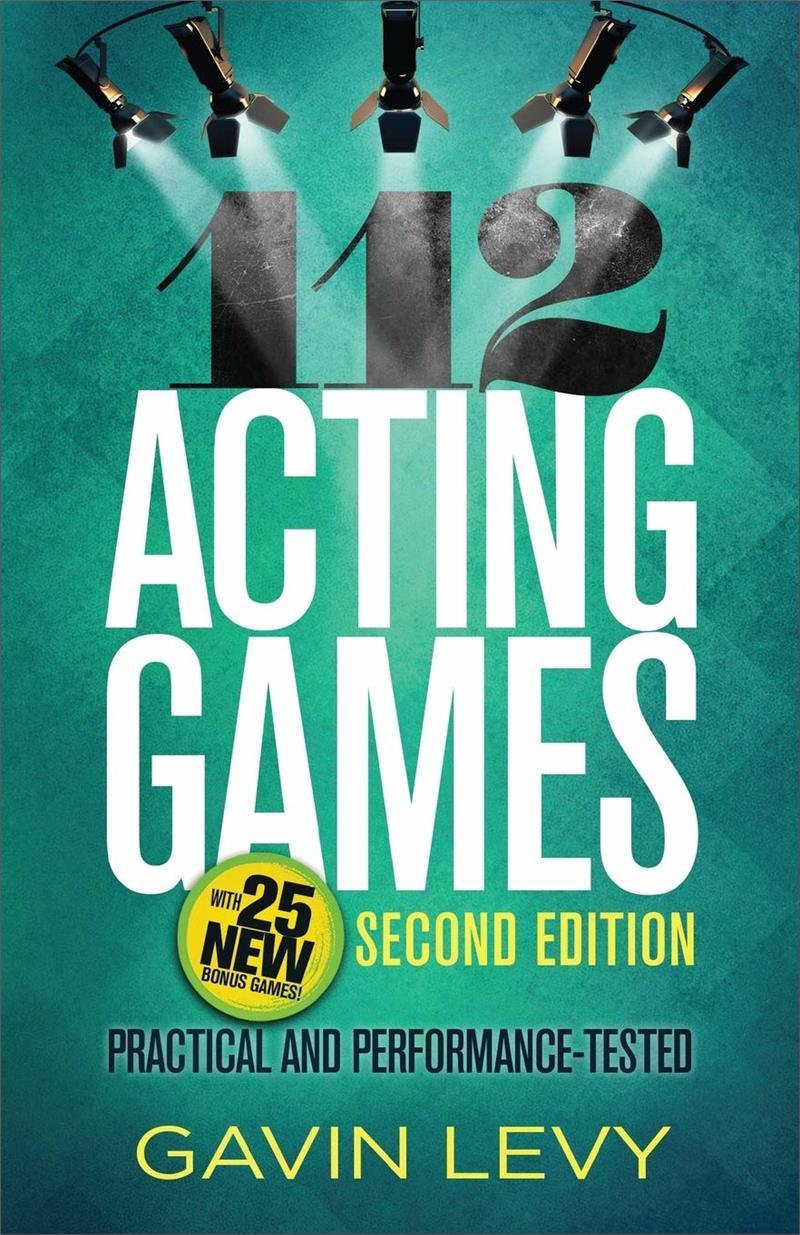
112 Acting Games
Gavin Levy
Theater Games for Rehearsal
Viola Spolin
Improvisation for the Theater
A Handbook of Teaching and Directing Techniques
Viola Spolin

Drama Games and Improvs
Games for the Classroom and Beyond
Justine Jones; Mary Ann Kelley

Group Improvisation
The Manual of Ensemble Improv Games
Peter Campbell Gwinn; Charna Halpern

Playing Along
37 Group Learning Activities Borrowed from Improvisational Theater
Izzy Gesell
Related Games
Arms
Arms is a short-form game in which one player stands behind another, extending their arms through the front player's sleeves to serve as their hands. The front player speaks and reacts while the hidden player's arms create unpredictable physical business. It is one of the most recognized and widely performed short-form games.
Cards
Cards is a short-form game in which performers draw playing cards that assign them secret emotions, character traits, or scene constraints they must incorporate into the scene. The random assignment prevents pre-planning and forces genuine in-the-moment adaptation. The game rewards the ability to make any given constraint appear natural.
Alphabet Game
Alphabet Game is a short-form scene game in which each line of dialogue must begin with the next successive letter of the alphabet. Players navigate a coherent scene while wrestling with difficult letters, making it both a verbal agility test and a shared comedic endurance challenge.
Presents
Presents is a short-form game and warm-up exercise in which players mime giving and receiving wrapped gifts. The recipient opens the imaginary package and enthusiastically identifies what is inside through physical reaction and commitment, while the giver must accept whatever the recipient names. The game trains object work, acceptance, and generous physical commitment to offers.
The Lineage
Explore the schools and structures that influenced or evolved from Action Charades.
112 Acting Games (Levy)
How to Reference This Page
The Improv Archive. (2026). Action Charades. Retrieved September 28, 2026, from https://improvarchive.org/games/action-charades
The Improv Archive. "Action Charades." The Improv Archive, 2026. https://improvarchive.org/games/action-charades.
The Improv Archive. "Action Charades." The Improv Archive, 2026, https://improvarchive.org/games/action-charades. Accessed September 28, 2026.
The Improv Archive is a systemically maintained repository. The archive itself acts as the corporate author.