Backwards Scene
Backwards Scene is a short-form game in which performers play a scene from its final moment to its first. Each exchange must logically precede what the audience has already seen, creating a reverse-engineered narrative that rewards careful physical and verbal continuity.
Structure
Setup
Two or more performers take the stage. The host gets a suggestion for a final moment: an argument, a celebration, a revelation.
Progression
Performers begin with the scene's ending already established. Each subsequent exchange must show what immediately preceded it: what was said or done just before the previous moment. Performers work backward through a causally coherent chain.
Performers do not speak backward. Words remain forward; only the narrative order reverses. Physical actions established in the opening (final) moment must be consistent with what led up to them.
A useful technique: after delivering a line, the performer can ask internally "what did I just say that for?" and let the preceding beat answer.
Ending
The scene ends when performers reach a natural starting point: a greeting, an arrival, a moment before anything had happened.
How to Teach It
How to Explain It
"You're at the end of the scene. Everything after this moment has already happened. Every move you make now shows what came just before what we already saw."
Common Notes
"Commit to large, specific physical actions at the start. You'll have to honour them as you move backward, and clear physicality gives you material to work with."
"Don't undo. Precede. Ask: what happened just before this, not what unravels it."
Common Pitfalls
Players often treat the game as "undoing" what happened, miming actions in literal reverse. The goal is causal storytelling in reverse order, not physical rewinding. Each beat is new information that explains the beat after it.
How to Perform It
Audience Intro
"These performers are going to play a scene backwards: starting at the end and working back to the beginning. They're not talking backwards: the story just runs in reverse."
Cast Size
Two to three performers.
Key Skills
Causal reasoning, physical continuity, scene logic, listening.
Wrap-Up Logic
End when the performers reach a genuine point of origin for the scene.
Worth Reading
See all books →
The Improv Handbook
The Ultimate Guide to Improvising in Comedy, Theatre, and Beyond
Tom Salinsky; Deborah Frances-White

Something from Nothing
The Technique of Improvisation
Richard Goteri

Improvising Now
A Practical Guide to Modern Improv
Rob Norman
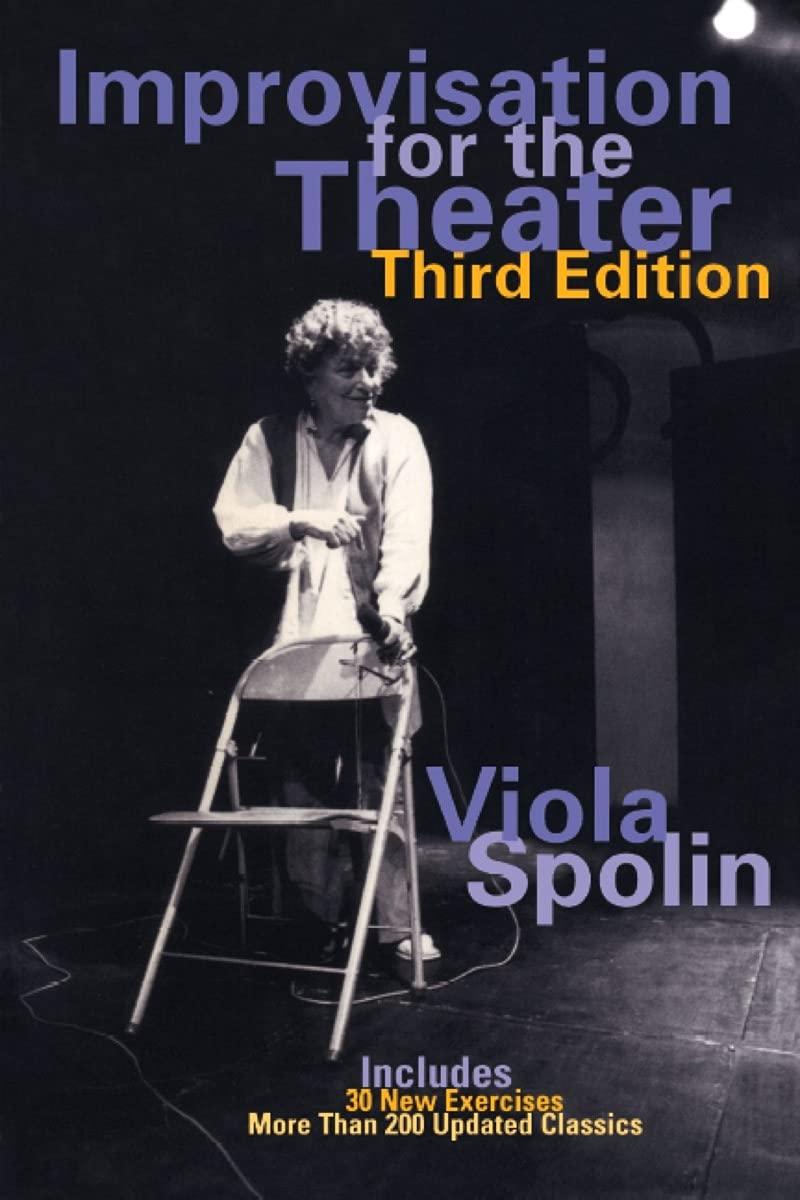
Improvisation for the Theater
A Handbook of Teaching and Directing Techniques
Viola Spolin

Theatrical Improvisation, Consciousness, and Cognition
Clayton D. Drinko
Impro for Storytellers
Keith Johnstone
Related Games
Backwards Interview
Backwards Interview is a short-form game in which a talk show interview is performed in reverse chronological order, beginning with the farewell and ending with the introduction. Players must construct logical narrative links that work backward while maintaining the illusion of a natural conversation. The game rewards sharp memory and structural thinking.
Rewind/fast-Forward
Rewind/Fast-Forward is a short-form game in which a host controls the speed and direction of a scene using imaginary playback buttons. "Fast-forward" accelerates the action into the future, "rewind" reverses it, and "play" resumes normal speed. The game demands strong physical commitment and the ability to maintain scene logic across temporal jumps.
Before or After
Before or After is a short-form game in which performers present a scene, then the audience calls out whether they want to see what happened "before" or "after" the events just depicted. The performers create a new scene that logically connects to the original, revealing backstory or consequences that recontextualize what the audience already witnessed. The game can cycle through multiple rounds, with the audience driving the story forward or backward in time. Before or After trains narrative construction, temporal awareness, and the ability to expand a story in either direction while maintaining internal consistency. The game rewards performers who plant details in early scenes that pay off when the timeline shifts.
Forward/reverse
Forward/Reverse is a short-form game in which a scene plays forward normally until the caller says "reverse," at which point performers rewind their actions and dialogue exactly. Another "forward" call resumes normal play. The game demands precise physical and verbal recall and rewards clear, reproducible choices.
Rewind
Rewind is a short-form game in which a host calls out during a scene, causing performers to physically and verbally reverse their actions back to an earlier moment, then replay forward with different choices. The game rewards strong physical memory, comedic timing at the point of replay, and the ability to generate distinct alternatives quickly when the scene resumes.
Last Line
Last Line is a scene game in which the audience provides a line of dialogue that must serve as the final words of the scene. The performers build a narrative that makes the predetermined ending feel inevitable and earned rather than forced. The game trains the ability to reverse-engineer a story toward a fixed conclusion, developing narrative instinct and the skill of planting details early that pay off at the end. The audience's awareness of the destination creates dramatic irony and anticipation throughout the scene.
How to Reference This Page
The Improv Archive. (2026). Backwards Scene. Retrieved September 28, 2026, from https://improvarchive.org/games/backwards-scene
The Improv Archive. "Backwards Scene." The Improv Archive, 2026. https://improvarchive.org/games/backwards-scene.
The Improv Archive. "Backwards Scene." The Improv Archive, 2026, https://improvarchive.org/games/backwards-scene. Accessed September 28, 2026.
The Improv Archive is a systemically maintained repository. The archive itself acts as the corporate author.