Blind Line Offers
Blind Line Offers is a scene exercise in which performers receive random written lines from slips of paper and must incorporate each one seamlessly into the scene as it unfolds. The unexpected text forces players to justify and connect disparate material in real time. The exercise trains adaptability and the skill of making any offer work.
Structure
Setup
Before the scene begins, collect 8-12 random lines of text on slips of paper. These can be sourced from anywhere: books, newspapers, overheard conversations, random sentences generated by the group. Each performer receives 3-4 slips, held face-down. They do not read them until the moment they use them in the scene.
Play
Two or more performers begin a scene normally. When a performer feels an impulse to use one of their lines, they flip over the next slip and speak whatever is written on it - incorporating it directly into the scene as if it is exactly what their character would say in that moment.
The challenge is to make the line work: to justify it, build on it, connect it to the scene. The performers who have not yet revealed their line continue normally until they use theirs.
Variation: One Line Per Performer
Each performer has exactly one line. They must choose the right moment to deploy it, integrating it seamlessly enough that it lands as natural scene dialogue.
Variation: Audience Lines
Audience members write the lines before the scene and select which performer receives their line. The unpredictability is higher; the lines are often more absurd.
How to Teach It
How to Explain It
"You have slips of paper with random lines on them. When you flip one over, you must say it in the scene right then - and make it work. Don't apologize for it. Don't explain it. Make it true."
Why It Matters
Blind Line Offers trains the most demanding form of yes-and: accepting a completely arbitrary offer and building on it with genuine commitment. Performers who have developed the ability to make any line work have developed the foundational improv skill of justifying any reality. The exercise also exposes the difference between accepting an offer and making it work - you can say the line without truly integrating it, and the scene will feel broken. True integration requires the performer to find the specific meaning of the line in this context, for this character, at this moment.
Common Coaching Notes
- The line is always the character speaking. Not an intrusion, not an accident. The character means every word.
- Justify immediately. If the line seems to break the scene's logic, the performer should act as if it makes perfect sense and build from there. The audience will follow.
- Watch for the moment of hesitation. Some performers pause visibly after reading the line - a tell that they're searching for justification. Coach: "Read and speak simultaneously. Trust your first instinct about what it means."
Debrief Questions
- Which line was hardest to make work? Why?
- When did the justification happen in your body - before speaking, as you spoke, or after?
- How did the experience of adapting to an unexpected line change your relationship to uncertainty in the scene?
How to Perform It
Audience Intro
"We're going to need a few random lines from you all - just say anything that comes to mind, I'll write it down." Collect lines as slips are passed out. Don't explain the game until the performers are in position.
"Our performers have slips of paper with random lines on them. At some point during the scene, each one will flip a slip over and say exactly what's written - and make it work. Let's see what happens."
Cast Size
Two to four performers. More than four makes the line-integration timing complex. Two performers with three lines each produces maximum density.
Staging
Standard scene staging. Performers hold their slips visibly (or tucked in a pocket). The flip-and-read moment should be visible to the audience - the act of looking at the slip and then committing to it is part of the game's visual storytelling.
Wrap Logic
The host wraps after all slips have been deployed and at least one clear narrative peak has been reached. A "reveal the lines" beat after the scene - showing the audience what the slips actually said - is a useful closing beat that lets the audience appreciate what the performers did with the material.
Worth Reading
See all books →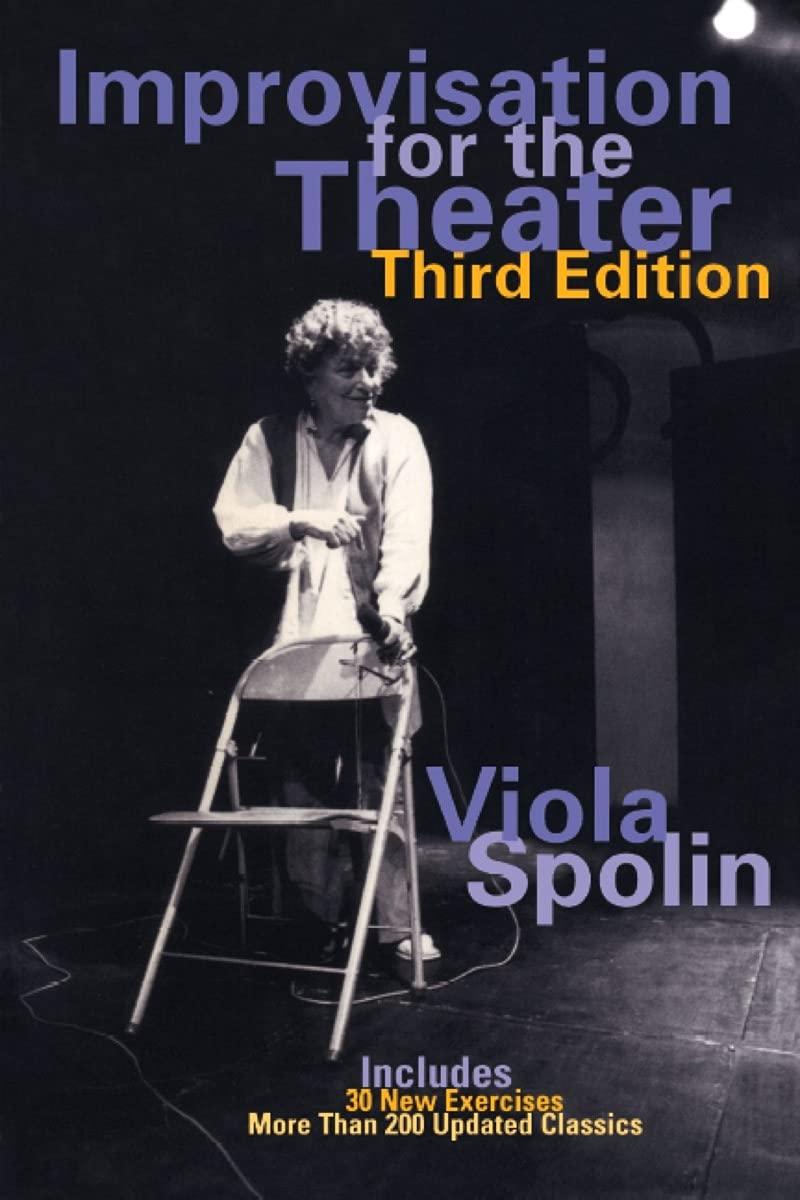
Improvisation for the Theater
A Handbook of Teaching and Directing Techniques
Viola Spolin

Improvisation for Actors and Writers
A Guidebook for Improv Lessons in Comedy
Bill Lynn

The Improv Handbook
The Ultimate Guide to Improvising in Comedy, Theatre, and Beyond
Tom Salinsky; Deborah Frances-White

Mask Improvisation for Actor Training and Performance
the compelling image
Sears A. Eldredge
The Improvisation Game
Discovering the Secrets of Spontaneous Performance
Chris Johnston

Business Improv
Experiential Learning Exercises to Train Employees
Val Gee
Related Games
Blindfolded Scene
Blindfolded Scene is a scene game in which performers play a scene while blindfolded, unable to see their partners, the audience, or the space. The restriction heightens all other senses and forces players to listen, communicate position verbally, and trust their partners completely. The game reveals how much performers normally rely on visual cues.
3 Lines
3 Lines is a scene game in which each performer enters with exactly three predetermined or improvised lines that they must use during the scene. Players weave their fixed lines into the emerging narrative, creating unexpected connections. The constraint generates surprising juxtapositions and trains adaptability.
3 Line Scenes
3 Line Scenes is a compact scene drill and short-form game in which two players improvise a scene using only three lines in total. One player starts, the other responds, and the first player answers back. The short limit keeps the round simple, fast, and playable for new improvisers who are getting used to starting scenes in front of a group or audience.
Blind Musical
Blind Musical is a short-form musical game in which performers create an improvised musical number without knowing the scene's premise, the musical style, or other key information. The constraints force pure instinctive creation and test the ensemble's ability to build coherent music from minimal shared context. The game rewards musical confidence and collaborative listening.
How to Reference This Page
The Improv Archive. (2026). Blind Line Offers. Retrieved September 28, 2026, from https://improvarchive.org/games/blind-line-offers
The Improv Archive. "Blind Line Offers." The Improv Archive, 2026. https://improvarchive.org/games/blind-line-offers.
The Improv Archive. "Blind Line Offers." The Improv Archive, 2026, https://improvarchive.org/games/blind-line-offers. Accessed September 28, 2026.
The Improv Archive is a systemically maintained repository. The archive itself acts as the corporate author.