Deaf Replay
Deaf Replay is a short-form game in which a scene is performed once with full dialogue and sound, then replayed by a different set of performers who watched the original without being able to hear it. The silent observers must reconstruct the scene's action, emotion, and physical activity based on what they could see but not hear, producing a version that may diverge from the original in comic and revealing ways.
Structure
Setup
The cast splits into two groups: a performing group and a watching group. The watching group observes the first scene from a position where they can see clearly but cannot hear: they face away from the performers, cover their ears, or move to a position where the sound is fully blocked.
The First Scene
The performing group plays a scene with full dialogue and sound. The content should be specific, physically active, and emotionally clear enough to be readable through action alone.
The Replay
The watching group now performs their version of the same scene -- reconstructed entirely from what they observed physically. They produce the dialogue they imagine was being spoken, the emotional logic they inferred from the physical action, and the character relationships they read from the staging. Their version will often differ from the original in small, surprising, or comedically revealing ways.
Reveal
After the replay, the host or the original performers can reveal key moments where the two versions diverged, giving the audience and performers insight into what physical action communicates and what it fails to communicate without sound.
How to Teach It
Objectives
Deaf Replay trains physical clarity, the ability to communicate through action rather than dialogue, and awareness of what information is carried by the body versus by words. It also trains observation and inference for the watching group.
How to Explain It
"First group: play a scene normally. Second group: cover your ears and watch only. Then you'll play back what you think happened, using your best guess at what was being said. We'll see what you got right and what you imagined."
Common Pitfalls
The first-scene performers sometimes produce a scene that is so dialogue-dependent that the watching group has almost nothing physical to reconstruct from. The exercise works best when the first scene is physically active and emotionally expressive through action, not only through speech. A scene with minimal physical specificity produces a replay that is too vague to be interesting.
How to Perform It
Audience Intro
"We're going to perform a scene. Half our group is going to watch without hearing it, then they'll play back what they think they saw. Let's see what gets lost in the silence."
Cast Size
Four to eight performers total, split evenly between performing and observing groups. Both groups must be large enough to populate a complete scene.
Staging
The observing group should be positioned to see the performing group's physical action clearly but with sound blocked.
Pacing
Keep the first scene to two to three minutes. Longer scenes produce more material for the replay but also more divergence that is harder to follow. A focused, physically clear original produces the most satisfying replay.
Wrap Logic
The game concludes after the replay. The reveal of key divergences between the two versions gives the game a satisfying ending structure.
Worth Reading
See all books →
Theater Games for Rehearsal
Viola Spolin
Theater Games for the Lone Actor
Viola Spolin
112 Acting Games
Gavin Levy
The Improvisation Game
Discovering the Secrets of Spontaneous Performance
Chris Johnston

Improvising Real Life
Personal Story in Playback Theatre
Jo Salas
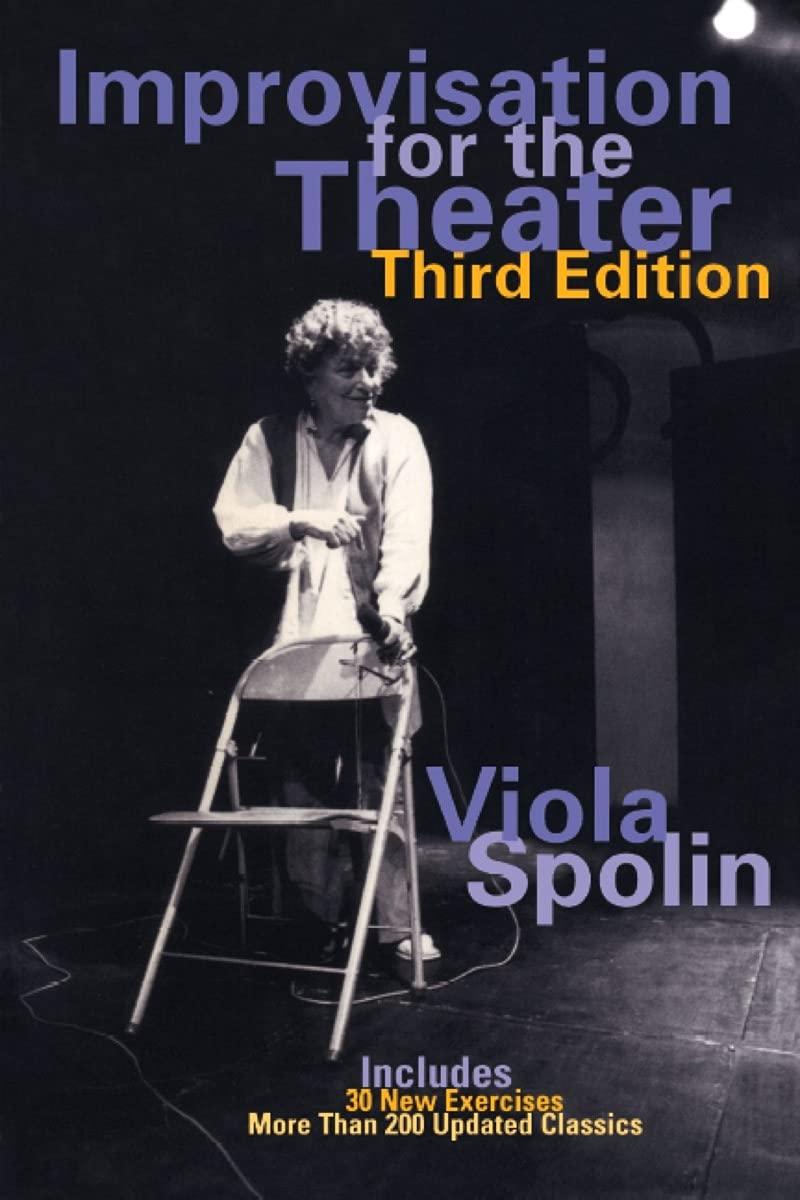
Improvisation for the Theater
A Handbook of Teaching and Directing Techniques
Viola Spolin
Related Games
Replay Gibberish
Replay Gibberish is a short-form game in which a scene is first performed in coherent dialogue, then replayed entirely in gibberish. The performers must convey the same story, emotions, and relationships using only invented sounds, facial expressions, and physicality, demonstrating how much communication exists beyond words.
Scene Replay
Scene Replay is a short-form game in which a scene is performed once, then replayed with a significant modification such as a new genre, emotional shift, or physical constraint. The replay preserves the original scene's structure and relationship while the imposed change reveals how a single variable transforms meaning, comedy, and dynamics.
Emotion Replay
Emotion Replay is a short-form game in which a brief scene is performed once, then replayed with different emotions assigned to each performer or to the scene as a whole. The same dialogue and physical action take on new meaning when filtered through joy, rage, terror, or grief, demonstrating how emotional state transforms the experience of any situation. The game makes the effect of emotion visible and concrete.
Mega Replay
Mega Replay is a short-form game in which a scene or series of scenes is replayed multiple times, each time in a dramatically different style, genre, or emotional register. The game demonstrates the ensemble's range and versatility by showing the same material transformed across radically different theatrical and comedic conventions -- from opera to thriller, from silent film to children's television -- rewarding specificity of style and the audience's recognition of each new frame.
Interpretation for the Deaf
Interpretation for the Deaf is a performance game in which one player delivers a speech, presentation, or scene narration while another provides increasingly expressive and divergent sign language interpretation. The interpreter's physical commentary develops a parallel narrative that may amplify, contradict, or heighten what the speaker is saying. The game rewards physical creativity, comic timing, and the ability to find performance opportunities in the gap between the spoken and the signed.
Style Replay
Style Replay is a short-form game in which a scene is performed once, then replayed in a series of audience-suggested styles, genres, or performance traditions. Each replay transforms the same basic content through a completely different theatrical or cinematic lens.
How to Reference This Page
The Improv Archive. (2026). Deaf Replay. Retrieved September 28, 2026, from https://improvarchive.org/games/deaf-replay
The Improv Archive. "Deaf Replay." The Improv Archive, 2026. https://improvarchive.org/games/deaf-replay.
The Improv Archive. "Deaf Replay." The Improv Archive, 2026, https://improvarchive.org/games/deaf-replay. Accessed September 28, 2026.
The Improv Archive is a systemically maintained repository. The archive itself acts as the corporate author.