Non Sequitor
Non Sequitur is a hybrid game and exercise in which performers deliberately break logical connections between lines of dialogue, forcing each new statement to have no apparent relationship to the one before it. The exercise trains performers to let go of the need to make sense, builds comfort with absurdity, and paradoxically reveals how audiences will construct meaning even from disconnected material.
Structure
Setup
Two or more performers stand ready. The facilitator explains the rule: each line of dialogue must be a complete non sequitur -- it cannot logically follow from the previous line. The performers are not building a scene in the traditional sense; they are practicing radical disconnection.
Progression
One performer makes an opening statement. The next performer responds with a line that has no logical, thematic, or associative connection to what was just said. The exchange continues, with each performer committing fully to their statement as if it is perfectly normal, regardless of what preceded it.
The exercise runs as a volley of disconnected statements. Performers must resist the pull to connect, explain, or justify. When a performer accidentally links to the previous line, the facilitator or group may call it out and reset.
In game format, an audience watches and laughs at the unexpected juxtapositions. In exercise format, the focus is on the performer's internal experience of releasing narrative control.
Conclusion
The exercise ends after a set number of exchanges or when the facilitator senses the group has found a comfortable rhythm of disconnection. A debrief follows to discuss what was difficult and what was liberating about releasing the need for logical sequence.
How to Teach It
Objectives
Non Sequitur trains performers to release the reflexive need to connect and justify every line. Many improvisers are so committed to building coherent narrative that they struggle when asked to be deliberately incoherent, which reveals how much of their creative bandwidth is consumed by sense-making.
How to Explain It
"Say something that has absolutely nothing to do with what the other person just said. Do not connect. Do not explain. Do not follow. Just say something new and commit to it completely."
Scaffolding
Beginners find it surprisingly difficult to avoid connections -- the brain automatically associates. Start by having performers prepare a list of unrelated sentences in advance, then deliver them in exchange. Once the group can do this mechanically, remove the preparation and have them generate non sequiturs in real time. Advanced groups can play the reverse: start with a non sequitur exercise and then transition into a connected scene, noticing how much richer their connections feel after practicing disconnection.
Common Pitfalls
The most common failure is accidental connection -- performers link through tone, topic, or word association without realizing it. The facilitator should flag these gently. A second pitfall is performers competing to be the most random or shocking; the exercise works best when each statement is delivered with sincere conviction, not as a comedy bit.
How to Perform It
Audience Intro
"Our performers are going to have a conversation, but nothing anyone says will have anything to do with what was just said. Watch what your brain does -- it will try to make connections anyway."
Cast Size
Two to four performers. Two is ideal for rapid-fire exchanges; more performers slow the rhythm but add variety.
Staging
Simple standing positions. Performers face each other or the audience. No props or set needed.
Wrap-Up Logic
End after two to three minutes or when the audience has experienced a satisfying run of absurd juxtapositions. The strongest endings come when a non sequitur accidentally sounds meaningful.
Worth Reading
See all books →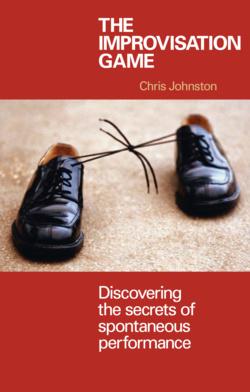
The Improvisation Game
Discovering the Secrets of Spontaneous Performance
Chris Johnston
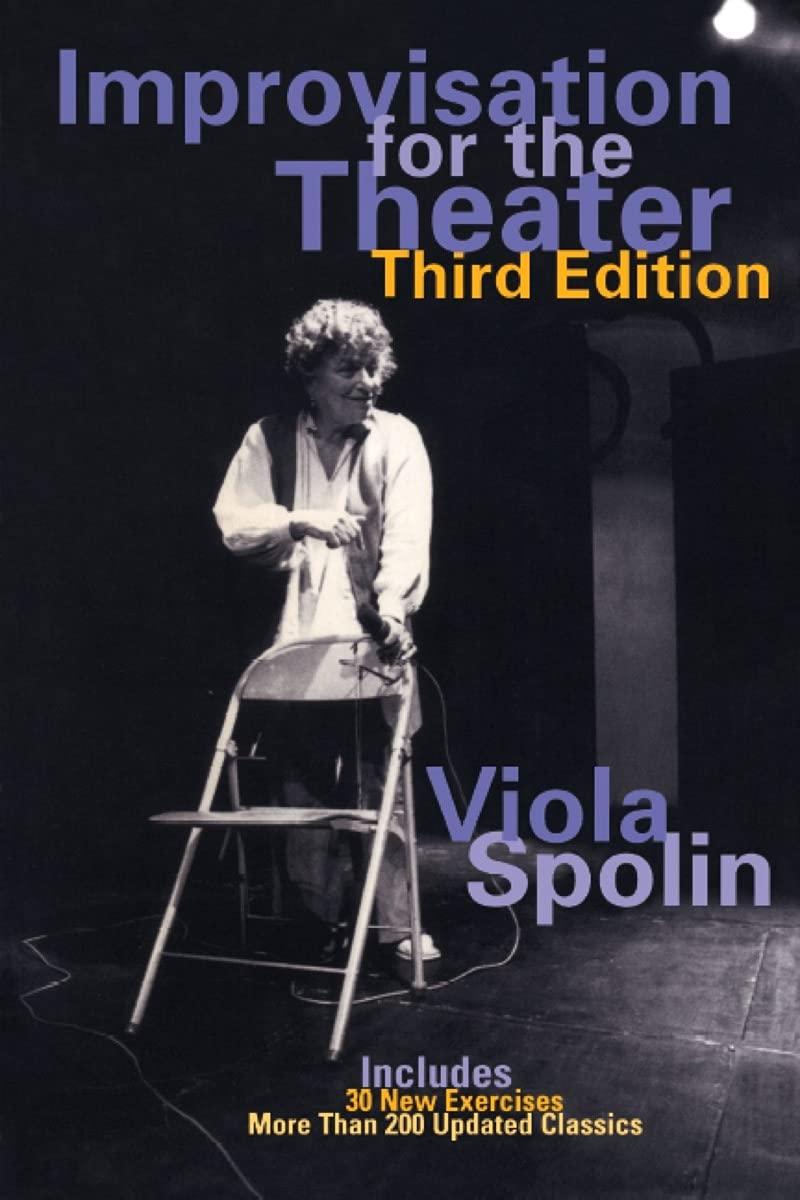
Improvisation for the Theater
A Handbook of Teaching and Directing Techniques
Viola Spolin

Something from Nothing
The Technique of Improvisation
Richard Goteri
Theater Games for Rehearsal
Viola Spolin

The Young Actor's Book of Improvisation
Dramatic Situations
Sandra Caruso; Susan Kosoff

Impro
Improvisation and the Theatre
Keith Johnstone
Related Games
How to Reference This Page
The Improv Archive. (2026). Non Sequitor. Retrieved September 28, 2026, from https://improvarchive.org/games/non-sequitor
The Improv Archive. "Non Sequitor." The Improv Archive, 2026. https://improvarchive.org/games/non-sequitor.
The Improv Archive. "Non Sequitor." The Improv Archive, 2026, https://improvarchive.org/games/non-sequitor. Accessed September 28, 2026.
The Improv Archive is a systemically maintained repository. The archive itself acts as the corporate author.