Listening
The practice of giving full attention to scene partners and responding to what is actually said and done rather than to a predetermined plan. In improv, listening extends beyond auditory attention to include awareness of physicality, emotion, spatial relationships, and the overall trajectory of a scene.
At the foundation of all improvisation lies the practice of giving full attention to scene partners and responding to what is actually said and done rather than to a predetermined plan. In improv, listening extends beyond auditory attention to include awareness of physicality, emotion, spatial relationships, and the overall trajectory of a scene. This expanded definition distinguishes theatrical listening from everyday hearing; it requires performers to track not only words but tone, body language, spatial choices, and the emotional undercurrent running through a moment.
The concept has roots in both acting tradition and the collaborative ethos that shaped modern improv. Early practitioners recognized that scenes fail most often not from a lack of cleverness but from a failure of attention. As Mick Napier, Viola Spolin, and other foundational teachers observed, the impulse to plan ahead or wait for a turn to speak produces disconnected, lifeless work. Genuine listening, by contrast, creates the conditions for authentic response, surprise, and discovery. The principle appears across virtually every school of improv thought, from Spolin's theater games to Keith Johnstone's status work to the long-form traditions of Chicago.
In teaching, listening is often the first skill introduced and the last to be mastered. Exercises frequently begin with pure sensory awareness. As one acting games text describes, students are asked to attend to the most immediate sounds around them, starting with their own breathing and the sound of their eyelids opening and closing, then gradually expanding their circle of attention outward. This progression from internal to external mirrors what performers must do in a scene: first quiet the internal chatter, then open fully to the ensemble. Introduction duos and other partner exercises build on this foundation, giving participants a chance to begin intensive listening activities that become a cornerstone for all subsequent work.
The practical demands of listening in performance are considerable. Improvisers must be concentrated, playing truthfully and honestly, playing off the actions and reactions of others while simultaneously tracking where a scene is and where it needs to go. This dual awareness, attending to the present moment while holding the larger shape of a piece, is what separates competent performers from exceptional ones. The skill becomes especially critical in long-form work, where narrative threads must be remembered, honored, and woven together across extended performances.
A common pitfall is confusing silence with listening. Performers sometimes believe they are listening simply because they are not talking, when in reality they are mentally rehearsing their next move. The phrase "Are you even listening to me?" captures this gap between physical presence and genuine attention. True listening in improv means that the next offer arises organically from what was just received, not from a queue of pre-planned ideas.
In applied improvisation contexts, listening takes on additional significance as a model for democratic collaboration. Business and organizational applications promote true listening and self-organization, where participants assume responsibility for their part in the communication whether it involves listening, responding, or talking. These improvisational cultures support emergent solutions by insisting that every voice in the room be genuinely heard, not merely tolerated.
Listening connects directly to several other core improv principles. It is the mechanism through which "Yes, And" operates; one cannot affirm and build on a partner's offer without first receiving it fully. It underpins commitment, since responding authentically requires knowing what one is responding to. And it is inseparable from ensemble play, where the group's collective awareness determines whether a piece coheres or fragments. Without listening, every other improv skill operates in isolation.
Further Reading
See all books →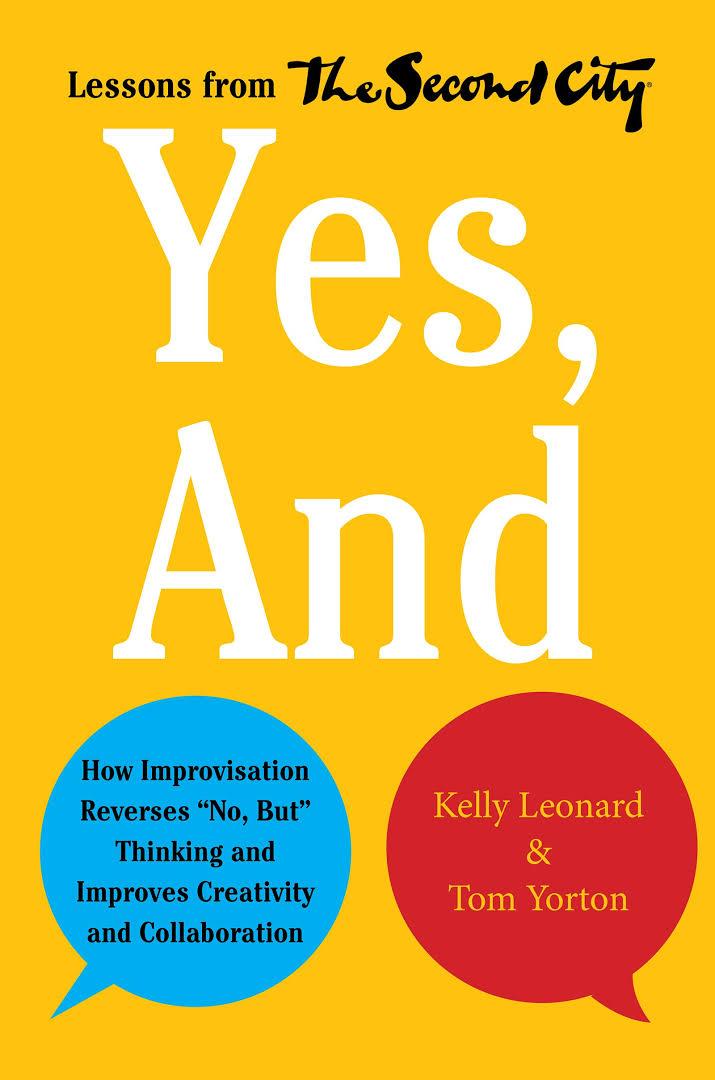
Yes, And
How Improvisation Reverses No, But Thinking and Improves Creativity and Collaboration
Kelly Leonard; Tom Yorton

Business Improv
Experiential Learning Exercises to Train Employees
Val Gee
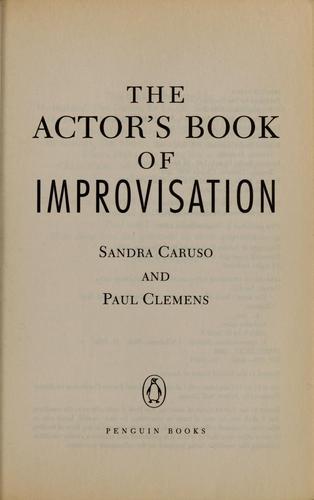
The Actor's Book of Improvisation
Sandra Caruso; Paul Clemens

Comedy and Distinction
The Cultural Currency of a 'Good' Sense of Humour
Sam Friedman

Legislative Theatre
Using Performance to Make Politics
Augusto Boal

Theatrical Improvisation
Short Form, Long Form, and Sketch-Based Improv
Jeanne Leep
How to Reference This Page
The Improv Archive. (2026). Listening. Retrieved September 28, 2026, from https://improvarchive.org/learn-improv/concepts/listening
The Improv Archive. "Listening." The Improv Archive, 2026. https://improvarchive.org/learn-improv/concepts/listening.
The Improv Archive. "Listening." The Improv Archive, 2026, https://improvarchive.org/learn-improv/concepts/listening. Accessed September 28, 2026.
The Improv Archive is a systemically maintained repository. The archive itself acts as the corporate author.