Point of View
A character's specific perspective, attitude, or worldview that colors how they interpret and respond to the events of a scene. A strong point of view gives a character consistent internal logic and creates natural conflict and comedy when it collides with other characters' perspectives.
Every character who steps onto an improv stage carries a lens through which they see the world. Point of view refers to a character's specific perspective, attitude, or worldview that colors how they interpret and respond to the events of a scene. A strong point of view gives a character consistent internal logic and creates natural conflict and comedy when it collides with other characters' perspectives. It is one of the most fundamental tools an improviser can develop, serving as both an anchor for individual performance and a engine for scene dynamics.
In practice, point of view operates as a filter. Two characters can witness the same event and arrive at completely different conclusions based on their internal frameworks. A character who believes the world is fundamentally dangerous will react to a knock at the door very differently from one who assumes every stranger is a potential friend. This divergence is where scenes find their energy. The collision of perspectives generates organic conflict without requiring improvisers to manufacture disagreement or resort to blocking. When each performer commits to a distinct point of view, the scene writes itself through the natural friction between worldviews.
Teaching point of view often begins with exercises that force performers to adopt and defend a specific stance. In applied improvisation settings, as described by Theresa Robbins Dudeck, facilitators ask participants to articulate a clear position on a topic and then engage with others who hold different views. This structure trains the muscle of committing to a perspective while remaining open to the scene's evolution. The key coaching note is that a point of view must be specific enough to dictate behavior. Vague attitudes produce vague scenes; a character who "doesn't like change" will generate less interesting work than one who believes that every new idea is a personal attack on tradition.
One common pitfall is what business improvisation practitioners describe as the "Me, Me, Me Syndrome," where a performer becomes so attached to their own point of view that they lose sight of their scene partners' perspectives. As noted in business improv pedagogy, people who filter everything through "How does this affect me?" tend not to see the bigger picture and take things personally. The antidote is learning to hold a strong point of view while simultaneously tracking and responding to other characters' perspectives. Point of view should make a character more present in the scene, not more isolated from it.
Another misunderstanding is confusing point of view with opinion. An opinion is a position on a single topic; a point of view is a pervasive orientation that affects everything a character encounters. The strongest improv characters do not simply agree or disagree with what happens; they process events through a consistent philosophical framework that the audience can learn to predict and delight in seeing confirmed or challenged.
Point of view connects closely to the concepts of character, commitment, and the game of the scene. It provides the raw material from which a scene's game often emerges, as the pattern of how a character's worldview distorts reality becomes the repeatable, heightenable element that drives comedy. Without a clear point of view, improvisers frequently default to neutral, reasonable behavior, which, while pleasant, rarely produces memorable scenes. The discipline of choosing and sustaining a specific lens is what separates functional scene work from compelling performance.
Further Reading
See all books →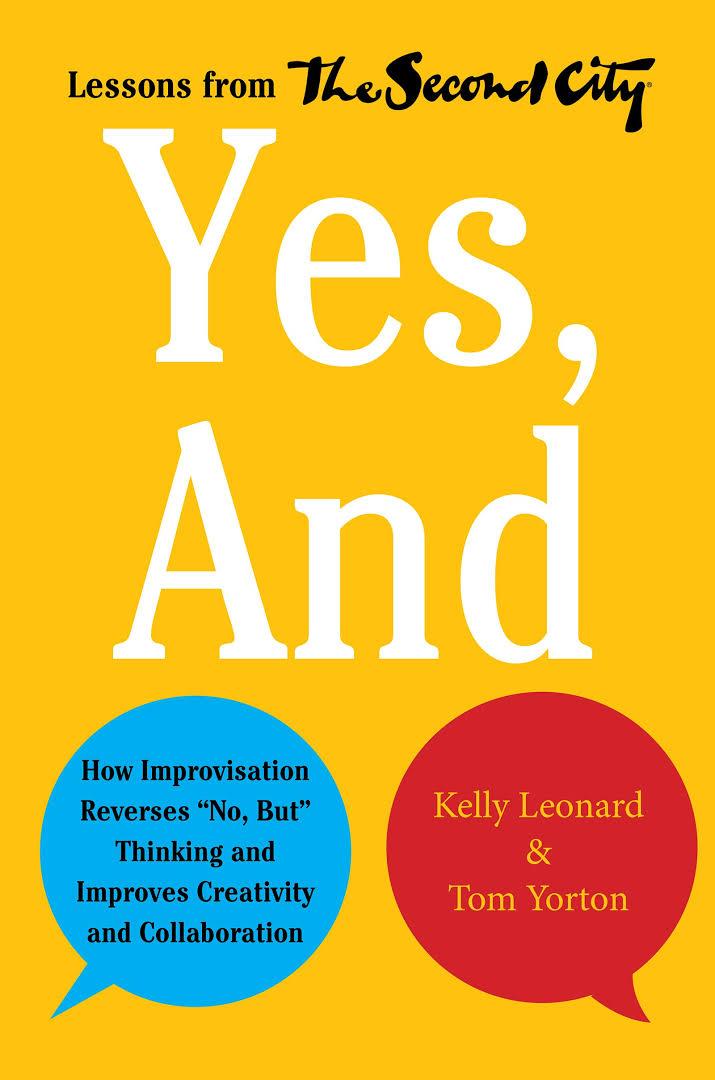
Yes, And
How Improvisation Reverses No, But Thinking and Improves Creativity and Collaboration
Kelly Leonard; Tom Yorton

Business Improv
Experiential Learning Exercises to Train Employees
Val Gee
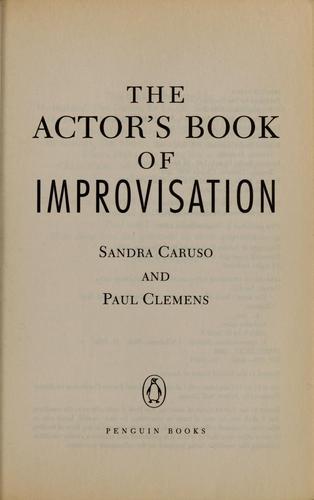
The Actor's Book of Improvisation
Sandra Caruso; Paul Clemens

Comedy and Distinction
The Cultural Currency of a 'Good' Sense of Humour
Sam Friedman

Legislative Theatre
Using Performance to Make Politics
Augusto Boal

Theatrical Improvisation
Short Form, Long Form, and Sketch-Based Improv
Jeanne Leep
How to Reference This Page
The Improv Archive. (2026). Point of View. Retrieved September 28, 2026, from https://improvarchive.org/learn-improv/concepts/point-of-view
The Improv Archive. "Point of View." The Improv Archive, 2026. https://improvarchive.org/learn-improv/concepts/point-of-view.
The Improv Archive. "Point of View." The Improv Archive, 2026, https://improvarchive.org/learn-improv/concepts/point-of-view. Accessed September 28, 2026.
The Improv Archive is a systemically maintained repository. The archive itself acts as the corporate author.