Mel Tonken is a Canadian veterinarian and theatre co-founder who, alongside Keith Johnstone, established the Loose Moose Theatre Company in Calgary in 1977. The company became the institutional home for Johnstone's improvisational formats including Theatresports, Maestro, Gorilla Theatre, and Life Game, and grew into an internationally recognized center for improvisational theatre training and performance. Tonken's partnership with Johnstone at a critical moment in the development of structured competitive improvisation placed him at the founding of one of the most influential improv institutions in Canada.
Tonken was working as a veterinarian in Calgary in the mid-1970s when Keith Johnstone, having relocated from England to teach at the University of Calgary, was searching for an off-campus home for his growing community of improvisers. Tonken and Johnstone co-founded the Loose Moose Theatre Company in 1977, establishing their initial base at the Pumphouse in Calgary, where they began producing weekly Sunday night performances.
The early productions drew on Johnstone's developing competitive improvisation formats, particularly Theatresports, which pitted two teams of improvisers against each other in scenes judged by an audience-selected panel. The early houses frequently sold out, and the company grew quickly, producing original performers and attracting students from across Alberta and beyond. Loose Moose became the institutional platform through which Johnstone's formats, Theatresports, Maestro, Gorilla Theatre, and Life Game, were developed, refined, and eventually disseminated internationally through workshops and touring programs. Original company member Dennis Cahill, who went on to serve as artistic director, recalled that the improvisation was what got people's attention because there was nothing quite like it anywhere.
From 1988 through 2019, Loose Moose hosted the International Improvisation Summer School, a two-week intensive that drew participants from around the world to Calgary each summer. The theatre also developed youth theatre programming alongside its performance and training work for adults. Loose Moose conducted workshops in the United States, Europe, and Japan, making it one of the most internationally active Canadian theatre organizations in the improv field. Tonken maintained his veterinary practice while serving as Loose Moose's co-founder and administrative anchor during the theater's establishment and growth years, combining dual professional commitments across disciplines that rarely coexist in the same individual's career. His veterinary practice, conducted in Calgary while Loose Moose developed as an international force in improvisational theater, represents the practical foundation that allowed the theater to develop without requiring Tonken to depend on it as his sole livelihood, giving the organization a financial stability that purely theater-dependent founders might not have been able to provide.
Loose Moose's development under Tonken and Johnstone's leadership extended beyond its Calgary home into international touring and educational exchange. The Theatre Machine, the professional touring ensemble based at Loose Moose, brought Johnstone's formats to venues across Europe, North America, and Japan, establishing Loose Moose as one of the internationally active Canadian theaters of the 1980s and 1990s and creating the practitioner networks that spread Theatresports globally. Tonken's organizational role in supporting these international activities gave him a position at the center of the global spread of Johnstone's improvisational formats.
The annual Improvisation Summer School at Loose Moose, which Tonken co-administered, brought practitioners from around the world to Calgary for two-week intensive training under Johnstone's direct instruction. The school created a practitioner community with shared formation in the Loose Moose tradition and gave participants a connection to Johnstone's methods that extended beyond the formats themselves to the pedagogical principles underlying them. The international alumni of the Improvisation Summer School carried those principles into improv institutions in dozens of countries.
Tonken's contribution to Loose Moose was primarily organizational and operational: maintaining the institutional infrastructure that allowed Johnstone's artistic practice to reach the scale and durability that the theater achieved over its decades of operation.
Historical Context
Tonken's co-founding of Loose Moose with Johnstone in 1977 provided the institutional structure that allowed Johnstone's improvisational ideas to develop beyond classroom exercises into a sustained public performance practice. Without a permanent company and venue, the competitive formats Johnstone was developing might have remained workshop material rather than becoming reproducible theatrical products. Tonken's role in establishing that institutional home gave Theatresports and its related formats a proving ground where they could be tested, iterated, and eventually packaged for international export.
The partnership between a working professional with community standing and an artist with innovative pedagogical ideas was a practical combination that sustained Loose Moose through its formative years. Johnstone later described Loose Moose and Alberta as the laboratory where his most important ideas about theatrical improvisation took shape, a description that implicitly acknowledges the organizational foundation Tonken helped build. The Pumphouse residency allowed the company to develop an audience before the company moved to larger and more permanent facilities.
Legacy
Loose Moose Theatre, which Tonken co-founded, is the birthplace of Theatresports, Maestro, Gorilla Theatre, and Life Game, four improvisational formats that have since spread to dozens of countries and thousands of practitioners. Theatresports in particular became one of the most widely licensed competitive improv formats in the world, used by ComedySportz affiliates and independent companies on every inhabited continent. The International Improvisation Summer School, hosted at Loose Moose from 1988 to 2019, trained hundreds of improvisers who carried Johnstone's methods back to their home communities. Tonken's founding partnership with Johnstone made all of this institutional development possible by providing the organizational and community foundation that Johnstone's artistic vision required to scale beyond the university workshop setting where it began.
Companies and Organizations
Associated venues and institutional relationships currently documented in the archive.
Recommended Reading
Books are ordered from the strongest direct connection outward to broader relevance.

Impro
Improvisation and the Theatre
Keith Johnstone

The Art of Chicago Improv
Short Cuts to Long-Form Improvisation
Rob Kozlowski
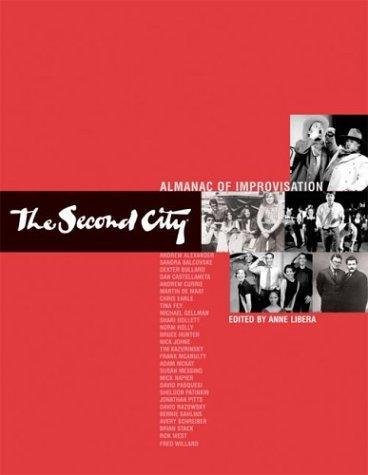
The Second City Almanac of Improvisation
Anne Libera

The Art of Making Sh!t Up
Using the Principles of Improv to Become an Unstoppable Powerhouse
Norm LaViolette; Bob Melley

The Comedy Improv Handbook
A Comprehensive Guide to University Improvisational Comedy
Matt Fotis; Siobhan O'Hara

Applied Improvisation
Leading, Collaborating, and Creating Beyond the Theatre
Theresa Robbins Dudeck; Caitlin McClure
References
How to Reference This Page
The Improv Archive. (2026). Mel Tonken. Retrieved September 29, 2026, from https://improvarchive.org/people/mel-tonken
The Improv Archive. "Mel Tonken." The Improv Archive, 2026. https://improvarchive.org/people/mel-tonken.
The Improv Archive. "Mel Tonken." The Improv Archive, 2026, https://improvarchive.org/people/mel-tonken. Accessed September 29, 2026.
The Improv Archive is a systemically maintained repository. The archive itself acts as the corporate author.