Stephen Book (born 1945) is an American acting teacher and author who studied directly with Viola Spolin at Sarah Lawrence College and went on to co-design and serve as executive director of the Spolin Theater Game Center in Hollywood during the 1970s. He has taught his system of Improvisation Technique at The Juilliard School, USC, Stanford, and his own Stephen Book Acting Workshop in Hollywood since 1985. His students include Academy Award winners William Hurt and Robin Williams, and his book Book on Acting: Improvisation Technique for the Professional Actor in Film, Theater, and Television (2002) is considered a definitive text on applying Spolin's methods to professional scripted performance.
Book studied directly under Viola Spolin as an undergraduate at Sarah Lawrence College, where he absorbed the Theater Games system that Spolin had developed over decades of work in settlement houses, community theatres, and professional companies. He also studied with Lee Strasberg in the Directors Unit at the Actors Studio, placing him at the intersection of the Spolin improvisational tradition and the American Method acting lineage. He received an MFA in directing from Stanford University.
Following his studies, Book became Spolin's closest institutional collaborator. Together they co-designed the Spolin Theater Game Center in Hollywood, where Book served as executive director and principal teacher throughout the 1970s. The Center was the primary institutional vehicle for disseminating Spolin's methodology on the West Coast, and Book's role in building and running it gave him an intimate understanding of the Theater Games system that went beyond student-teacher learning.
In 1985 Book opened the Stephen Book Acting Workshop in Hollywood, where he has taught continuously for nearly four decades. His system, which he calls Improvisation Technique, applies Spolin-derived exercises to the specific demands of professional scripted performance in film, television, and theatre. The method addresses the central challenge facing working actors: maintaining a spontaneous improvisational state while delivering memorized lines under the time constraints and technical demands of professional production.
His academic teaching career has included faculty positions at The Juilliard School and the University of Southern California, along with guest teaching at Stanford University, Brown University, UCLA, the Bread Loaf School of English at Middlebury College, and the Esalen Institute. Internationally, he has taught at GITIS (the Russian Institute of Theatre Arts) in Moscow and the Globe Shakespeare Center at Shakespeare's Globe in London. He directed a production of Antigone at the Theater of Dionysus in Athens.
Book's students include Academy Award winners William Hurt, Rita Moreno, and Robin Williams, along with Val Kilmer, Maura Tierney, Sanaa Lathan, Carla Gugino, David Boreanaz, Kurtwood Smith, Malcolm-Jamal Warner, and comedians George Carlin and Christopher Titus. He served as creative consultant on the Oscar-winning film What Dreams May Come (1998). He has directed productions Off-Broadway and at regional and university theatres.
He has published three books through Silman-James Press: Book on Acting: Improvisation Technique for the Professional Actor in Film, Theater, and Television (2002), a 630-page text presenting his adaptation of Spolin's methods for professional actors; The Actor Takes a Meeting: How to Interview Successfully with Agents, Managers, Producers, and Casting Directors (2006); and Secret Magic Stuff for Actors: Solutions for Almost Every Situation, a reference guide offering practical technique solutions for common performance challenges.
Historical Context
Book occupies a distinctive position in the Spolin lineage. Where Paul Sills, Spolin's son, took the Theater Games into ensemble theatre and helped launch The Second City, and where the Chicago improv community adapted Spolin's work into the long-form tradition through Del Close and others, Book pursued a different branch entirely. His application of Spolin's methods was directed toward individual actor technique for the professional film and television industry, a path that diverged from both the ensemble comedy tradition and the educational theatre tradition.
His role as co-designer and executive director of the Spolin Theater Game Center in the 1970s made him the most prominent figure to have worked directly as Spolin's institutional partner rather than simply as her student. The Center's existence during that decade represented the only dedicated institution in the country focused exclusively on teaching Spolin's system, and Book's stewardship ensured that the methodology was transmitted with precision and depth.
His dual training under both Spolin and Strasberg at the Actors Studio gave him a unique pedagogical perspective. By integrating the spontaneity and play-based discovery of Spolin's Theater Games with the psychological rigor of the Method tradition, Book developed an approach that could speak to actors trained in either lineage.
Legacy
Book's primary legacy is the preservation and professional adaptation of Viola Spolin's Theater Games system. His book Book on Acting (2002) is the most comprehensive text applying Spolin's methods specifically to the demands of professional scripted performance. Where Spolin's own Improvisation for the Theater (1963) established the foundational vocabulary and exercises, Book's text demonstrated how those exercises could be adapted to address the specific challenges of working in film, television, and professional theatre, from audition preparation to on-set performance under minimal rehearsal conditions.
The roster of his students, spanning from Academy Award winners to stand-up comedians to working character actors, demonstrates the breadth of application his approach has achieved. His work with William Hurt, Robin Williams, and George Carlin, among many others, placed Spolin-derived techniques at the foundation of major screen and stage careers that audiences would not typically associate with improvisation training.
Book's teaching at The Juilliard School and USC ensured that Spolin's methods reached students in elite conservatory and university programs where other pedagogical traditions, particularly the Strasberg Method and Meisner Technique, had long dominated. By bringing Spolin's approach into those institutional contexts, Book helped establish improvisational technique as a legitimate component of mainstream professional actor training rather than a specialty confined to comedy performance.
Recommended Reading
Books are ordered from the strongest direct connection outward to broader relevance.

Book on Acting
Improvisation Technique for the Professional Actor in Film, Theater & Television
Stephen Book

Spontaneous Performance
Acting Through Improv
Marsh Cassady
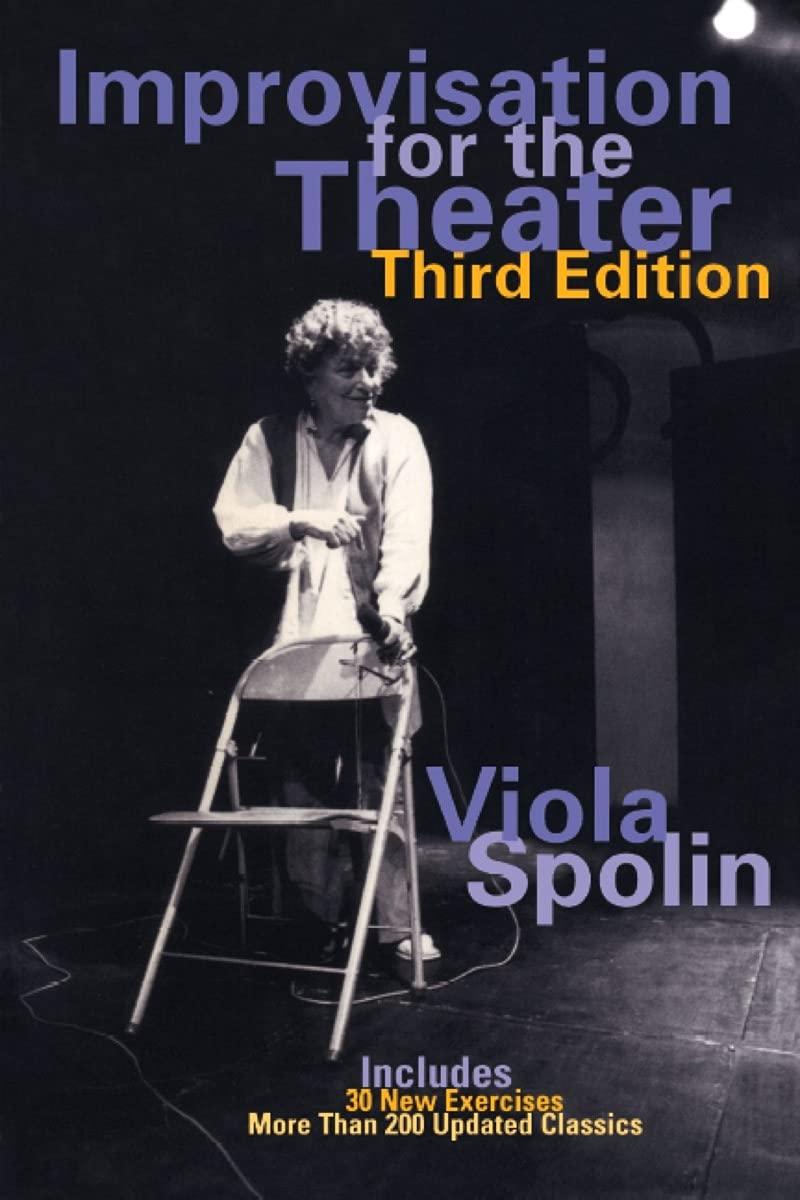
Improvisation for the Theater
A Handbook of Teaching and Directing Techniques
Viola Spolin
Theater Games for Rehearsal
Viola Spolin
The Actor's Book of Improvisation
Sandra Caruso; Paul Clemens
Theater Games for the Classroom
Viola Spolin
References
In the Archive
How to Reference This Page
The Improv Archive. (2026). Stephen Book. Retrieved September 29, 2026, from https://improvarchive.org/people/stephen-book
The Improv Archive. "Stephen Book." The Improv Archive, 2026. https://improvarchive.org/people/stephen-book.
The Improv Archive. "Stephen Book." The Improv Archive, 2026, https://improvarchive.org/people/stephen-book. Accessed September 29, 2026.
The Improv Archive is a systemically maintained repository. The archive itself acts as the corporate author.