I Know is a scene-building exercise in which performers respond to every offer with the two-word affirmation that names the game, followed by an addition that expands the shared reality. The response functions as an amplified form of yes-and: it validates the partner's offer, implies pre-existing shared knowledge, and propels the scene forward through rapid mutual agreement. The exercise prevents denial and forces each player to build on their partner's contributions without hesitation, creating scenes that accumulate detail and emotional weight at speed.
Structure
Setup
Two performers face each other. One player makes an opening statement that establishes a piece of reality: "The basement is flooding."
Progression
The second player responds with the title phrase and adds new information that builds on the offer: "...the water has already reached the third step."
The first player responds with the same affirming phrase and adds again: "...and the photo albums are still down there." The exchange continues, with each player accepting everything that has been established and adding a new layer.
The scene builds rapidly because nothing is questioned, denied, or negotiated. Every offer is treated as established fact. The accumulation of accepted details creates a rich, specific world in a short time.
The exercise can remain as a pure alternating volley or evolve into a full scene in which the structured pattern relaxes into natural dialogue while the agreement habit persists. The facilitator signals the transition from structured exercise to open scene.
Variations
Group format: three or more performers take turns adding to a shared reality. Emotional escalation: each response must be delivered with increasing intensity. Recontextualization: an advanced version in which the affirming response is followed by information that reframes the previous offer without denying it.
Conclusion
The facilitator ends the round after the agreed-upon world has reached sufficient complexity, or after the performers have transitioned naturally into open scene work.
How to Teach It
Objectives
The exercise targets agreement, offer acceptance, and information-building. The structured phrase makes denial unavoidable: the performer must accept and add. Players who struggle with denial in open scene work find the constraint clarifying because it removes the option to block, refuse, or redirect.
How to Explain It
"We're going to do an exercise called I Know. Two people face each other. One of you makes a simple statement that establishes something about the world you're in. The other person responds with 'I know' and then immediately adds new information that builds on what was just said. Not a question, not a correction. Just: I know, and here's more. Then the first person responds the same way. Keep going. Let's see how much world you can build in thirty seconds."
Scaffolding
With beginners, limit the opening round to pure alternating exchanges. Keep the constraint tight. Once the group understands the agreement habit, introduce the transition to open scene: allow the structured phrase to drop naturally when both performers feel ready.
With experienced players, introduce the recontextualization variation: the "I Know" response is followed by information that reframes the previous offer without contradicting it. This version trains performers to find the more interesting interpretation of every offer.
Common Notes
Coach performers to make additions with stakes. Facts that raise the emotional temperature or complicate the situation build the scene faster than neutral details.
The exercise reveals the efficiency of agreement. Two performers running an exchange for sixty seconds generate more established scene detail than most three-minute scenes achieve through natural dialogue. Use that observation explicitly in the debrief.
Watch for performers who qualify their additions: "Well, I think the basement..." Any hedge weakens the agreement habit the exercise is building. Coach for immediate, unconditional acceptance.
Common Pitfalls
The most common drift is additions that are too small or too neutral. Coach for information that raises stakes or introduces consequence.
When performers transition from structured exercise to open scene, the agreement energy often drops. The exercise's value extends beyond the constraint. Coach performers to notice when their natural scene work loses the momentum the exercise creates, and to reconnect to the habit of immediate acceptance.
Worth Reading
See all books →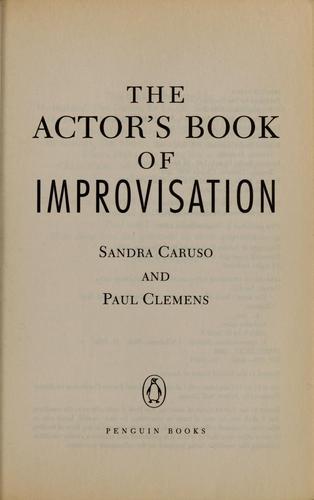
The Actor's Book of Improvisation
Sandra Caruso; Paul Clemens

The Art of Chicago Improv
Short Cuts to Long-Form Improvisation
Rob Kozlowski
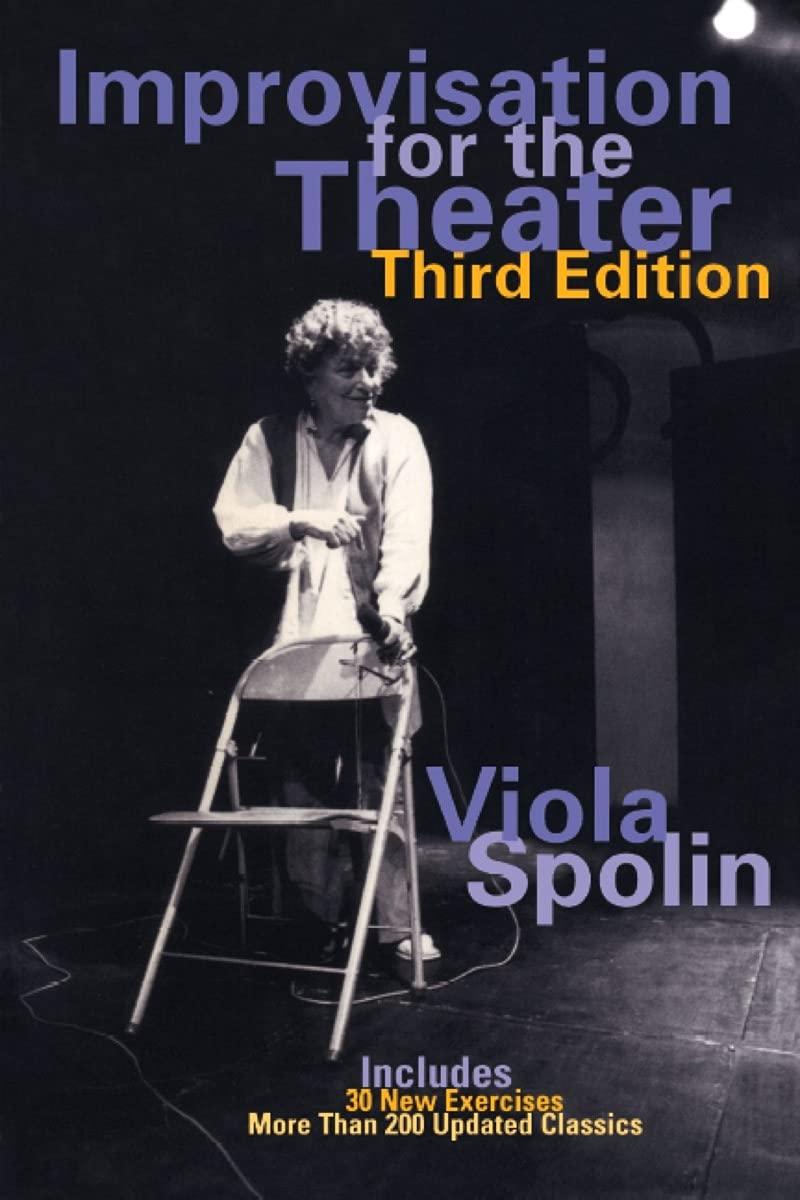
Improvisation for the Theater
A Handbook of Teaching and Directing Techniques
Viola Spolin

Mask Improvisation for Actor Training and Performance
the compelling image
Sears A. Eldredge

Acting Through Improv
Improv Through Theatresports
Lynda Belt; Rebecca Stockley

When I Say This, Do You Mean That?
Enhancing Communication
Cherie Kerr; Julia Sweeney
Related Exercises
Agreement Scenes
Agreement Scenes is an exercise in which performers practice fully agreeing with every offer their scene partner makes. By removing all conflict and negation, the exercise reveals how scenes can build through mutual enthusiasm and escalating shared reality. It reinforces the "yes, and" principle at its most fundamental level.
Yes And
Yes And is the foundational improv exercise and philosophical principle in which performers practice accepting a partner's offer (the "yes") and adding new information that builds on it (the "and"). One player makes a statement; the partner responds by first affirming the reality of that statement and then contributing something new. The exercise trains the most essential skill in improvisation and has become the defining principle of the entire art form.
Fuck Yeah!
Fuck Yeah! is an affirmation exercise in which players celebrate each other's offers, ideas, and choices with immediate, enthusiastic, profanity-optional approval. When a scene partner makes an offer, the group or the other performer responds with full-body, vocally committed affirmation rather than analysis or evaluation. The exercise trains the Yes-And reflex at its most visceral and develops comfort with unreserved enthusiasm as a collaborative default.
Lets Not
Let's Not is a scene-work exercise in which performers practice recognizing and resisting the impulsive move -- the immediate next step that seems obvious after an offer is made -- and instead exploring what already exists in the scene before building further. The exercise counters the improv tendency to pile offer onto offer and trains performers to dwell productively in established scene reality.
Non Sequitor
Non Sequitur is a hybrid game and exercise in which performers deliberately break logical connections between lines of dialogue, forcing each new statement to have no apparent relationship to the one before it. The exercise trains performers to let go of the need to make sense, builds comfort with absurdity, and paradoxically reveals how audiences will construct meaning even from disconnected material.
Location, Relationship, Escalate, End
Location, Relationship, Escalate, End is a scene construction exercise in which performers build a scene through four discrete, progressive stages: first establishing a specific physical location, then establishing the specific relationship between the characters, then escalating the scene through increasing stakes or emotional intensity, and finally bringing it to a definitive end. The exercise provides a structured scaffold for scene construction and trains performers to execute each element with commitment and specificity before moving to the next.
How to Reference This Page
The Improv Archive. (2026). I Know. Retrieved September 28, 2026, from https://improvarchive.org/exercises/i-know
The Improv Archive. "I Know." The Improv Archive, 2026. https://improvarchive.org/exercises/i-know.
The Improv Archive. "I Know." The Improv Archive, 2026, https://improvarchive.org/exercises/i-know. Accessed September 28, 2026.
The Improv Archive is a systemically maintained repository. The archive itself acts as the corporate author.