Final Freeze
Final Freeze is an exercise in which players improvise a scene that must end in a specific physical tableau or frozen image called by the facilitator or agreed upon in advance. The scene must arrive at the designated freeze organically through the scene's own logic rather than forcing its way there artificially. The exercise develops narrative construction skills and the ability to engineer a predetermined ending from a completely open beginning.
Structure
Setup
The facilitator establishes the required final image before the scene begins: all players in a circle with arms raised, two players facing away from each other, one player on the floor with others reaching toward them. The image can be called as a physical description, a photograph title, or a named relationship configuration.
Progression
Two to four players begin an unscripted scene from an audience suggestion. They must arrive at the specified physical image by the end of the scene without breaking the scene's internal logic to do so. The ending cannot be imposed abruptly -- it must be earned.
As the scene develops, players make choices that move them closer to the required physical configuration while maintaining the integrity of the scene. The challenge is double: tell a real scene and arrive at a specific physical image.
Conclusion
The scene ends when the required image is achieved and held. The facilitator acknowledges the final freeze and invites brief observation of how the image was reached.
How to Teach It
Objectives
Final Freeze develops narrative construction, spatial awareness, and the ability to hold a destination in mind while remaining present in the scene. It trains the forward-looking awareness that experienced performers use to give scenes shape without forcing them.
How to Explain It
"Your scene has a specific ending -- a physical picture you're working toward. You don't have to get there fast, but you do have to get there. And the scene has to make it make sense."
Scaffolding
Begin with simple, two-player images before requiring complex multi-person configurations. Once the group can reliably reach simple images, introduce more demanding final states that require greater spatial engineering within the scene.
Common Pitfalls
Players sometimes arrive at the final image by suddenly changing the scene's direction without narrative justification -- breaking the natural flow to hit the shape. The coaching note is that the final image should feel inevitable in retrospect: the scene should produce it, not interrupt itself to achieve it.
Worth Reading
See all books →
Theater Games for Rehearsal
Viola Spolin
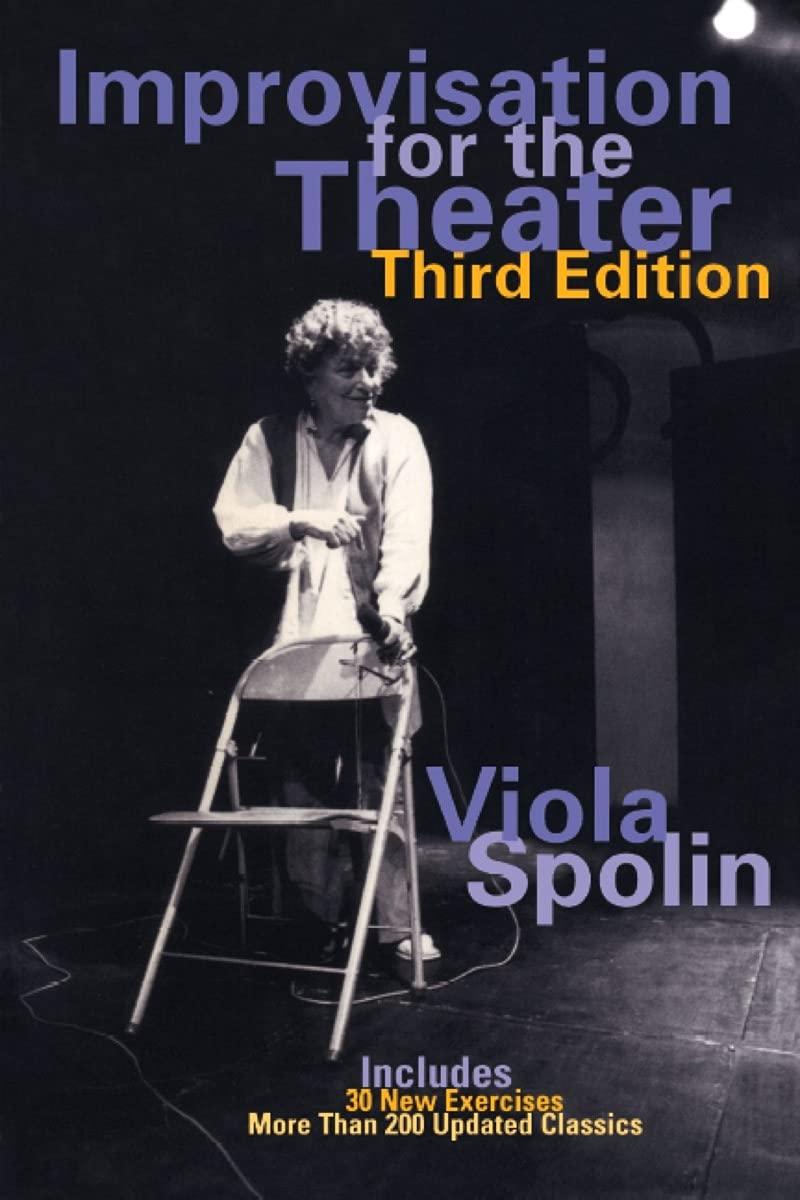
Improvisation for the Theater
A Handbook of Teaching and Directing Techniques
Viola Spolin
The Improvisation Game
Discovering the Secrets of Spontaneous Performance
Chris Johnston

Improvising Now
A Practical Guide to Modern Improv
Rob Norman

The 5 Elements of Improv
How to Take Your Improv to the Next Level
Andrew M. Spragge; Karen L. Eichler
Theater Games for the Lone Actor
Viola Spolin
Related Exercises
Last Letter Scene
Last Letter Scene is a hybrid game and exercise in which each line of dialogue must begin with the last letter of the previous line. The constraint forces performers to listen with acute precision -- not to the general content of what is said but to the exact final sound of each utterance -- while maintaining scene coherence, character, and forward momentum simultaneously.
Freeze Tag Round Two
Freeze Tag Round Two extends Round One by requiring the entering player to justify their physical choice with one short sentence or action immediately after entering. Rather than simply completing a frozen picture silently, the entering player establishes a brief scene -- naming the relationship, the situation, or the location -- before both players are released. The addition of verbal justification trains the integration of physical and narrative scene-building.
Freeze Tag Round One
Freeze Tag Round One is an applied improv exercise in which one person strikes a physical pose in the center of a circle and freezes. The next person enters and completes the picture -- adding themselves physically to create a scene with the frozen player. The exercise develops spatial reading, physical commitment, and the ability to find a scene within a tableau without verbal negotiation.
Group Freeze
Group Freeze is a variation of Freeze Tag in which the entire ensemble participates simultaneously rather than tagging in one at a time. When a freeze is called, all performers stop in position, and any player can initiate the next scene from any frozen body in the tableau. The group format creates a faster pace, a wider variety of stage pictures, and greater collective responsibility for the game's momentum. Every performer is always on stage and always available to initiate.
Montage Ending
Montage Ending is a rehearsal technique and scene-work exercise in which performers practice bringing a montage structure to a deliberate, coordinated conclusion -- finding the final image, moment, or group beat that closes the set of scenes as a unified whole rather than allowing the montage to simply stop when no one has anything left to offer. The exercise trains the ensemble's capacity to sense when a montage is complete and to create the shared ending actively rather than passively.
How to Reference This Page
The Improv Archive. (2026). Final Freeze. Retrieved September 28, 2026, from https://improvarchive.org/exercises/final-freeze
The Improv Archive. "Final Freeze." The Improv Archive, 2026. https://improvarchive.org/exercises/final-freeze.
The Improv Archive. "Final Freeze." The Improv Archive, 2026, https://improvarchive.org/exercises/final-freeze. Accessed September 28, 2026.
The Improv Archive is a systemically maintained repository. The archive itself acts as the corporate author.