Gibberish
Gibberish is a foundational improv exercise in which performers communicate using invented nonsense language while relying on vocal tone, facial expression, gesture, and physical action to convey meaning. The exercise demonstrates that communication transcends words and that audiences read emotional truth through nonverbal channels. Gibberish builds confidence in physical and vocal expression, frees performers from dependence on clever dialogue, and reveals how much information the body communicates before language enters the picture. It is one of the most widely used exercises across all improv traditions and appears in the training curricula of Viola Spolin, Keith Johnstone, and nearly every major improv school.
Structure
Two or more performers begin a scene using only gibberish: invented syllables and sounds that carry no semantic meaning. The performers communicate their characters, relationships, and situation entirely through vocal tone, volume, rhythm, facial expression, and physical gesture.
The facilitator assigns a simple scenario (ordering at a restaurant, meeting a neighbor, negotiating a business deal) to provide context. The performers play the scene with full emotional commitment, treating the gibberish as their native language.
Variations increase complexity. Gibberish Translation pairs a gibberish speaker with a translator who interprets the nonsense into English, creating a comedic gap between what is "said" and what is "translated." Gibberish Switch has performers alternate between gibberish and English on a signal from the facilitator, revealing how much more information the gibberish version communicates physically. Gibberish Expert has a performer deliver a lecture in gibberish while scene partners treat the content as profound.
Advanced versions use gibberish in full scenes without translation, challenging performers to sustain narrative, build relationships, and reach emotional peaks using only nonsense syllables. The audience follows the story through physical behavior and emotional truth rather than plot information.
How to Teach It
How to Explain It
"From this moment, you may not speak English. Everything you need to communicate, communicate in gibberish. The words are nonsense. The meaning is real. Make yourself understood."
Gibberish is one of the most effective exercises for breaking performers' dependence on dialogue. Students who rely on verbal wit or clever writing discover that their strongest communication happens through their bodies and voices. The exercise rebalances the performer's toolkit.
Begin with paired exercises before moving to full scenes. Have two performers hold a gibberish conversation about a specific topic (directions to the store, an argument about housework) and ask the observing group to identify the topic. The accuracy of the group's guesses demonstrates how much nonverbal communication conveys.
The most common failure is performers abandoning emotional commitment when speaking gibberish. Without real words to anchor them, some performers become silly or disengaged. Coach for the same emotional investment they would bring to a scene in English. The gibberish is the language; the emotion is real.
Gibberish connects to Spolin's foundational principle that communication is a full-body activity. The exercise appears throughout her curriculum as a tool for developing what she calls "the intuitive," the performer's ability to communicate beyond the rational, verbal mind.
How to Perform It
The gibberish must sound like a real language. Performers who repeat the same syllables or speak in a flat monotone undermine the exercise. Effective gibberish has the cadence, inflection, and emotional variation of genuine speech. The performer should believe they are communicating, and the commitment to that belief makes the nonsense readable.
Physical expression must carry the scene's content. Performers discover that their bodies communicate more clearly than they realized: pointing, shrugging, recoiling, embracing, and turning away all transmit story information. The exercise reveals physicality as the primary communication channel.
In Gibberish Translation, the comedy emerges from the gap between the gibberish speaker's apparent meaning and the translator's interpretation. The best translations listen to the emotional tone of the gibberish and then provide content that matches the emotion but surprises in its specifics.
Gibberish scenes work best when performers forget they are speaking nonsense. Scenes that play as comedy about gibberish (performers mugging at the audience about their inability to communicate) miss the exercise's point. The scene should play as a real scene in which the language happens to be unintelligible.
Worth Reading
See all books →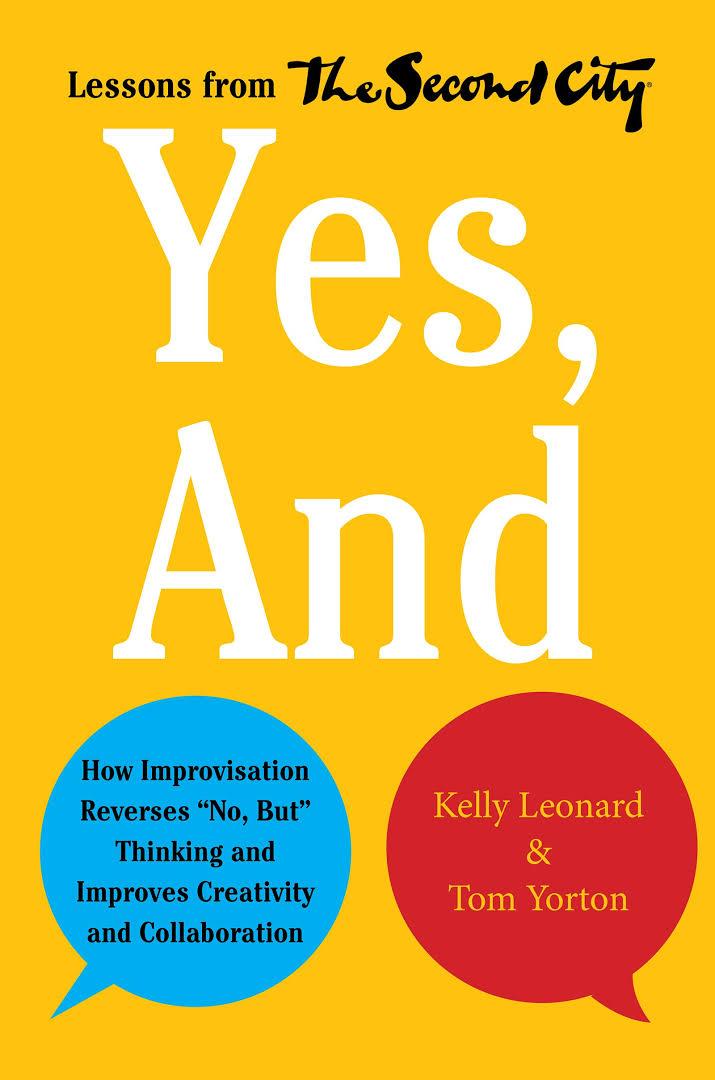
Yes, And
How Improvisation Reverses No, But Thinking and Improves Creativity and Collaboration
Kelly Leonard; Tom Yorton

Business Improv
Experiential Learning Exercises to Train Employees
Val Gee
The Actor's Book of Improvisation
Sandra Caruso; Paul Clemens

The Art of Chicago Improv
Short Cuts to Long-Form Improvisation
Rob Kozlowski
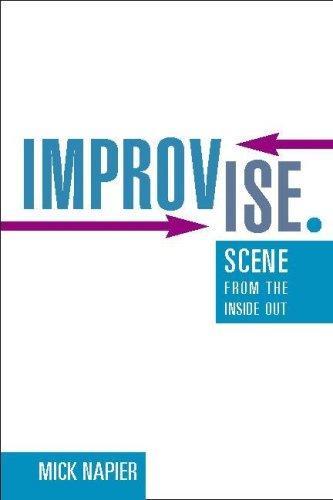
Improvise
Scene from the Inside Out
Mick Napier

The Second City Unscripted
Revolution and Revelation at the World-Famous Comedy Theater
Mike Thomas
Related Exercises
Translate Gibberish
Translate Gibberish is an exercise and short-form game in which one performer speaks in invented nonsense language while a second performer translates their speech into English for a third performer or the audience. The exercise trains commitment, physical storytelling, and the skill of reading emotional and physical information rather than linguistic content.
Switch Gibberish
Switch Gibberish is a scene game in which performers alternate between speaking coherent dialogue and speaking in invented gibberish language. The switch happens on a signal from the facilitator or host, requiring performers to maintain scene continuity across radically different modes of communication.
Gibberish Games
Gibberish Games is an applied exercise in which two participants hold a conversation entirely in made-up, invented language -- gibberish -- while a third person translates for the rest of the group. The exercise trains attention to nonverbal cues: tone, rhythm, gesture, facial expression, and physical presence carry the meaning that words normally would. Participants learn to read and respond to a speaker's full communicative body rather than filtering attention through vocabulary alone.
Replay Gibberish
Replay Gibberish is a short-form game in which a scene is first performed in coherent dialogue, then replayed entirely in gibberish. The performers must convey the same story, emotions, and relationships using only invented sounds, facial expressions, and physicality, demonstrating how much communication exists beyond words.
Gibberish Commands
Gibberish Commands is an exercise in which a facilitator gives instructions entirely in gibberish -- an invented, wordless language -- and the group must interpret and execute what they believe was communicated. The exercise sharpens nonverbal reading: tone, gesture, pacing, and physical demonstration carry meaning in the absence of recognizable words. The group discovers how much information travels through channels other than vocabulary, and develops responsiveness to a speaker's full communicative presence.
Gibberish Malapropism
Gibberish Malapropism is a scene game in which performers speak mostly in English but periodically substitute gibberish for key nouns or verbs. The audience and scene partners must infer the meaning of each gibberish word from context. The game rewards clear, specific scene-work: the more vividly the scene establishes its world, the more accessible the gibberish substitutions become. It trains contextual specificity and attentiveness in both performers and audience.
The Lineage
Explore the schools and structures that influenced or evolved from Gibberish.
112 Acting Games (Levy)
How to Reference This Page
The Improv Archive. (2026). Gibberish. Retrieved September 28, 2026, from https://improvarchive.org/exercises/gibberish
The Improv Archive. "Gibberish." The Improv Archive, 2026. https://improvarchive.org/exercises/gibberish.
The Improv Archive. "Gibberish." The Improv Archive, 2026, https://improvarchive.org/exercises/gibberish. Accessed September 28, 2026.
The Improv Archive is a systemically maintained repository. The archive itself acts as the corporate author.