Great, Next Character
Great, Next Character is a rapid character-switching exercise in which a facilitator prompts a performer to create a new character every few seconds. The performer barely has time to establish one persona before being pushed to the next. The exercise trains the ability to make instant character choices, build characters from body and voice rather than concept, and prevent the overthinking that causes character hesitation in performance.
Structure
Setup
One performer stands in the space. The facilitator stands nearby with the authority to call "Next!" at any moment.
The Exercise
The performer begins: they make a physical and vocal character choice immediately -- not after deliberation, but as their first impulse. They embody the character, speak a line or two, and begin to establish the persona.
At any point -- often within three to five seconds -- the facilitator calls "Next!" or "Great, next character!" The performer drops the current character instantly and enters a new one: a new body, a new voice, a new emotional world. No transition, no cleanup.
Pacing
The facilitator controls the pace. Early rounds may allow five to eight seconds per character; as the performer warms up, the pace increases. The goal is to move fast enough that the performer cannot plan ahead -- they must discover who the next character is as they arrive.
Conclusion
The exercise ends after a set number of characters or a set duration. Performers may reflect on which characters arrived most fully and which felt constructed or generalized.
How to Teach It
Objectives
Great, Next Character trains instantaneous character commitment, the ability to build from body and voice rather than concept, and trust in the first impulse. It defeats the planning and evaluation that prevent character specificity in performance.
How to Explain It
"I'm going to call 'next' and you're going to give me a completely different person. Don't plan. Don't think about who's coming. Just arrive. First impulse, full body, full voice. We move fast."
Scaffolding
Begin with longer intervals -- seven to ten seconds -- to let the performer experience entering and briefly inhabiting a character before the pace increases. As confidence builds, shorten the interval. The discomfort of being cut off before a character is fully formed is intentional: the exercise teaches that a character does not need to be finished, only arrived in.
Common Pitfalls
Performers sometimes default to a small repertoire of types -- the same postures, voices, and ages recurring across the exercise. The coaching note is to notice when the same body keeps arriving and find a part of the physical or emotional range not yet explored. Encourage wide variation in age, energy level, physicality, and emotional state.
Worth Reading
See all books →
Mask Improvisation for Actor Training and Performance
the compelling image
Sears A. Eldredge

Spontaneous Performance
Acting Through Improv
Marsh Cassady
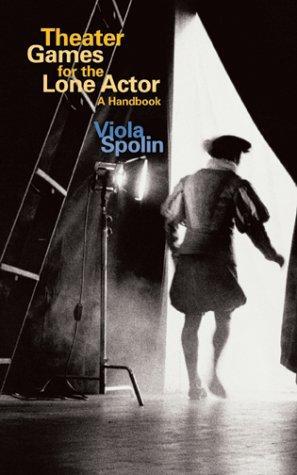
Theater Games for the Lone Actor
Viola Spolin

Embodied Playwriting
Improv and Acting Exercises for Writing
Hillary Haft Bucs; Charissa Menefee

Business Improv
Experiential Learning Exercises to Train Employees
Val Gee

Improvising Now
A Practical Guide to Modern Improv
Rob Norman
Related Exercises
John Cremer Characters and Scenes
John Cremer Characters and Scenes is a character-building and scene initiation exercise developed by UK improviser and educator John Cremer, in which participants develop distinct physicalized characters and then bring those characters into spontaneous scenes with one another. The exercise trains the connection between physical specificity and character logic, building confidence in initiating scenes from a grounded physical starting point rather than from dialogue or concept.
Cliched Characters Instant Depth
Cliched Characters Instant Depth is an exercise in which performers begin with a stock character type and progressively add layers of specificity, contradiction, and humanity. The exercise demonstrates that any character, no matter how familiar the starting point, can become compelling through committed detail work. It trains the skill of transforming a surface choice into a full person.
Emotions Characters
Emotions Characters is a character-building exercise in which performers construct a character whose entire identity is defined by a single dominant emotion. Rather than playing a character who experiences an emotion, the performer plays a human being for whom that emotion is the organizing principle of their existence: a person constituted entirely by joy, or anger, or longing, or fear. The exercise develops the skill of using emotion as a generative foundation for character rather than as a surface-level behavioral quality.
Character / Scene Walkabout
Character/Scene Walkabout is an exercise in which performers walk through the space and, on a signal, immediately enter a scene with whoever is nearest. The random pairing and instant commitment prevent over-planning. The exercise builds comfort with initiating scenes with any partner and develops quick character choices.
As You Will
As You Will is a character immersion exercise in which actors spend an extended period inhabiting their characters in an unstructured social environment. As documented by Gavin Levy in 112 Acting Games, players arrive already in character and interact freely with each other for twenty to sixty minutes without any scripted dialogue, predetermined blocking, or audience. The exercise strips away the technical demands of performance (projection, line learning, blocking) and replaces them with pure character exploration and responsive interaction. By removing the pressure of performance, As You Will allows actors to discover new dimensions of their characters through spontaneous encounter. The exercise is primarily used in conjunction with a scripted production, where it serves as a rehearsal tool for deepening character work and ensemble connection.
How to Reference This Page
The Improv Archive. (2026). Great, Next Character. Retrieved September 28, 2026, from https://improvarchive.org/exercises/great-next-character
The Improv Archive. "Great, Next Character." The Improv Archive, 2026. https://improvarchive.org/exercises/great-next-character.
The Improv Archive. "Great, Next Character." The Improv Archive, 2026, https://improvarchive.org/exercises/great-next-character. Accessed September 28, 2026.
The Improv Archive is a systemically maintained repository. The archive itself acts as the corporate author.