Knife Throwing
Knife Throwing is an object work and shared reality exercise in which one performer mimes throwing a knife -- or another specific object -- and a partner mimes catching it, with both performers committed to the same imaginary object's weight, speed, and trajectory. The exercise trains precise physical negotiation of shared imaginary objects and the two-performer coordination required for shared object work.
Structure
Setup
Participants stand in pairs facing each other at a distance of several feet. The facilitator establishes the object: a throwing knife, with agreed weight, length, and balance.
Progression
One performer mimes picking up and gripping the knife, establishing its weight and size. The performer then throws it with full physical commitment -- an arm swing that communicates speed, rotation, and trajectory. The catching partner must receive the throw as if catching the same object: tracking its path, adjusting to its speed, and landing the grip where the throw placed the handle.
Partners exchange roles and throw. The facilitator coaches precision and physical commitment: the throw and catch must agree on the object's speed, weight, and arc.
Conclusion
The exercise concludes when partners have developed consistent physical agreement on the imaginary object and can sustain that agreement across multiple exchanges without losing shared specificity.
How to Teach It
Objectives
Knife Throwing targets precision in object work and the ability to establish and maintain a shared physical reality with a partner. It trains the discipline of genuine physical specificity rather than gestural approximation.
How to Explain It
"The knife exists. It has weight, it has a handle, it rotates in the air. When you throw it, commit to what your body knows about throwing something real. When you catch it, track what the throw told you: how fast, where it's spinning, where the handle is going to be. Both of you have to be agreeing on the same object."
Scaffolding
Begin with slow, deliberate throws before increasing speed. Have the catcher describe the object they received after each throw -- the description should match what the thrower intended. Use this as a calibration tool before continuing.
Common Pitfalls
The throw is often performed as a mime gesture without genuine physical investment, resulting in a vague arc that gives the catcher no information. The exercise requires the thrower to commit fully to the physical act of throwing, generating real information that the catcher can track and respond to.
Worth Reading
See all books →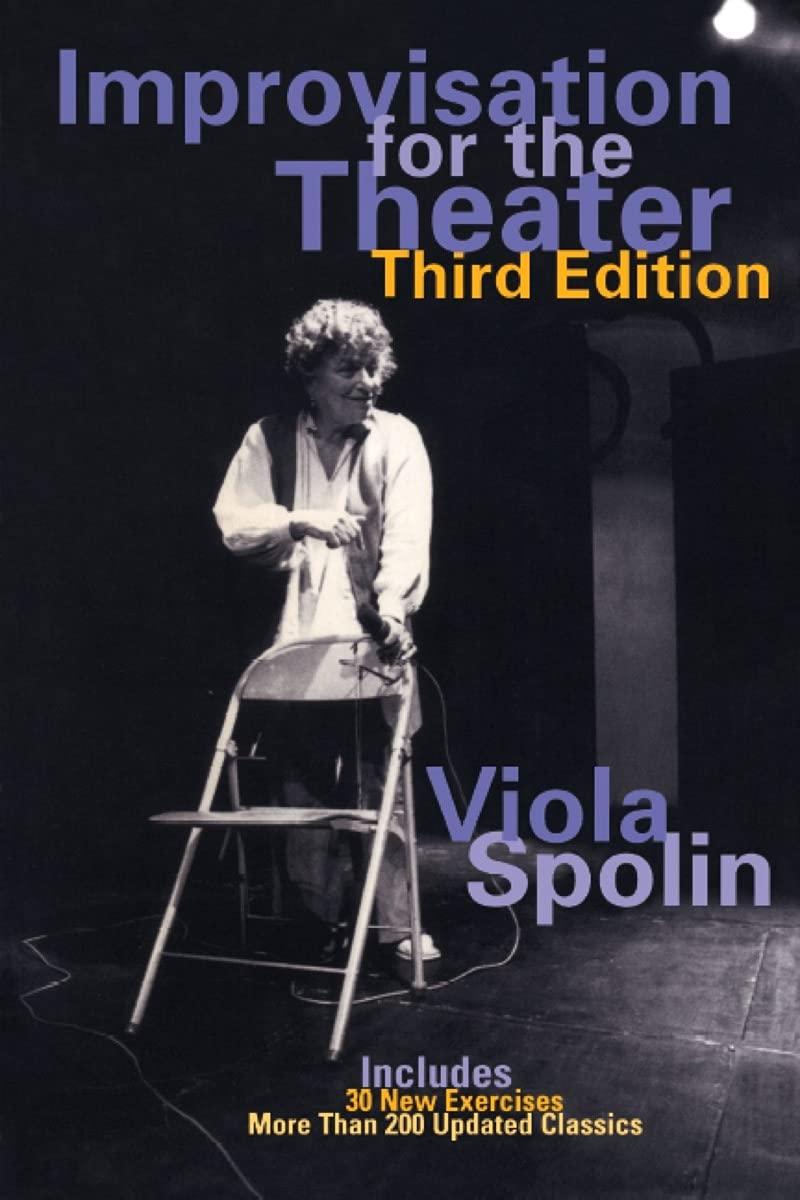
Improvisation for the Theater
A Handbook of Teaching and Directing Techniques
Viola Spolin

The Improv Illusionist
Using Object Work, Environment, and Physicality in Performance
David Raitt

Improvising Now
A Practical Guide to Modern Improv
Rob Norman

Something from Nothing
The Technique of Improvisation
Richard Goteri

Mask Improvisation for Actor Training and Performance
the compelling image
Sears A. Eldredge

Book on Acting
Improvisation Technique for the Professional Actor in Film, Theater & Television
Stephen Book
Related Exercises
Tossing
Tossing is a circle warm-up exercise in which players pass real or imaginary objects around the group with clear physical intention. Each exchange requires specific attention to the give and the receive: the sender must establish the object's weight, size, and nature before releasing it; the receiver must honor those physical qualities in the catch and carry. The exercise trains physical specificity, eye contact, ensemble attention, and the fundamental habit of truly giving something to a partner.
Object Circle
Object Circle is a warm-up exercise in which participants stand in a circle and pass physical or mimed objects to each other, transforming each object through imagination as it travels. One participant sends an object with a specific size, weight, and character; the next participant receives it, uses it briefly, then transforms it into something new before passing it on. The exercise develops physical specificity, collaborative imagination, and the habit of accepting and building on what a partner offers.
Pass Ball
Pass Ball is a circle warm-up exercise in which players toss a real or imaginary ball around the group while maintaining eye contact with the intended recipient. Additional balls may be introduced to increase complexity, requiring the group to track multiple objects simultaneously. The exercise builds focus, nonverbal communication, and the habit of making clear, directed offers to specific partners rather than throwing ideas into the void.
Red Ball
Red Ball is a circle warm-up exercise in which participants mime passing an imaginary red ball around the group, with both thrower and catcher naming the object aloud. As the exercise progresses, additional imaginary objects are introduced simultaneously, training focus, multitasking, and group awareness.
Passing Around Objects
Passing Around Objects is a circle exercise in which players create imaginary objects with distinct physical properties and pass them to their neighbors, who must receive and reproduce each object faithfully before sending it on. When objects return to their creators, the group examines what changed along the way. The exercise develops object work consistency, observation, and the discipline of treating a partner's physical choices as real.
Word Ball
Word Ball is a circle exercise in which participants pass an imaginary ball while simultaneously passing a word. The physical throw and the verbal word must match in speed, weight, and direction, creating a coordination challenge that links physical and verbal offer-making.
How to Reference This Page
The Improv Archive. (2026). Knife Throwing. Retrieved September 29, 2026, from https://improvarchive.org/exercises/knife-throwing
The Improv Archive. "Knife Throwing." The Improv Archive, 2026. https://improvarchive.org/exercises/knife-throwing.
The Improv Archive. "Knife Throwing." The Improv Archive, 2026, https://improvarchive.org/exercises/knife-throwing. Accessed September 29, 2026.
The Improv Archive is a systemically maintained repository. The archive itself acts as the corporate author.