Yes Based Conversations
Yes Based Conversations is an exercise in which performers practice having conversations built entirely on agreement and mutual support. Each speaker accepts what the other has said and adds their own perspective without contradiction. The exercise breaks the habit of default negation and demonstrates how agreement generates more productive scenes than conflict.
Worth Reading
See all books →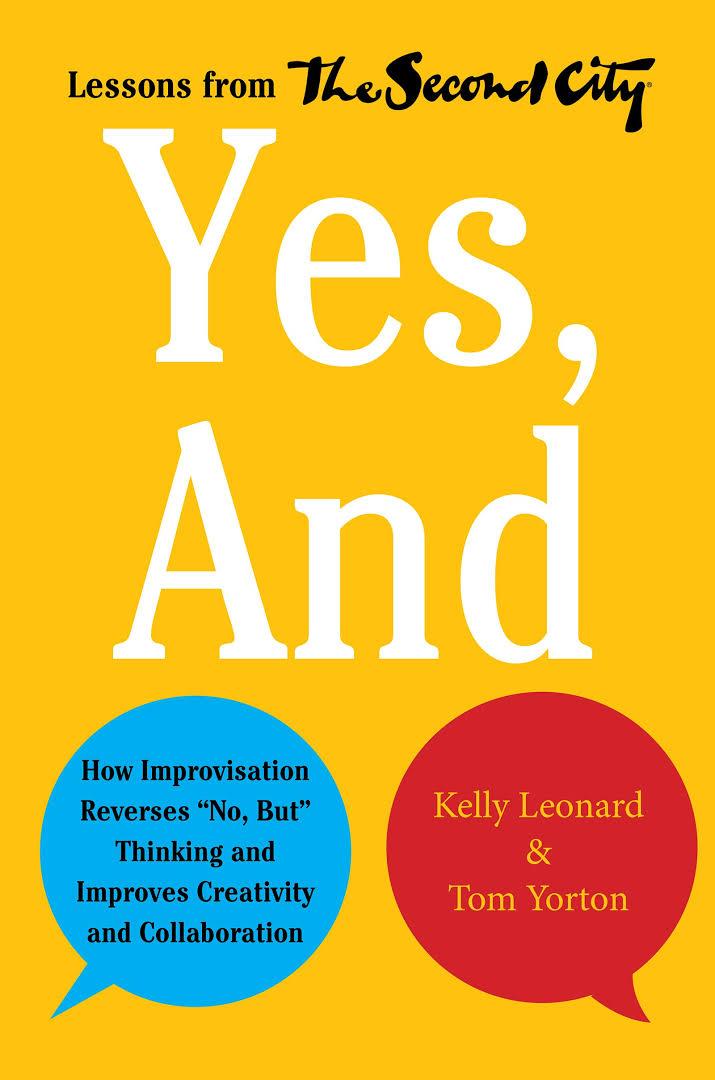
Yes, And
How Improvisation Reverses No, But Thinking and Improves Creativity and Collaboration
Kelly Leonard; Tom Yorton

The "Yes And" Business Evolution
Improv Skills for Leadership and Life
Tracy Shea-Porter

When I Say This, Do You Mean That?
Enhancing Communication
Cherie Kerr; Julia Sweeney

You Can Teach Improv (Yes, You!)
The Ultimate Guide to Class Planning, Skill Building, and Helping Every Student Leave With a Win
Andrew Berkowitz

Getting to Yes And
The Art of Business Improv
Bob Kulhan; Chuck Crisafulli

Playing Along
37 Group Learning Activities Borrowed from Improvisational Theater
Izzy Gesell
Related Exercises
Yes And
Yes And is the foundational improv exercise and philosophical principle in which performers practice accepting a partner's offer (the "yes") and adding new information that builds on it (the "and"). One player makes a statement; the partner responds by first affirming the reality of that statement and then contributing something new. The exercise trains the most essential skill in improvisation and has become the defining principle of the entire art form.
Yes But vs Yes And Conversation
Participants pair off and hold conversations starting every sentence with 'Yes, but...' then switch to 'Yes, and...' to experience how language choice impacts connection and energy.
The Cycle of Deep Yes And
The Cycle of Deep Yes And is an applied exercise in which participants practice full acceptance and active building in paired conversation, moving through multiple rounds that progressively deepen their commitment to the yes-and principle. The exercise trains the habit of genuine affirmation before contribution.
Count Yes/No in a Day
Count Yes/No in a Day is an applied improvisation awareness exercise in which participants track how many times they say 'Yes' and 'No' across all their communication channels over the course of a day or a designated week. The exercise builds awareness of habitual agreement and refusal patterns, revealing whether participants' default conversational moves align with their stated values around collaboration and openness.
Pass Yes
Pass Yes is a circle warm-up in which players attempt to say the word "yes" at the exact same moment as a partner. One player turns to a neighbor and both try to speak simultaneously, then the receiving player turns to the next person and repeats the process. The exercise trains listening, eye contact, and the willingness to synchronize with another person rather than lead or follow.
Chat Then Add an Activity
Chat Then Add an Activity is an exercise in which two players begin a conversation, then layer in a physical activity without letting the dialogue falter. The dual task trains the ability to maintain verbal engagement while committing to physical action. It builds the multitasking skills essential to naturalistic scene work.
How to Reference This Page
The Improv Archive. (2026). Yes Based Conversations. Retrieved September 29, 2026, from https://improvarchive.org/exercises/yes-based-conversations
The Improv Archive. "Yes Based Conversations." The Improv Archive, 2026. https://improvarchive.org/exercises/yes-based-conversations.
The Improv Archive. "Yes Based Conversations." The Improv Archive, 2026, https://improvarchive.org/exercises/yes-based-conversations. Accessed September 29, 2026.
The Improv Archive is a systemically maintained repository. The archive itself acts as the corporate author.