Sit Stand Lie Lean
Sit Stand Lie Lean is a scene exercise in which each performer must maintain a different physical position at all times. With four performers, one must be sitting, one standing, one lying down, and one leaning. Whenever one person changes position, someone else must adjust to maintain four distinct positions simultaneously.
Structure
Setup
Four performers take the stage. Each adopts one of the four positions: sitting, standing, lying, and leaning. The facilitator explains the rule: at all times, exactly one person must occupy each position. No two performers can share the same position.
Playing the Scene
The performers begin a scene while maintaining the positional constraint. As the scene develops, a performer who needs to change position for scenic reasons (standing up from a chair, lying down on a bed) forces at least one other performer to adjust. If the standing performer sits, the previously sitting performer must move to one of the now-open positions.
These positional shifts create a constant physical negotiation happening beneath the dialogue. Performers must track their own position, their scene partners' positions, and the available options simultaneously. The physical constraint generates unexpected stage pictures and movement patterns that would never arise in unconstrained scene work.
Justification
The strongest work justifies every position change within the scene's reality. A performer who suddenly lies on the floor finds a reason: exhaustion, searching for something under a table, or collapsing from shock. These justifications often become the most memorable moments in the scene.
Variations
A three-person version uses only sit, stand, and lie. A five-person version adds kneeling. A speed version requires position changes every ten seconds regardless of scenic motivation. An elimination version removes a performer each time they share a position with someone else.
How to Teach It
Objectives
Sit Stand Lie Lean develops physical awareness, multitasking, and the ability to incorporate external constraints into organic scene work. It trains performers to justify unexpected physical positions and to maintain scene engagement while managing a spatial puzzle.
How to Explain It
"Four of you on stage. One sits, one stands, one lies down, one leans. No two people can have the same position at any time. Play a scene. When you change position, someone else has to move. Justify everything."
Scaffolding
Begin with just the physical constraint without dialogue. Let performers practice the positional puzzle silently before adding scene work. Then add simple scenes with familiar premises so the scenic demands are low while performers develop comfort with the constraint.
Common Pitfalls
Performers sometimes become so focused on the positional puzzle that they stop playing the scene. The constraint should serve the scene, not replace it. Another issue is performers who change positions too frequently, creating chaos, or too infrequently, losing the dynamic quality of the exercise. The facilitator should encourage natural, scene-motivated changes.
How to Perform It
Stage Pictures
The constraint naturally creates visually interesting stage compositions. Four people at different heights and angles produce more dynamic pictures than four people standing in a line. Performers should embrace the visual variety rather than fighting it.
Flow of Changes
The most entertaining performances create chain reactions where one person's change triggers a cascade of adjustments. The audience enjoys watching the physical puzzle solve itself in real time while the scene continues seamlessly on top.
Physical Awareness
Performers need peripheral vision and spatial awareness to track all four positions simultaneously. Making eye contact with scene partners during transitions helps coordinate changes without verbal negotiation.
Worth Reading
See all books →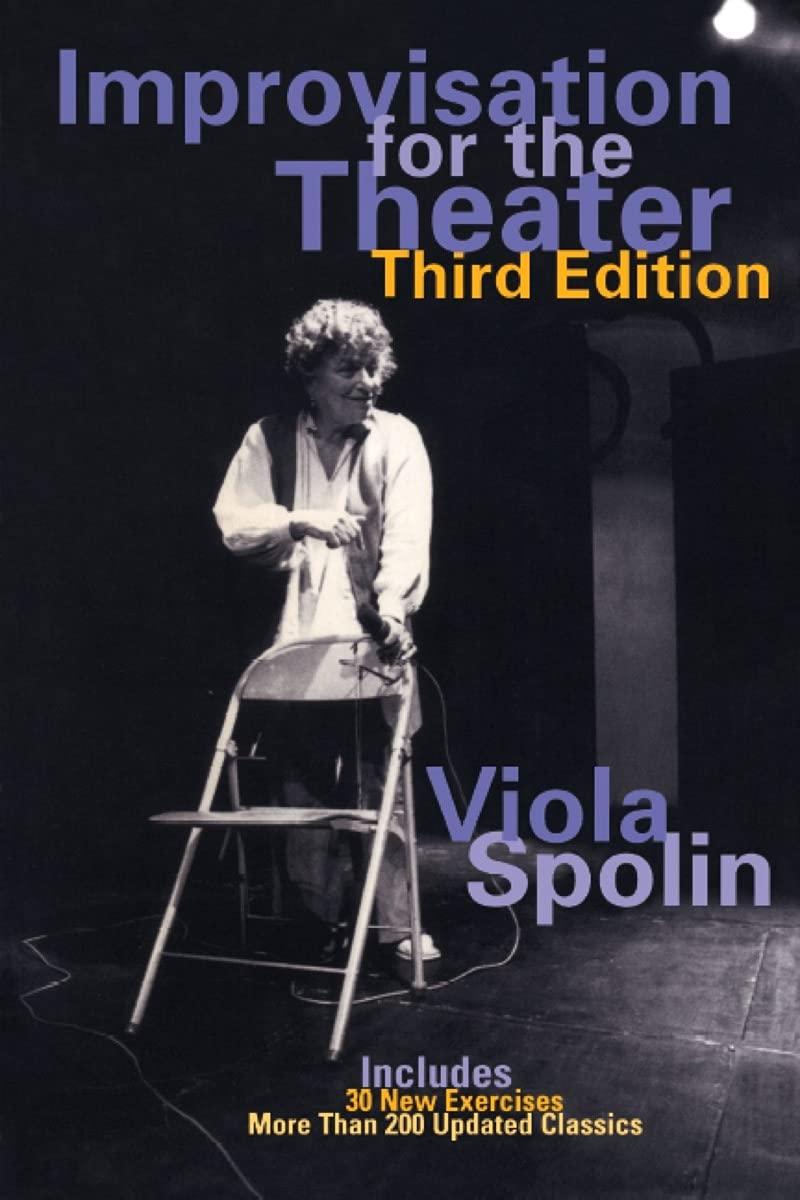
Improvisation for the Theater
A Handbook of Teaching and Directing Techniques
Viola Spolin
Theater Games for Rehearsal
Viola Spolin
Theater Games for the Lone Actor
Viola Spolin
112 Acting Games
Gavin Levy

How to Improvise a Full-Length Play
The Art of Spontaneous Theater
Kenn Adams

Improvisation
Use What You Know, Make Up What You Don't
Brad Newton
Related Exercises
Sitting Standing Lying
Sitting Standing Lying is a three-player scene exercise in which one performer must always be sitting, one standing, and one lying down. When any performer changes position, one of the others must immediately switch to maintain three distinct positions, creating a constant physical negotiation underneath the scene.
Give and Take
Give and Take is a foundational scene technique and exercise in which performers practice transferring and sharing focus within a scene. Only one action, conversation, or event holds the audience's attention at a time, and performers must silently negotiate who has focus and who yields it. The exercise trains the essential ensemble skill of knowing when to step forward and when to step back, making it one of the most important exercises for developing group awareness. Give and Take is used in both theatrical improv and applied improvisation settings, where it teaches collaborative turn-taking and active listening.
Standing on the Line
Standing on the Line is a scene exercise in which performers stand on a literal or imagined line on the stage floor, using their position on the line to establish spatial relationships, status dynamics, and physical constraints that shape the scene's development.
Pivot
Pivot is a scene exercise in which performers identify the moment when a scene needs to shift direction and make a deliberate choice to change it. The facilitator may call "Pivot" to signal the moment, or players practice identifying pivot points themselves. The exercise develops editorial awareness and trains the skill of knowing when a scene needs to evolve rather than repeat.
One Line Scene
One Line Scene is a scene-building exercise in which two or more performers create a complete scene using only one line of dialogue each. The constraint forces performers to make every word count, to communicate volumes through subtext, physicality, and relationship, and to find the essence of a scene without the luxury of extended dialogue.
How to Reference This Page
The Improv Archive. (2026). Sit Stand Lie Lean. Retrieved September 28, 2026, from https://improvarchive.org/exercises/sit-stand-lie-lean
The Improv Archive. "Sit Stand Lie Lean." The Improv Archive, 2026. https://improvarchive.org/exercises/sit-stand-lie-lean.
The Improv Archive. "Sit Stand Lie Lean." The Improv Archive, 2026, https://improvarchive.org/exercises/sit-stand-lie-lean. Accessed September 28, 2026.
The Improv Archive is a systemically maintained repository. The archive itself acts as the corporate author.