Stop. Start. Continue.
Stop Start Continue is a structured feedback exercise in which participants ask someone what they should stop doing, start doing, and continue doing. The three-part framework channels feedback into clear, actionable categories rather than vague assessments.
Structure
Setup
Participants pair up or work in small groups. One person is the feedback receiver and the others provide input using the three categories.
Stop
The group identifies behaviors, practices, or habits the person should stop. These are actions that are counterproductive, distracting, or no longer serving their goals. The framework gives explicit permission to name what is not working.
Start
The group identifies things the person should begin doing. These are new behaviors, approaches, or practices that would improve their work. The "start" category opens space for aspirational feedback.
Continue
The group identifies what the person should keep doing. This category acknowledges current strengths and effective practices, ensuring the feedback session is not purely corrective.
Rotation
After one person receives feedback in all three categories, roles rotate so that each participant experiences both giving and receiving structured feedback.
Debrief
The group discusses what they noticed about the quality of feedback when it is organized into clear categories versus unstructured commentary.
How to Teach It
Objectives
Stop Start Continue teaches participants to give specific, actionable feedback organized by clear categories. The exercise demonstrates that feedback is more useful when it includes both what to change and what to preserve.
How to Explain It
"Ask someone what they want you to stop doing, start doing, and continue doing. Three simple categories that turn vague feedback into concrete action items."
Scaffolding
Before running the exercise with personal feedback, practice with a low-stakes topic such as team meeting habits or email practices. This lets participants learn the framework before applying it to more sensitive areas.
Common Pitfalls
The most common issue is participants who load all their feedback into the "stop" category and treat "continue" as an afterthought. Emphasize that all three categories deserve equal attention and specificity.
In Applied Settings
Performance Reviews
Stop Start Continue provides a simple framework that transforms annual reviews from ambiguous narratives into structured conversations with clear action items. The three categories prevent the common pattern of feedback that is too vague to act on.
Retrospectives
Teams use the framework at the end of projects or sprints to capture what worked, what did not, and what new practices to adopt. The structure prevents retrospectives from becoming complaint sessions.
Facilitation Notes
In professional settings, emphasize that the "continue" category is as important as the others. Teams often skip past what is working to focus on problems. Modeling thorough "continue" feedback teaches participants to recognize and reinforce effective practices.
Skills Developed
Worth Reading
See all books →
Improvisation Starters
A Collection of 900 Improvisation Situations for the Theater
Philip Bernardi

Playing Along
37 Group Learning Activities Borrowed from Improvisational Theater
Izzy Gesell

Directing Improv
Asaf Ronen
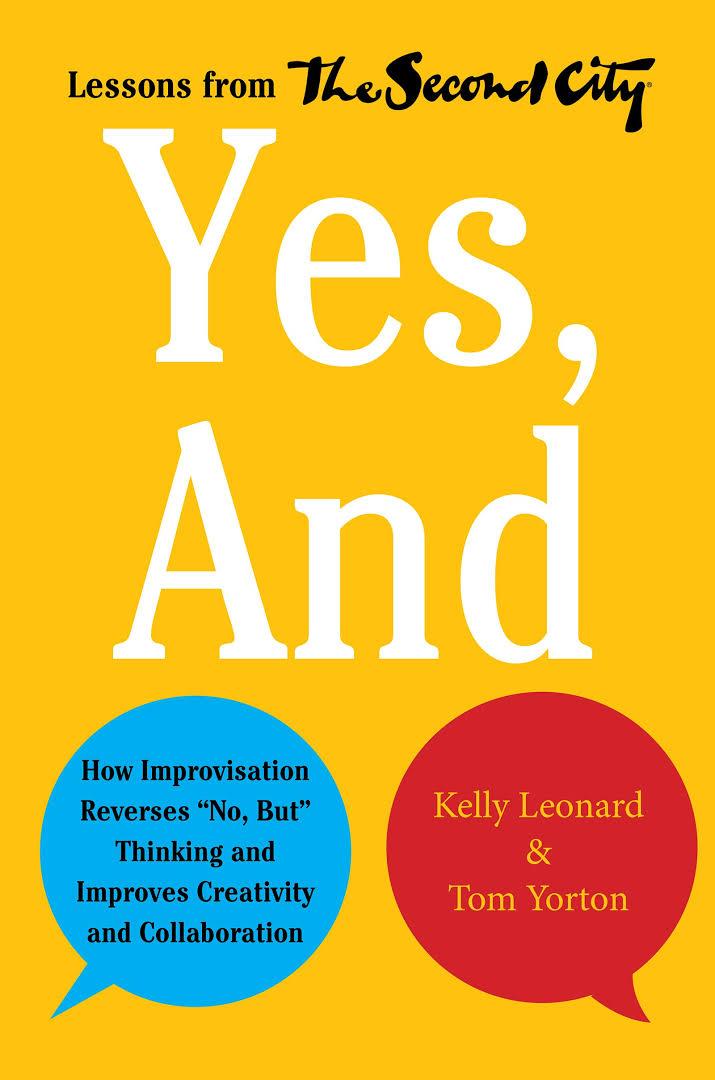
Yes, And
How Improvisation Reverses No, But Thinking and Improves Creativity and Collaboration
Kelly Leonard; Tom Yorton

When I Say This, Do You Mean That?
Enhancing Communication
Cherie Kerr; Julia Sweeney

Business Improv
Experiential Learning Exercises to Train Employees
Val Gee
Related Exercises
Feedback
Feedback is an applied improv exercise in which participants construct conversations and letters one word at a time, practicing the principles of constructive feedback delivery and reception through a collaborative word-at-a-time structure. The constraint removes defensive preparation and forces participants to co-create the feedback conversation in real time, revealing the habits, avoidances, and instincts that govern how feedback is actually given and received in professional settings.
Suspend Judgments
Suspend Judgments is a series of exercises designed to help participants notice and temporarily set aside their automatic evaluations of other people. Through structured interactions and reflection, participants develop awareness of how snap judgments affect their listening and collaboration.
Three-Second Pauses
Three Second Pauses is an applied exercise in which participants practice inserting a deliberate three-second pause before responding to any question or statement, building the habit of active listening over reactive reply. The pause allows full processing of what was said before generating a response.
Breakfast of Champions
Frame feedback with: I am giving you these comments because I have high expectations of you and I am confident you can reach them. Research shows this framing makes feedback 40% more effective.
Rewind and Unblock
Rewind and Unblock is a coaching exercise in which a facilitator stops a scene at a point where it has stalled or gone off track, rewinds to a specific moment, and asks the performers to make a different choice. The exercise teaches performers to recognize blocking patterns and practice alternative responses in real time.
The Cycle of Deep Yes And
The Cycle of Deep Yes And is an applied exercise in which participants practice full acceptance and active building in paired conversation, moving through multiple rounds that progressively deepen their commitment to the yes-and principle. The exercise trains the habit of genuine affirmation before contribution.
The Lineage
Explore the schools and structures that influenced or evolved from Stop. Start. Continue..
Improvise! (Max Dickins)
How to Reference This Page
The Improv Archive. (2026). Stop. Start. Continue.. Retrieved September 28, 2026, from https://improvarchive.org/exercises/stop-start-continue
The Improv Archive. "Stop. Start. Continue.." The Improv Archive, 2026. https://improvarchive.org/exercises/stop-start-continue.
The Improv Archive. "Stop. Start. Continue.." The Improv Archive, 2026, https://improvarchive.org/exercises/stop-start-continue. Accessed September 28, 2026.
The Improv Archive is a systemically maintained repository. The archive itself acts as the corporate author.