Ten Commandments
Ten Commandments is an applied exercise in which a group collaboratively generates a set of shared behavioral agreements using the structure and gravity of the biblical form. The resulting commandments articulate norms the group chooses to hold itself to.
Structure
The Framing
The facilitator introduces the exercise as an opportunity for the group to define its own operating principles. The commandments format signals that these are not suggestions but commitments.
Individual Generation
Each participant privately writes three to five commandments they believe the group needs. Commandments are written as direct imperatives: "Thou shalt listen before speaking," "Thou shalt not mock the idea before it is finished."
Sharing and Clustering
Participants share their commandments. The facilitator or group clusters similar commandments together and identifies recurring themes.
Negotiation and Selection
The group discusses, combines, and refines until they have agreed on a final set. The number is flexible but the exercise name suggests aiming for ten.
Posting and Commitment
The final commandments are written visibly. The group formally commits to them. The facilitator may return to them in future sessions.
How to Teach It
Objectives
Ten Commandments creates explicit shared agreements about group behavior. Many team dysfunction problems stem from implicit norms that different members interpret differently. Making norms explicit and collectively authored gives the group a shared reference point.
How to Explain It
"We are going to write our own commandments as a group. Not guidelines or suggestions. Commandments. What are the things this group absolutely must do, and absolutely must not do, to work well together?"
Scaffolding
The mock-biblical register is intentional. It signals that these commitments carry weight. If participants treat the format as a joke, the exercise loses its value. Hold the frame.
Common Pitfalls
Groups sometimes write commandments so general that they are meaningless. "Be respectful" is not a commandment. "Thou shalt not talk over the person who is speaking" is. Push for behavioral specificity.
In Applied Settings
Team Norming
Ten Commandments is most effective during the forming or norming stage of team development, when groups are establishing how they want to work together. It is also useful after a breakdown in team dynamics as a reset mechanism.
Organizational Culture
Facilitators use this exercise to surface the gap between stated organizational values and actual team behavior. The commandments that emerge often address behaviors that official values documents ignore.
Facilitation Notes
Record all commandments before clustering. Early commandments that get absorbed into later clusters often contain important specificity that is lost in the synthesis. Preserve the original language when possible.
Skills Developed
Worth Reading
See all books →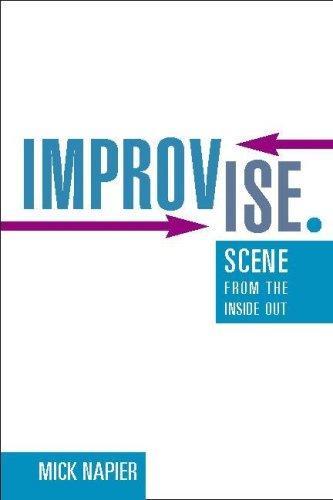
Improvise
Scene from the Inside Out
Mick Napier

The Upright Citizens Brigade Comedy Improvisation Manual
Matt Besser; Ian Roberts; Matt Walsh

The Applied Improvisation Mindset
Tools for Transforming Individuals, Organizations, and Communities
Theresa Robbins Dudeck; Caitlin McClure

Something from Nothing
The Technique of Improvisation
Richard Goteri

The Funniest One in the Room
The Lives and Legends of Del Close
Kim Howard Johnson

Whose Improv Is It Anyway?
Beyond Second City
Amy E. Seham
Related Exercises
Group Order
Group Order is a nonverbal exercise in which all players must arrange themselves into a specific sequence -- by height, birthday, shoe size, or another criterion -- without speaking. The exercise forces creative, nonverbal communication and collaborative problem-solving in real time. It builds patience, observation, and comfort with nonverbal interaction while revealing how a group self-organizes when verbal shortcuts are removed.
Leadership
Leadership is an applied improv exercise that uses structured group movement and voluntary leader emergence to explore how leadership authority is claimed, transferred, and recognized within a group. Participants move through the space or perform actions in which any member of the group may step into a leadership role at any moment, and the group must recognize and follow the shift without verbal announcement. The exercise surfaces the dynamics of organizational leadership through an embodied, real-time demonstration.
Team Confidence
Team Confidence is an applied exercise in which participants build collective self-assurance through structured sequences of shared achievement. The exercise uses graduated challenges and group acknowledgment to create a felt sense of competence that transfers to workplace contexts.
No Doubles 1-10
No Doubles 1-10 is a group focus exercise in which participants attempt to count from one to ten as a collective, with only one person speaking each number at a time. If two or more people speak simultaneously, the count resets to one. The exercise trains group listening, patience, and the shared impulse awareness that underlies ensemble work.
Red Teaming
Red Teaming assigns specific team members the role of critics and challengers during a meeting or brainstorming session. By making the adversarial role explicit and sanctioned, the exercise removes the social risk of disagreement and surfaces objections that would otherwise remain unspoken.
Collaboration
Collaboration is a category of applied improvisation exercises in which group tasks are designed so that individual success is structurally impossible: the design requires coordinated effort, shared information, and mutual accountability to complete. The exercises are used to surface how groups actually function under cooperative pressure, revealing patterns of self-organization, communication, and shared decision-making.
The Lineage
Explore the schools and structures that influenced or evolved from Ten Commandments.
The Applied Improvisation Mindset (Dudeck & McClure)
How to Reference This Page
The Improv Archive. (2026). Ten Commandments. Retrieved September 28, 2026, from https://improvarchive.org/exercises/ten-commandments
The Improv Archive. "Ten Commandments." The Improv Archive, 2026. https://improvarchive.org/exercises/ten-commandments.
The Improv Archive. "Ten Commandments." The Improv Archive, 2026, https://improvarchive.org/exercises/ten-commandments. Accessed September 28, 2026.
The Improv Archive is a systemically maintained repository. The archive itself acts as the corporate author.