Yes Lets
Yes Let's is an ensemble exercise in which any participant can call out an activity and the entire group enthusiastically responds "Yes, let's!" and immediately begins doing it. The exercise builds collective permission and creates a culture of unguarded acceptance.
Structure
The Call
One participant calls out an activity: "Let's swim in the ocean!" or "Let's build a fire!" The activity can be realistic or fantastical.
The Response
The entire group shouts "Yes, let's!" and immediately begins miming and embodying the activity together. There is no pause for consideration.
The Next Call
After a brief moment of shared activity, any participant can call out a new activity. The group responds with equal enthusiasm.
Escalation
As the exercise progresses, activities become more specific, more unusual, or more emotionally charged. The group's enthusiasm must remain genuine regardless of the content.
Debrief
Participants discuss what it felt like to receive unconditional enthusiasm for their offer, and what happened internally when they called out something vulnerable or unusual.
How to Teach It
Objectives
Yes Let's builds the culture of unconditional acceptance that makes risk-taking possible. Performers who have experienced genuine collective enthusiasm for their offers become more willing to make bold, unusual choices.
How to Explain It
"Whatever anyone calls out, we all say 'Yes, let's!' and we do it. There is no wrong offer. There is no pause to evaluate. There is just immediate, committed, enthusiastic yes."
Common Pitfalls
Groups sometimes respond with ironic or halfhearted "Yes, let's" to ideas they find stupid or embarrassing. This breaks the exercise completely. The enthusiasm must be genuine or at least committed even when the idea feels silly.
Worth Reading
See all books →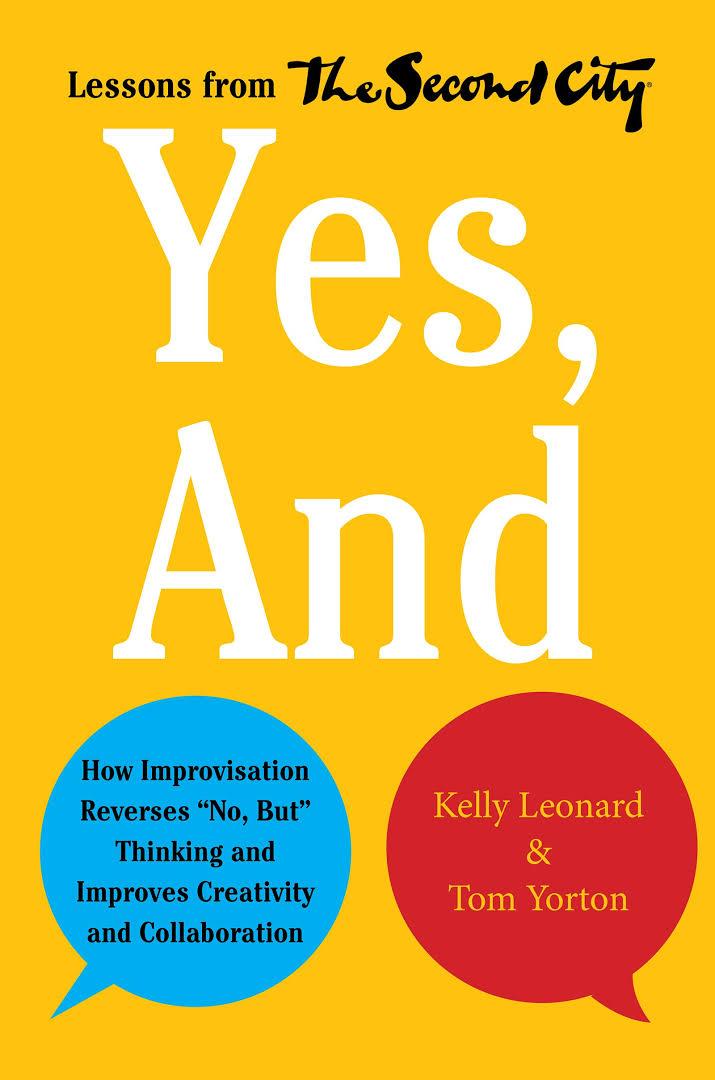
Yes, And
How Improvisation Reverses No, But Thinking and Improves Creativity and Collaboration
Kelly Leonard; Tom Yorton

The "Yes And" Business Evolution
Improv Skills for Leadership and Life
Tracy Shea-Porter

You Can Teach Improv (Yes, You!)
The Ultimate Guide to Class Planning, Skill Building, and Helping Every Student Leave With a Win
Andrew Berkowitz

When I Say This, Do You Mean That?
Enhancing Communication
Cherie Kerr; Julia Sweeney

Getting to Yes And
The Art of Business Improv
Bob Kulhan; Chuck Crisafulli

Playing Along
37 Group Learning Activities Borrowed from Improvisational Theater
Izzy Gesell
Related Exercises
Yes And
Yes And is the foundational improv exercise and philosophical principle in which performers practice accepting a partner's offer (the "yes") and adding new information that builds on it (the "and"). One player makes a statement; the partner responds by first affirming the reality of that statement and then contributing something new. The exercise trains the most essential skill in improvisation and has become the defining principle of the entire art form.
Lets Not
Let's Not is a scene-work exercise in which performers practice recognizing and resisting the impulsive move -- the immediate next step that seems obvious after an offer is made -- and instead exploring what already exists in the scene before building further. The exercise counters the improv tendency to pile offer onto offer and trains performers to dwell productively in established scene reality.
The Cycle of Deep Yes And
The Cycle of Deep Yes And is an applied exercise in which participants practice full acceptance and active building in paired conversation, moving through multiple rounds that progressively deepen their commitment to the yes-and principle. The exercise trains the habit of genuine affirmation before contribution.
Fuck Yeah!
Fuck Yeah! is an affirmation exercise in which players celebrate each other's offers, ideas, and choices with immediate, enthusiastic, profanity-optional approval. When a scene partner makes an offer, the group or the other performer responds with full-body, vocally committed affirmation rather than analysis or evaluation. The exercise trains the Yes-And reflex at its most visceral and develops comfort with unreserved enthusiasm as a collaborative default.
Pass Yes
Pass Yes is a circle warm-up in which players attempt to say the word "yes" at the exact same moment as a partner. One player turns to a neighbor and both try to speak simultaneously, then the receiving player turns to the next person and repeats the process. The exercise trains listening, eye contact, and the willingness to synchronize with another person rather than lead or follow.
Thank You
Thank You is an applied exercise in which participants practice expressing genuine gratitude to one another in a structured group setting. The exercise builds appreciation habits, strengthens interpersonal connection, and creates psychological safety through the ritual acknowledgment of positive contributions.
The Lineage
Explore the schools and structures that influenced or evolved from Yes Lets.
112 Acting Games (Levy)
How to Reference This Page
The Improv Archive. (2026). Yes Lets. Retrieved September 28, 2026, from https://improvarchive.org/exercises/yes-lets
The Improv Archive. "Yes Lets." The Improv Archive, 2026. https://improvarchive.org/exercises/yes-lets.
The Improv Archive. "Yes Lets." The Improv Archive, 2026, https://improvarchive.org/exercises/yes-lets. Accessed September 28, 2026.
The Improv Archive is a systemically maintained repository. The archive itself acts as the corporate author.