Uncertain Dialogue
Uncertain Dialogue is an applied exercise in which two participants hold a conversation in which neither knows the subject, relationship, or outcome, committing to each response as if it makes complete sense, training tolerance for ambiguity, present-moment listening, and the construction of meaning from incomplete information.
Structure
The Setup
Two participants face each other. The facilitator gives no context: no character, no relationship, no subject. Participants begin speaking.
The Conversation
Each participant responds genuinely to what the other just said, without trying to establish a frame or resolve the ambiguity. They accept each contribution as meaningful and build from it.
The Emergence
Over time, a conversation takes shape through accumulated acceptance. The facilitator stops the exchange when a coherent thread has emerged organically or when the discomfort with not-knowing has become the subject itself.
How to Teach It
Objectives
Uncertain Dialogue trains participants to remain present and responsive under conditions of genuine uncertainty rather than reaching for control, resolution, or a pre-existing frame.
Facilitation Notes
Debriefs often reveal that participants unconsciously tried to establish context in the first few exchanges. Invite them to notice when that impulse arose and what happened when they followed it versus set it aside.
Common Pitfalls
Participants fill the uncertainty with jokes or meta-commentary. Encourage them to treat every exchange as if it has genuine stakes, even when the content is opaque.
In Applied Settings
Adaptive Leadership and Change Management
Uncertain Dialogue is used in workshops on navigating ambiguity, demonstrating that meaningful action and communication are possible without complete information, a core competency in volatile environments.
Creative Problem-Solving
Facilitators use the exercise before ideation sessions to shift participants from convergent thinking toward open receptivity, loosening the habit of evaluating ideas before they are fully formed.
Coaching and Facilitation Training
Coaches use Uncertain Dialogue to build tolerance for not-knowing in practitioners who must hold space for others without directing the outcome.
Worth Reading
See all books →
Applied Improvisation
Leading, Collaborating, and Creating Beyond the Theatre
Theresa Robbins Dudeck; Caitlin McClure

When I Say This, Do You Mean That?
Enhancing Communication
Cherie Kerr; Julia Sweeney

The Applied Improvisation Mindset
Tools for Transforming Individuals, Organizations, and Communities
Theresa Robbins Dudeck; Caitlin McClure
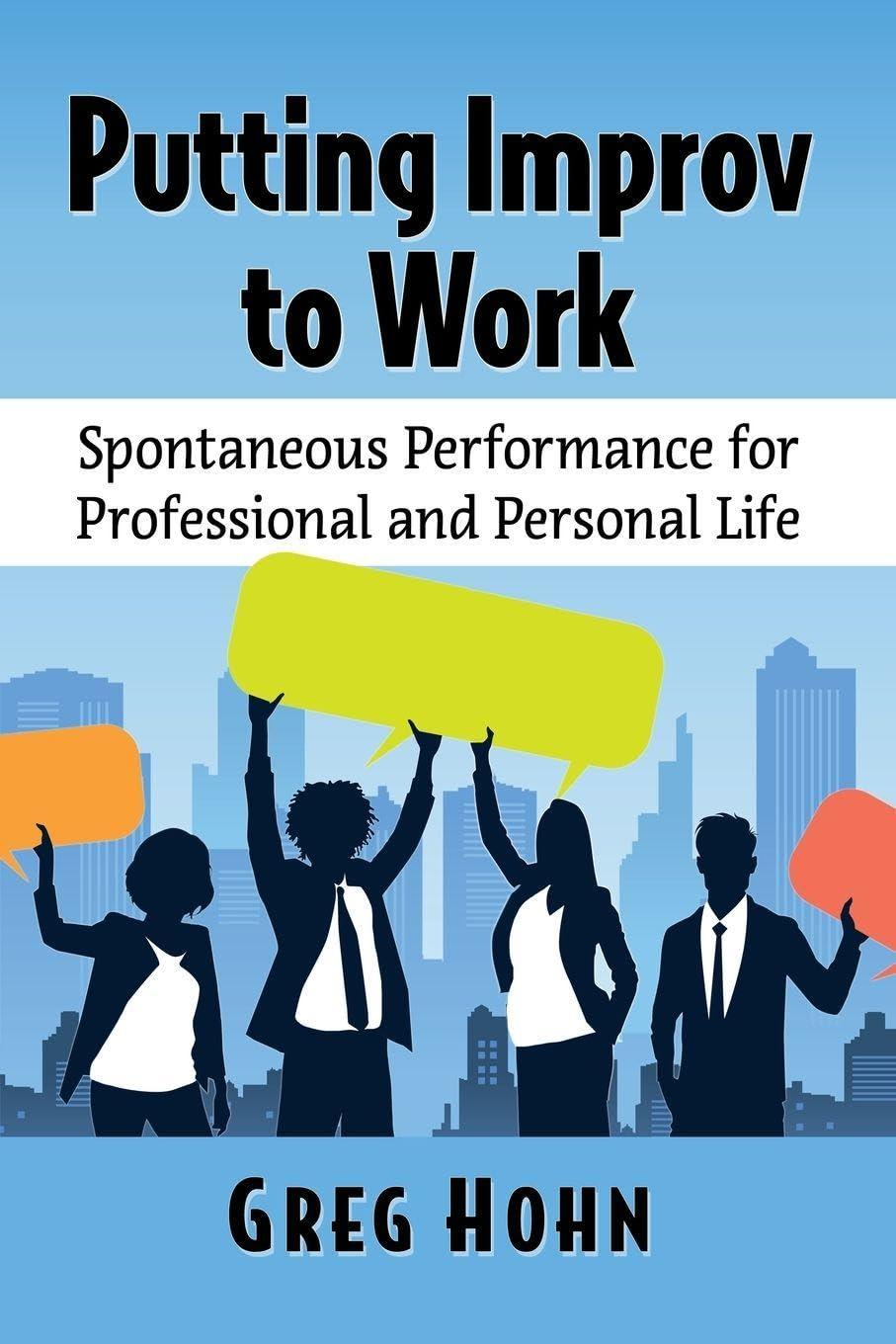
Putting Improv to Work
Spontaneous Performance for Leadership, Learning, and Life
Greg Hohn
The Improvisation Book
How to Conduct Successful Improvisation Sessions
John S.C. Abbott
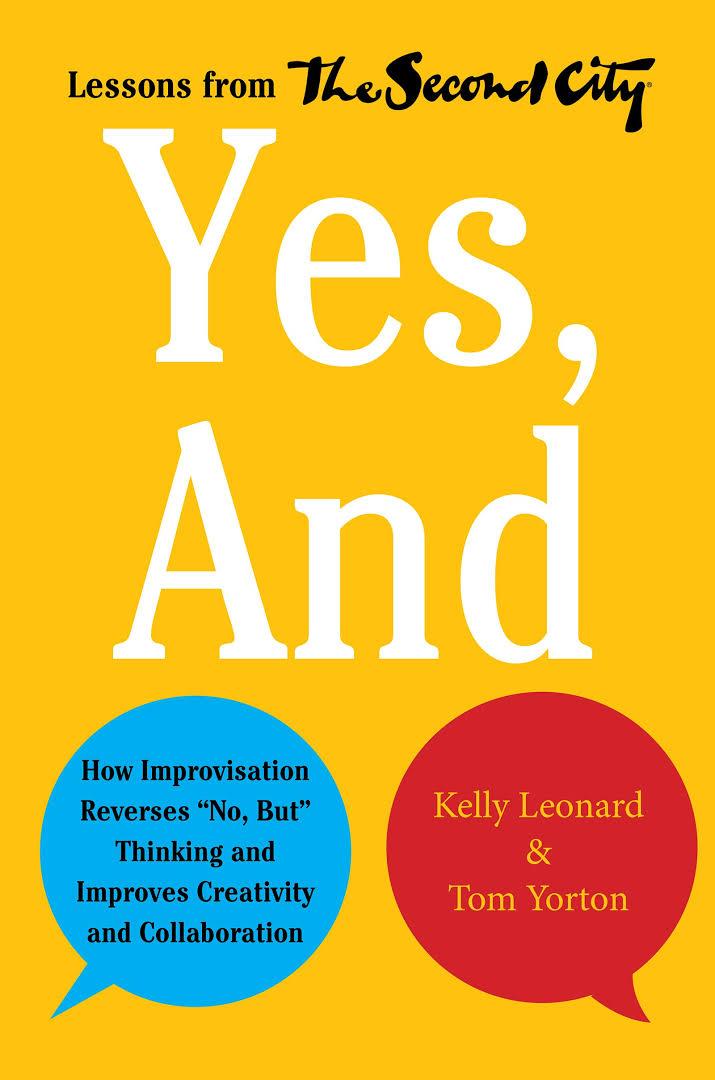
Yes, And
How Improvisation Reverses No, But Thinking and Improves Creativity and Collaboration
Kelly Leonard; Tom Yorton
Related Exercises
Adapting to Ambiguous Information
In a circle, one person poses a problem, the next proposes a nonsensical solution, and the third links them together. Builds comfort with uncertainty.
What They Said
What They Said is an applied listening exercise in which participants must accurately paraphrase or repeat back what the previous speaker said before contributing their own point, training active listening, retention under pressure, and the discipline of understanding before responding.
Emotional Option
Emotional Option is an applied improv exercise in which participants hold a paired conversation while a facilitator calls out different emotions at intervals. The pairs must continue their conversation in the register of the newly assigned emotion without stopping or acknowledging the transition. The exercise trains rapid emotional adaptability, the awareness that emotional state is a choice, and the practical skill of continuing a conversation under shifting emotional pressure.
Confusion and Not
Confusion and Not is an applied improvisation exercise in which one person stands at the center of a circle while three to five people simultaneously initiate intense, distinct conversations with them. The center player must attempt to maintain all conversations at once, accepting the confusion while continuing to reach toward each person. The exercise develops multi-channel listening, attention management under pressure, and the ability to remain present and engaged despite cognitive overload.
Building Rapport
Structured activities for establishing connection and trust with colleagues through improvisational active engagement.
Benefit of the Doubt
An exercise in choosing to assume positive intent from others. Participants practice reframing situations where they might normally assume the worst about a colleague's behavior.
The Lineage
Explore the schools and structures that influenced or evolved from Uncertain Dialogue.
Applied Improvisation (Dudeck & McClure)
How to Reference This Page
The Improv Archive. (2026). Uncertain Dialogue. Retrieved September 28, 2026, from https://improvarchive.org/exercises/uncertain-dialogue
The Improv Archive. "Uncertain Dialogue." The Improv Archive, 2026. https://improvarchive.org/exercises/uncertain-dialogue.
The Improv Archive. "Uncertain Dialogue." The Improv Archive, 2026, https://improvarchive.org/exercises/uncertain-dialogue. Accessed September 28, 2026.
The Improv Archive is a systemically maintained repository. The archive itself acts as the corporate author.