Robert Gravel (September 14, 1944 to August 12, 1996) was a Quebec actor, director, playwright, and improviser who co-founded the Ligue nationale d'improvisation (LNI) with Yvon Leduc in 1977 and co-founded the Theatre Experimental de Montreal (TEM) with Jean-Pierre Ronfard and Pol Pelletier in 1975. The LNI's match d'improvisation format, which structures improv competitions around the rules and aesthetics of ice hockey, became the dominant form of improvisation in French-speaking cultures worldwide and has spawned leagues in more than a dozen countries. Gravel also co-founded Espace Libre, one of Montreal's most important independent theatre venues.
Gravel was born in Montreal in 1944 and grew up in the working-class Sainte-Marie neighborhood of east-end Montreal. He trained at the Conservatoire d'art dramatique de Montreal and graduated in 1969. His populist upbringing in francophone working-class Montreal deeply informed his anti-elitist vision of theatre.
In the early 1970s he entered Quebec's theatrical world as an actor, appearing in landmark productions including Claude Gauvreau's Les oranges sont vertes (1972) and Rejean Ducharme's Ha! ha!... (1978). In 1975 he co-founded the Theatre Experimental de Montreal (TEM) with Jean-Pierre Ronfard and Pol Pelletier, operating on a self-management model that rejected conventional institutional theatre hierarchies. The TEM was committed to exploring the outer limits of performance in unconventional spaces and formats.
In 1977 Gravel and actor Yvon Leduc co-founded the Ligue nationale d'improvisation, with the first official match taking place on October 21, 1977. The format consciously borrowed the structure and aesthetics of Quebec ice hockey: two teams of six players in colored numbered jerseys compete in a rink-shaped performance space over three twenty-minute periods, with a referee in hockey attire enforcing rules and imposing penalties. Before each scene, a topic, style, number of players, and duration are chosen at random, teams have twenty seconds for a caucus, and the audience votes by show of hands after each improvisation. Gravel's stated motivation was to strip theatre of its elite cultural image, make actors see their work as accessible entertainment, and give spectators a direct role in the outcome.
Following ideological conflicts within the TEM, Gravel co-founded the Nouveau Theatre Experimental (NTE) in 1979 with Ronfard, Robert Claing, and Anne-Marie Provencher. The NTE established itself in a former fire station on rue Fullum in east-end Montreal, which in 1981 became Espace Libre, a landmark independent theatre venue. In 1982 Gravel created one of his most celebrated performances as Richard Premier in Ronfard's massive epic Vie et mort du roi boiteux, a twelve-hour cycle of six plays that inaugurated Espace Libre.
As a playwright, Gravel authored the trilogy La tragedie de l'homme, comprising Durocher le milliardaire (1991), L'Homme qui n'avait plus d'amis (1991 to 1992), and Il n'y a plus rien (1992). He was also a prolific screen actor, appearing in more than twenty film and television productions including Pouvoir intime (1986), La Petite Vie (1993), and Lance et compte (1991). LNI matches were broadcast on Radio-Quebec (Tele-Quebec) for multiple seasons, vastly expanding the format's visibility. Gravel died of a heart attack on August 12, 1996, at his chalet in Saint-Gabriel-de-Brandon, Quebec, at the age of 51.
Historical Context
Gravel's founding of the LNI in 1977 represented a radical reimagining of what improvisational performance could look like and who it could reach. By deliberately modeling the format on ice hockey, Quebec's dominant popular sport, Gravel and Leduc created a form that felt immediately legible to audiences who had never set foot in a theatre. The hockey frame provided ready-made emotional investment: spectators could cheer for their team, boo the opposition, and feel the genuine tension of competitive performance without any prior knowledge of theatrical conventions.
This approach developed independently of and in parallel with Keith Johnstone's Theatresports format in Calgary, which similarly structured improvisation as a competitive event with audience participation. The two formats, LNI and Theatresports, became the dominant competitive improv traditions in French-speaking and English-speaking cultures respectively. Where Theatresports spread through the international network of Johnstone-trained teachers, the LNI format spread through francophone cultural channels, taking root in France, Belgium, Switzerland, and Italy during the 1980s.
The TEM and NTE represented Gravel's parallel commitment to experimental theatre beyond improvisation. His insistence on self-managed companies, unconventional venues, and performances that pushed the limits of theatrical form placed him at the center of Quebec's experimental theatre movement during a period of intense cultural production.
Legacy
The LNI remains active in Montreal and across Quebec, and the match d'improvisation format it pioneered has become the most widely practiced competitive improv format in the French-speaking world. National leagues in France, Belgium, Switzerland, and Italy operate on the LNI model, and the first Improvisation World Cup was held in Montreal in 1985 with teams from four countries. The format penetrated Quebec's educational system so thoroughly that by the twenty-first century, nearly 200 schools in the province had active improvisation programs and 125 adult troupes were performing across Quebec.
Espace Libre, the independent theatre venue that Gravel helped establish in 1981, continues operating as one of Montreal's most important alternative performance spaces. The Nouveau Theatre Experimental remains active as a laboratory for theatrical experimentation. Both institutions carry forward the anti-hierarchical, boundary-pushing ethos that Gravel championed throughout his career.
Gravel's vision of theatre as fundamentally populist, as something that should advance the freedom of those who play it and those who watch it, shaped Quebec's relationship to improvisation in ways that have no direct parallel in English-speaking improv cultures. His insistence that improvisation belonged to ordinary audiences rather than cultural elites created a participatory tradition that has endured for nearly five decades. A biography, Robert Gravel, sur les pistes du cheval indompte, was published by Raymond Plante in 2004.
Recommended Reading
Books are ordered from the strongest direct connection outward to broader relevance.

The Improv Handbook
The Ultimate Guide to Improvising in Comedy, Theatre, and Beyond
Tom Salinsky; Deborah Frances-White

Acting Through Improv
Improv Through Theatresports
Lynda Belt; Rebecca Stockley

Improvising Now
A Practical Guide to Modern Improv
Rob Norman
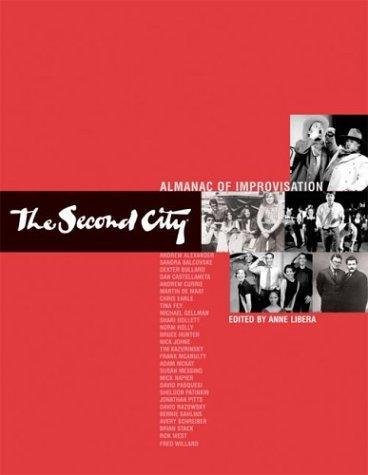
The Second City Almanac of Improvisation
Anne Libera

Impro
Improvisation and the Theatre
Keith Johnstone

The Art of Chicago Improv
Short Cuts to Long-Form Improvisation
Rob Kozlowski
References
In the Archive
How to Reference This Page
The Improv Archive. (2026). Robert Gravel. Retrieved September 28, 2026, from https://improvarchive.org/people/robert-gravel
The Improv Archive. "Robert Gravel." The Improv Archive, 2026. https://improvarchive.org/people/robert-gravel.
The Improv Archive. "Robert Gravel." The Improv Archive, 2026, https://improvarchive.org/people/robert-gravel. Accessed September 28, 2026.
The Improv Archive is a systemically maintained repository. The archive itself acts as the corporate author.