Free Association Lines
Free Association Lines is a scene exercise in which performers base each line of dialogue on a free association from the previous line rather than on the logical or narrative continuation of the scene. The scene's dialogue follows an associative chain rather than a plot chain, producing unexpected turns, images, and juxtapositions. The exercise trains performers to trust spontaneous impulse in scene work and to discover that scenes built from associative logic can carry emotional truth even without conventional narrative coherence.
Structure
Setup
Two performers begin a scene. No special staging is required. A location or opening line can be offered by the facilitator.
Progression
The scene begins. Each performer's next line of dialogue is driven not by the logical continuation of what their character would say, but by whatever the previous line triggered associatively in their mind. A character speaking about a car might trigger a response about speed, or about freedom, or about the color red, or about the sound of rain.
The associative jump is made by the performer, not explained to the audience. The scene continues without acknowledgment of the leaps, which produces dialogue with an unexpected, surrealist quality.
The exercise is not about narrative -- the scene may never resolve or develop a clear story. It is about following the mind's honest first move rather than its rational next move.
Conclusion
The facilitator stops the scene after two to four minutes and debriefs: what did the associative chain reveal? Where did the scene go that the performers did not plan?
How to Teach It
Objectives
Free Association Lines develops spontaneous dialogue, trust in unexpected impulse, and the ability to work in a non-rational scene logic without anxiety. It also produces unexpected imagery that often becomes raw material for scene ideas in other contexts.
How to Explain It
"Whatever the last word or image triggers in you -- not what your character would logically say, but what the word itself makes your mind do -- say that."
Scaffolding
Begin with the free association practice in a circle before applying it to scene dialogue. Performers who have not felt genuine free association before the scene work struggle to distinguish it from creative invention.
Common Pitfalls
Performers often perform free association rather than doing it -- they make interesting-sounding choices rather than genuinely following the first thing that arrived. The coaching note is to notice the difference between a word that showed up immediately and a word that was selected because it seemed right.
Worth Reading
See all books →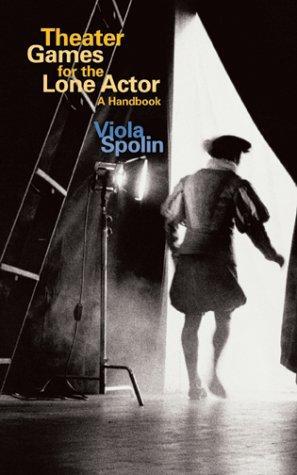
Theater Games for the Lone Actor
Viola Spolin

How to Improvise a Full-Length Play
The Art of Spontaneous Theater
Kenn Adams
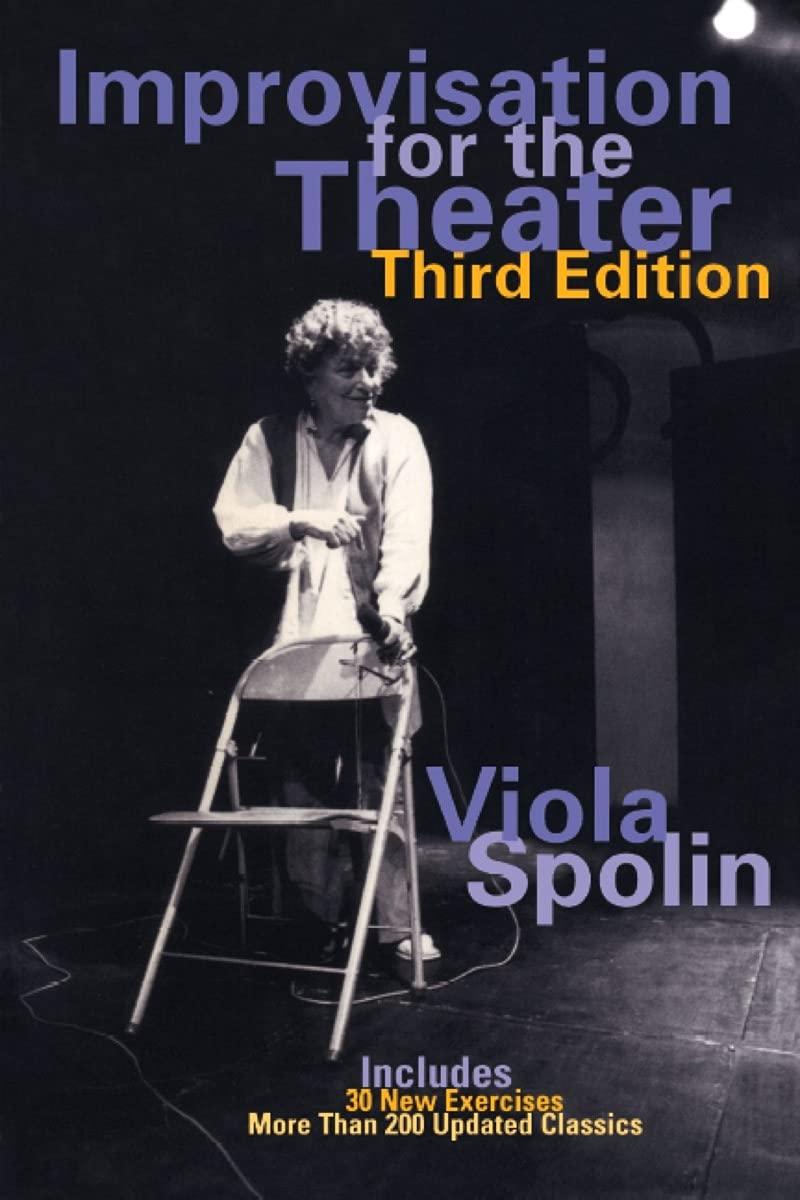
Improvisation for the Theater
A Handbook of Teaching and Directing Techniques
Viola Spolin

The Young Actor's Book of Improvisation
Dramatic Situations
Sandra Caruso; Susan Kosoff

Improvisation Starters
A Collection of 900 Improvisation Situations for the Theater
Philip Bernardi
Theater Games for Rehearsal
Viola Spolin
Related Exercises
Free Association
Free Association is a foundational improv exercise in which players say the first word that comes to mind in response to the previous word. The exercise trains the spontaneous, uncensored response that forms the basis of all improvisation. Speed is critical: hesitation reveals the internal censor at work, and the exercise's purpose is to bypass that censor entirely. Free Association develops the mental agility to generate offers without pre-planning and builds trust in the unfiltered creative impulse. The exercise is widely used in both theatrical improv training and applied improvisation contexts, where it builds rapid ideation skills and breaks down overthinking.
Free Association Circle
Free Association Circle is a group exercise in which players standing in a circle pass words around the circle, each player saying the first word that comes to mind in response to the word just spoken. There is no topic, no narrative, and no correct direction -- only the unfiltered associative chain between one mind and the next. The exercise develops spontaneity, the suppression of the self-editing reflex, and the awareness of how the associative mind generates material.
Associatioin Chain
Association Chain is a circle exercise in which each player says a word inspired by the previous player's word, building a rapid chain of free associations. The exercise trains spontaneous, uncensored responses and reveals the connective leaps that drive improvised scene work. Speed is essential to prevent intellectual filtering.
Non Sequitor
Non Sequitur is a hybrid game and exercise in which performers deliberately break logical connections between lines of dialogue, forcing each new statement to have no apparent relationship to the one before it. The exercise trains performers to let go of the need to make sense, builds comfort with absurdity, and paradoxically reveals how audiences will construct meaning even from disconnected material.
Three Line Scenes
Three Line Scenes is an exercise in which pairs of performers create complete scenes using exactly three lines of dialogue each, totaling six lines. The extreme compression demands that every line establish character, relationship, environment, and conflict simultaneously, developing the skill of maximum impact with minimum words.
One Line Scene
One Line Scene is a scene-building exercise in which two or more performers create a complete scene using only one line of dialogue each. The constraint forces performers to make every word count, to communicate volumes through subtext, physicality, and relationship, and to find the essence of a scene without the luxury of extended dialogue.
How to Reference This Page
The Improv Archive. (2026). Free Association Lines. Retrieved October 15, 2026, from https://improvarchive.org/exercises/free-association-lines
The Improv Archive. "Free Association Lines." The Improv Archive, 2026. https://improvarchive.org/exercises/free-association-lines.
The Improv Archive. "Free Association Lines." The Improv Archive, 2026, https://improvarchive.org/exercises/free-association-lines. Accessed October 15, 2026.
The Improv Archive is a systemically maintained repository. The archive itself acts as the corporate author.