Three Line Scenes
Three Line Scenes is an exercise in which pairs of performers create complete scenes using exactly three lines of dialogue each, totaling six lines. The extreme compression demands that every line establish character, relationship, environment, and conflict simultaneously, developing the skill of maximum impact with minimum words.
Structure
The Constraint
Two performers create a scene. Each may speak exactly three times. In six lines total, the scene must establish who the characters are, where they are, what their relationship is, what the scene is about, and reach a resolution or button.
The First Exchange
The opening two lines establish the world and the relationship. Each line must carry significant informational and emotional weight without exposition.
The Second Exchange
Lines three and four deepen the conflict or revelation. The stakes become clear.
The Third Exchange
Lines five and six resolve, escalate, or button the scene. The ending must be earned by what came before.
Review and Repeat
After each attempt, the pair and observers discuss what was established, what was unclear, and what a different line choice might have unlocked. Multiple attempts with the same or different pairs follow.
How to Teach It
Objectives
Three Line Scenes trains economy and precision in scene construction. By removing the safety net of extended dialogue, the exercise forces performers to make intentional choices about what each line accomplishes.
Facilitation Notes
Ask performers to identify what each line was doing: establishing location, revealing character, raising stakes, landing the button. Lines that cannot be identified as doing specific work are the ones to refine.
Common Pitfalls
Performers often treat the three-line constraint as a puzzle and produce awkward or overloaded lines. The goal is not clever compression but genuine scene-making within the form. The same scene impulses that drive full-length scenes must fit here.
Worth Reading
See all books →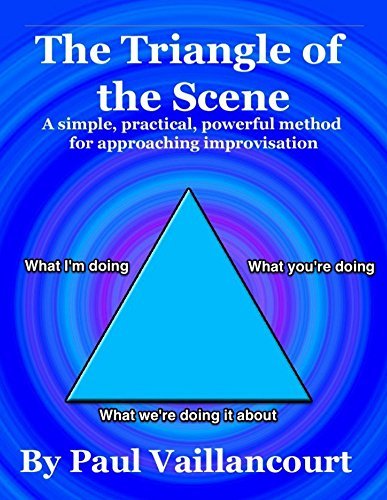
The Triangle of the Scene
A Simple, Practical, Powerful Method for Approaching Improvisation
Paul Vaillancourt

Improvisation Starters
A Collection of 900 Improvisation Situations for the Theater
Philip Bernardi
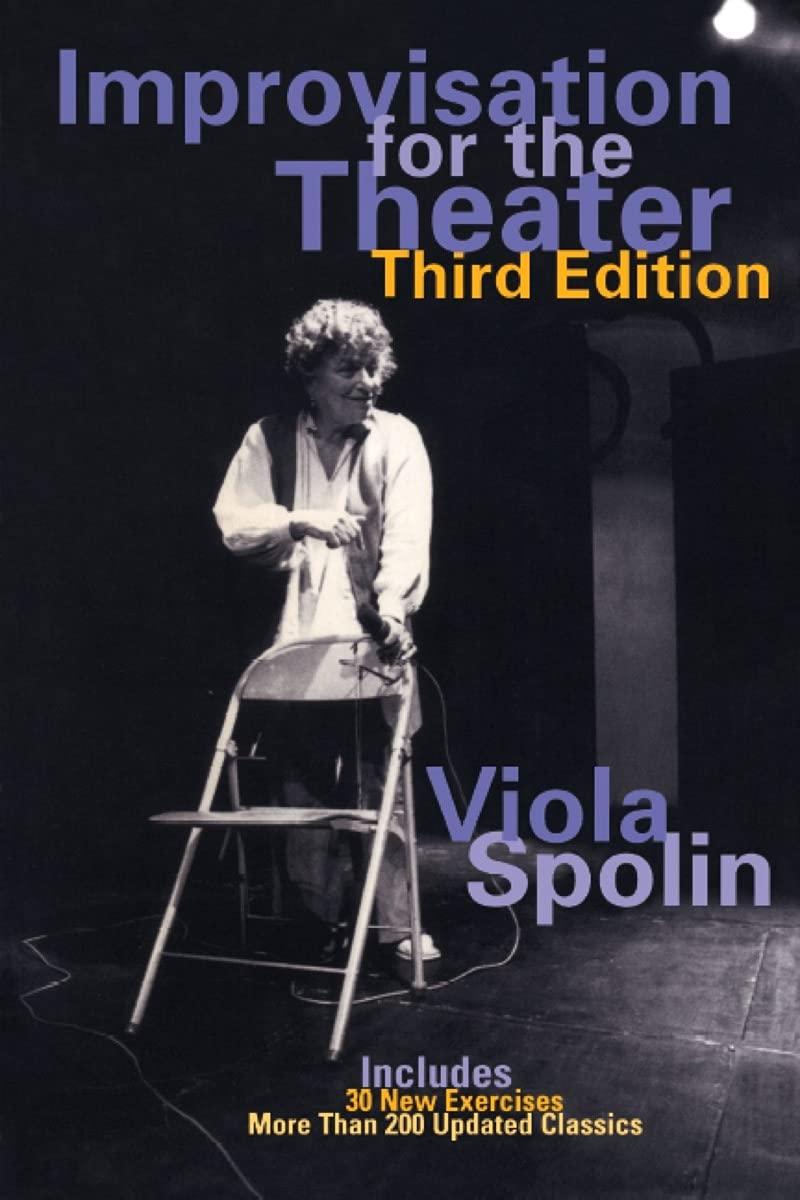
Improvisation for the Theater
A Handbook of Teaching and Directing Techniques
Viola Spolin

The Young Actor's Book of Improvisation
Dramatic Situations
Sandra Caruso; Susan Kosoff
Theater Games for Rehearsal
Viola Spolin

Mask Improvisation for Actor Training and Performance
the compelling image
Sears A. Eldredge
Related Exercises
Three Line Solo
Three Line Solo is an exercise in which a single performer delivers a complete monologue in exactly three lines, establishing character, situation, and emotional truth in minimal words. The constraint pushes performers toward essential specificity and away from the habit of building to meaning through extended warm-up.
3 Line Scenes
3 Line Scenes is a compact scene drill and short-form game in which two players improvise a scene using only three lines in total. One player starts, the other responds, and the first player answers back. The short limit keeps the round simple, fast, and playable for new improvisers who are getting used to starting scenes in front of a group or audience.
Three Line Environment
Three Line Environment is an exercise in which performers establish a complete physical world using exactly three lines of dialogue, each line adding a distinct environmental detail. The constraint forces precise, economical world-building and develops the skill of grounding a scene in a specific location through implication rather than announcement.
One Line Scene
One Line Scene is a scene-building exercise in which two or more performers create a complete scene using only one line of dialogue each. The constraint forces performers to make every word count, to communicate volumes through subtext, physicality, and relationship, and to find the essence of a scene without the luxury of extended dialogue.
Three Sentence Story
Three Sentence Story is an exercise in which participants construct a complete narrative using exactly three sentences, one person contributing each sentence in sequence. The constraint forces immediate narrative commitment and trains the skill of building a satisfying story arc without the luxury of extended setup.
How to Reference This Page
The Improv Archive. (2026). Three Line Scenes. Retrieved September 28, 2026, from https://improvarchive.org/exercises/three-line-scenes
The Improv Archive. "Three Line Scenes." The Improv Archive, 2026. https://improvarchive.org/exercises/three-line-scenes.
The Improv Archive. "Three Line Scenes." The Improv Archive, 2026, https://improvarchive.org/exercises/three-line-scenes. Accessed September 28, 2026.
The Improv Archive is a systemically maintained repository. The archive itself acts as the corporate author.