I Need A…
I Need a... is an audience suggestion technique in which the host or performer calls out for audience input by announcing the type of suggestion needed: "I need a profession!" or "I need a relationship!" The technique structures audience interaction and ensures performers receive useful, specific material rather than random responses. As a teaching exercise, it trains students to identify what type of information would most serve a scene and to ask for it specifically rather than accepting whatever is offered.
Structure
The Technique
The host addresses the audience directly and names the category of suggestion desired: "I need a location," "I need an activity," "I need a relationship between two people." The category should be specific enough that the audience understands what is useful, broad enough that multiple valid answers exist.
Taking the Suggestion
The host listens to the audience's responses and selects one -- often the first clear and usable answer, sometimes the one that generates the most energy or specificity. The host confirms the suggestion aloud and thanks the audience.
As an Exercise
In the exercise form, students practice identifying the type of suggestion that would most serve the next moment of a scene: what kind of information is missing, what type of material would generate the most scene richness, and how to ask for it clearly without leading the audience toward a specific answer.
Practice
Students stop a scene at a natural moment and practice naming what they would need from an audience if this were a performance. The group discusses what type of information would serve the scene best and why.
Conclusion
The exercise ends when students have developed fluency with the relationship between scene needs and suggestion types.
How to Teach It
Objectives
I Need a... trains the skill of identifying what a scene needs from outside material and asking for it specifically, rather than accepting whatever the audience offers and retrofitting the scene around it.
How to Explain It
"Before you ask for a suggestion, know what you need. A location? A relationship? An activity? An emotion? If you ask 'give me something,' you'll get random noise. If you ask 'give me a profession that involves travel,' you'll get something you can use."
Scaffolding
Begin with common suggestion types -- location, relationship, profession, emotion -- before asking students to invent new categories that serve specific scene needs. The common types give students a vocabulary; practice inventing new categories develops real fluency.
Common Pitfalls
Students sometimes ask leading questions that tell the audience the answer they want: "Give me a location -- like a restaurant or a kitchen." The coaching note is that a leading question is not a suggestion -- it is the performer choosing and asking the audience to confirm. The suggestion should come from the audience.
Worth Reading
See all books →
Something from Nothing
The Technique of Improvisation
Richard Goteri

Improvisation Starters
A Collection of 900 Improvisation Situations for the Theater
Philip Bernardi

Directing Improv
Asaf Ronen

Semiotics and Pragmatics of Stage Improvisation
Domenico Pietropaolo; Paul Bouissac
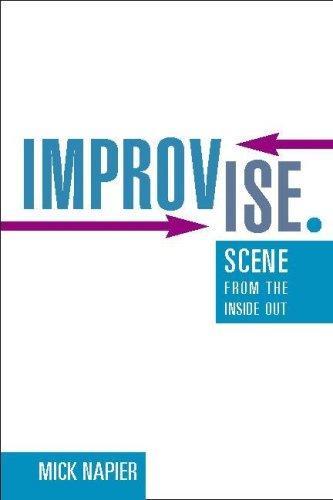
Improvise
Scene from the Inside Out
Mick Napier
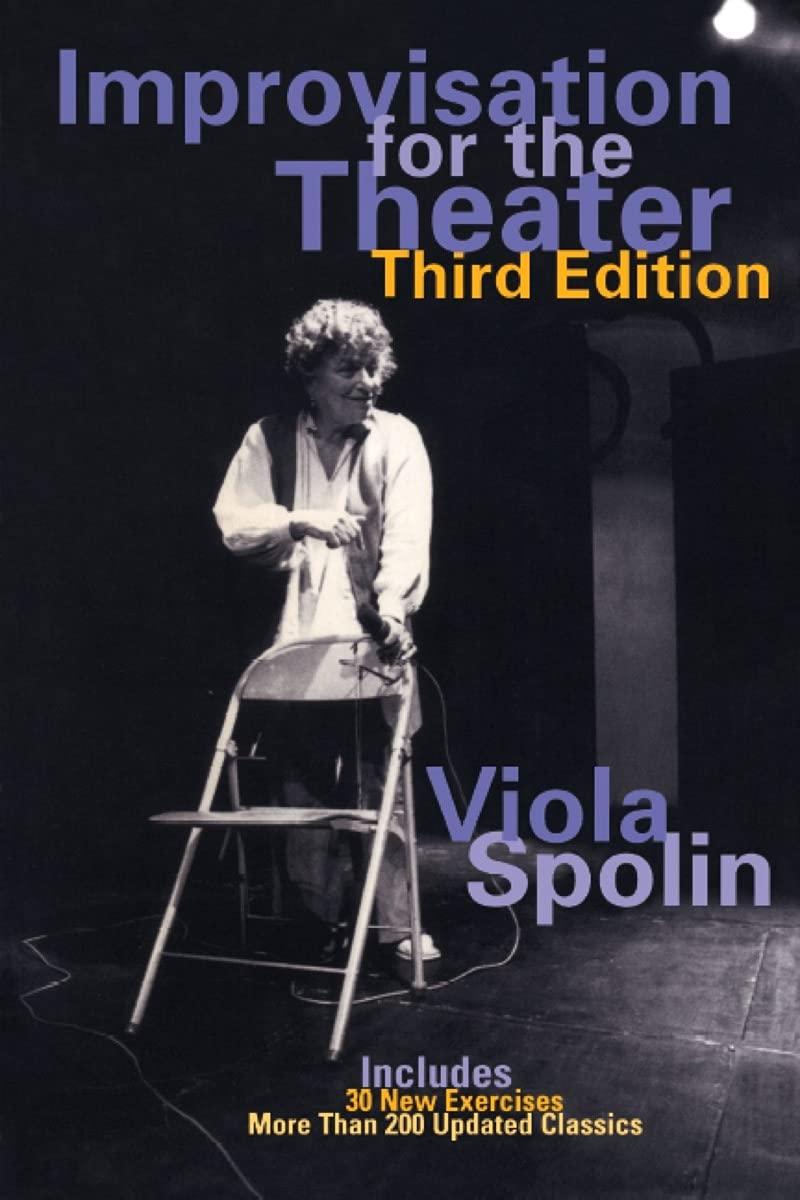
Improvisation for the Theater
A Handbook of Teaching and Directing Techniques
Viola Spolin
Related Exercises
Scenes from a Suggestion
Scenes from a Suggestion is a foundational exercise in which performers build a scene directly from a single audience suggestion, practicing the core skill of transforming a word or phrase into characters, relationships, and situations without additional prompting or warm-up games.
I'll Have a Coke
I'll Have a Coke is a scene exercise in which one performer makes a simple, mundane request -- ordering a soft drink, asking for the time, requesting a pen -- and the scene partner responds by investing the exchange with emotional weight, relational history, or narrative significance. The exercise demonstrates that any ordinary transaction can become the foundation for compelling scene-work when the performers bring genuine investment to it. The mundane request is the entry point; the performers discover what it actually means.
Maslow's Hierarchy of Needs
Maslow's Hierarchy of Needs is a character and motivation exercise in which performers assign characters a specific level of Maslow's motivational hierarchy -- physiological, safety, love and belonging, esteem, or self-actualization -- and play scenes in which every character choice, reaction, and goal is driven by that level's corresponding need. The exercise develops specificity of character motivation by anchoring it in a well-defined psychological framework and trains performers to play need-driven characters rather than generically reactive ones.
Location, Relationship, Escalate, End
Location, Relationship, Escalate, End is a scene construction exercise in which performers build a scene through four discrete, progressive stages: first establishing a specific physical location, then establishing the specific relationship between the characters, then escalating the scene through increasing stakes or emotional intensity, and finally bringing it to a definitive end. The exercise provides a structured scaffold for scene construction and trains performers to execute each element with commitment and specificity before moving to the next.
Performance of an Audience
Performance of an Audience is an applied improvisation exercise that explores the reciprocal relationship between performer and spectator. Participants experience both roles, discovering how the quality of attention an audience gives shapes the performer's experience and how conscious, engaged witnessing differs from passive spectating. The exercise builds awareness that presence and attention are active contributions to any group interaction.
Performing Curiosity
Performing Curiosity is an applied improvisation exercise in which participants practice embodying genuine curiosity through three specific conversational directions: listening for what is new, asking open questions, and focusing attention outward. The core insight is that performing curiosity, even when it feels like pretending, generates genuine curiosity. The exercise develops listening, empathy, and the ability to shift attention away from internal judgment and toward a conversation partner.
How to Reference This Page
The Improv Archive. (2026). I Need A…. Retrieved September 29, 2026, from https://improvarchive.org/exercises/i-need-a
The Improv Archive. "I Need A…." The Improv Archive, 2026. https://improvarchive.org/exercises/i-need-a.
The Improv Archive. "I Need A…." The Improv Archive, 2026, https://improvarchive.org/exercises/i-need-a. Accessed September 29, 2026.
The Improv Archive is a systemically maintained repository. The archive itself acts as the corporate author.