Scenes from a Suggestion
Scenes from a Suggestion is a foundational exercise in which performers build a scene directly from a single audience suggestion, practicing the core skill of transforming a word or phrase into characters, relationships, and situations without additional prompting or warm-up games.
Structure
Setup
The facilitator or host takes a single suggestion from the audience or group. The suggestion can be a word, a location, a relationship, or an occupation. Two performers step out and begin a scene inspired by that suggestion.
Building the Scene
Performers use the suggestion as a launching point rather than a rigid constraint. A suggestion of "laundromat" does not require a scene set in a laundromat; it might inspire a scene about cleaning up a mess, or about the monotony of routine, or about two strangers waiting. The suggestion opens a door rather than dictating the room behind it.
The first few lines establish the who, what, and where. Performers name each other, define their relationship through behavior, and ground themselves in a specific location through object work and environmental references. The suggestion serves as shared context that both performers can draw from.
Development
Once the relationship and situation are established, the scene develops through discovery. Performers follow the emotional thread of the relationship, finding the game of the scene or deepening the conflict. The suggestion recedes into the background as the scene takes on its own life.
Multiple Rounds
In a workshop setting, the facilitator calls for new scenes from the same suggestion, showing how a single word can generate completely different scenes. This demonstrates that suggestions are not blueprints but catalysts. Four different pairs given "dentist" will produce four entirely different scenes.
Variations
A chain version uses the ending of one scene as the suggestion for the next. A themed version restricts suggestions to a category such as emotions, locations, or occupations. A rapid-fire version gives pairs only sixty seconds per scene before the next pair takes over with the same suggestion.
How to Teach It
Objectives
Scenes from a Suggestion trains the fundamental improv skill of creating something from nothing. It develops the ability to interpret suggestions creatively, establish scenes efficiently, and build relationships without elaborate setup.
How to Explain It
"Take a suggestion and start a scene. The suggestion is your inspiration, not your script. Find the characters, find the relationship, and let the scene go wherever it wants to go."
Scaffolding
Begin with concrete, location-based suggestions before moving to abstract words. New performers find it easier to start a scene in a "doctor's office" than from the word "freedom." As comfort grows, move toward more open-ended suggestions that require greater interpretive leaps.
Common Pitfalls
Performers sometimes treat the suggestion as a topic to discuss rather than a world to inhabit. A scene about "vacation" should not become two characters talking about vacations; it should be two characters living inside a specific moment. Another common issue is performers who ignore the suggestion entirely. While loose interpretation is encouraged, completely abandoning the audience's contribution breaks the implicit contract of improvisation.
Worth Reading
See all books →
Improvisation Starters
A Collection of 900 Improvisation Situations for the Theater
Philip Bernardi

Something from Nothing
The Technique of Improvisation
Richard Goteri
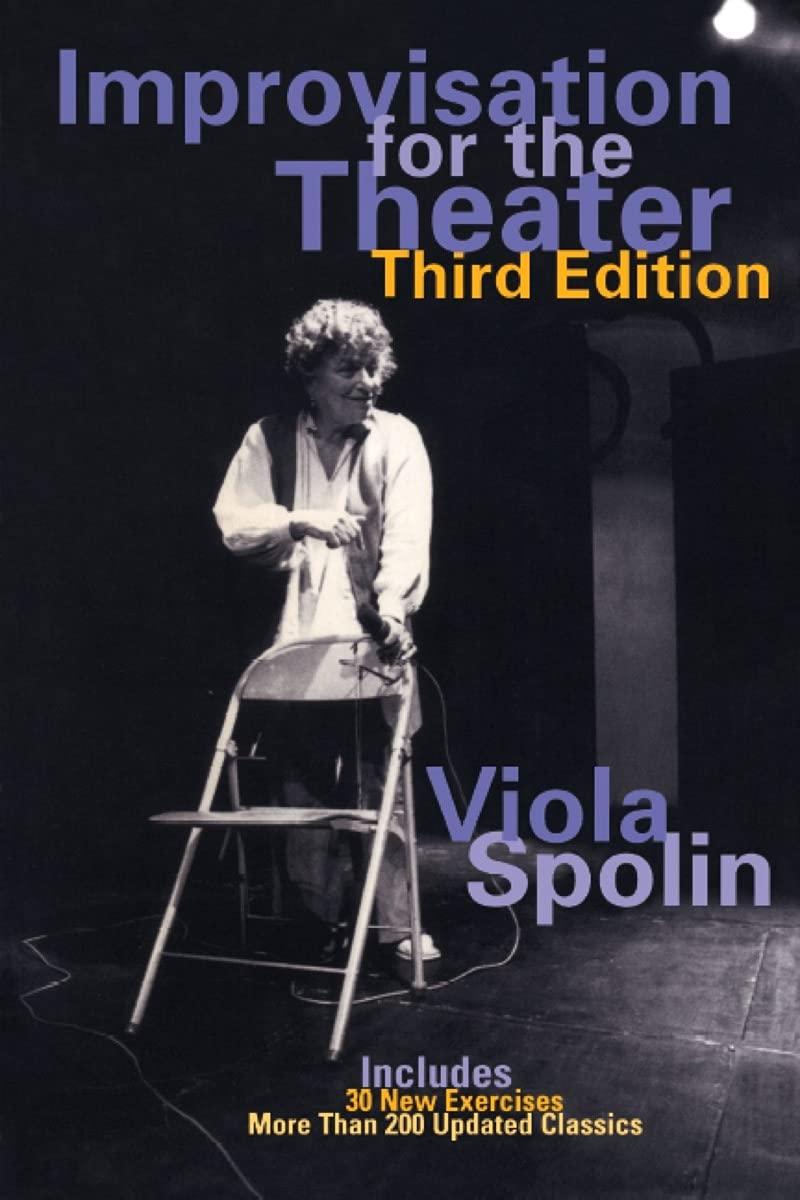
Improvisation for the Theater
A Handbook of Teaching and Directing Techniques
Viola Spolin

The 5 Elements of Improv
How to Take Your Improv to the Next Level
Andrew M. Spragge; Karen L. Eichler
Theater Games for Rehearsal
Viola Spolin

Improvising Now
A Practical Guide to Modern Improv
Rob Norman
Related Exercises
Open Improv Scenes
Open Improv Scenes is an applied improvisation exercise in which participants perform unscripted scenes drawn from workplace or professional scenarios, using improv principles to navigate realistic situations they encounter in their jobs. Unlike traditional improv scenes that prioritize entertainment, Open Improv Scenes prioritizes transfer -- the scenes serve as behavioral rehearsals for real professional interactions.
Scenes in the Same Setting
Scenes in the Same Setting is an exercise in which multiple pairs or groups perform separate scenes all set in the same location, exploring how a single environment can host vastly different characters, relationships, and stories. The exercise demonstrates that setting is a springboard rather than a limitation.
3 Line Scenes
3 Line Scenes is a compact scene drill and short-form game in which two players improvise a scene using only three lines in total. One player starts, the other responds, and the first player answers back. The short limit keeps the round simple, fast, and playable for new improvisers who are getting used to starting scenes in front of a group or audience.
Meditation to Scenes
Meditation to Scenes is an exercise in which performers begin with a brief guided meditation and then immediately bring the images, sensations, or emotional states that arose in meditation into an improvised scene. The exercise trains the ability to work from genuine internal experience rather than externally constructed premises, using the quieted, image-rich state of meditation as a source of authentic material for scene initiation.
How to Reference This Page
The Improv Archive. (2026). Scenes from a Suggestion. Retrieved September 28, 2026, from https://improvarchive.org/exercises/scenes-from-a-suggestion
The Improv Archive. "Scenes from a Suggestion." The Improv Archive, 2026. https://improvarchive.org/exercises/scenes-from-a-suggestion.
The Improv Archive. "Scenes from a Suggestion." The Improv Archive, 2026, https://improvarchive.org/exercises/scenes-from-a-suggestion. Accessed September 28, 2026.
The Improv Archive is a systemically maintained repository. The archive itself acts as the corporate author.