Is There Any More?
Is There Any More? is a scene extension technique and game in which the host or audience prompts performers to continue exploring a scene or relationship after it appears to have reached its natural conclusion. The prompt forces performers to find new layers, new complications, or new dimensions beneath what seemed complete -- discovering that a scene's apparent end was not its real end. The technique trains the ability to mine depth from a premise that could easily be treated as finished.
Structure
Setup
A scene plays to what feels like a natural ending point: a decision made, a revelation landed, a relationship moment completed. The host pauses and asks: "Is there any more?"
Continuation
Performers re-enter the world of the scene and find what exists underneath the apparent conclusion: a feeling that was not expressed, an action that follows from the ending, a dimension of the relationship that was present but not yet surfaced.
The new material does not restart the scene but deepens it: what has just ended is now the foundation for another layer of exploration.
Multiple Extensions
The host may ask "Is there any more?" repeatedly, requiring performers to find multiple layers of extension from a single premise. Each extension should reveal something genuinely new rather than recycling what was already expressed.
Ending
The technique ends when the performers have reached a genuine new ending -- one that feels more complete than the one they arrived at first -- or when the host determines the scene has been fully explored.
How to Teach It
Objectives
Is There Any More? trains the ability to go beyond a scene's surface completion into its deeper available material, combats the improv habit of ending at the first satisfying moment, and develops the patience to look for what is not yet said or felt before declaring a scene complete.
How to Explain It
"When you think you're done -- you're probably not done yet. There's usually more. I'm going to ask you to go back in. Find what you didn't say. Find what happened next. It's there."
Scaffolding
Use the technique on scenes that clearly had more material than was explored in the first pass. Scenes with established relationships, specific stakes, and genuine emotion are the richest candidates for extension. Thin scenes that ended appropriately because they had nothing to develop often do not benefit from extension.
Common Pitfalls
Performers sometimes treat the extension as a repetition of what was already expressed rather than a genuine deepening. The coaching note is that each extension must reveal something that was not in the original scene -- a new feeling, a new action, a new understanding -- not a rephrasing of the same emotional note.
How to Perform It
Audience Intro
"That scene appeared to be over. It may not be. Let's find out if there's anything left."
Cast Size
Same as the extended scene.
Staging
Performers return to the scene space they were in. The host signals re-entry clearly.
Wrap-Up Logic
End when the extension produces a genuinely new and satisfying conclusion that could not have been predicted from the scene's first ending.
Worth Reading
See all books →
Something from Nothing
The Technique of Improvisation
Richard Goteri

Whose Improv Is It Anyway?
Beyond Second City
Amy E. Seham
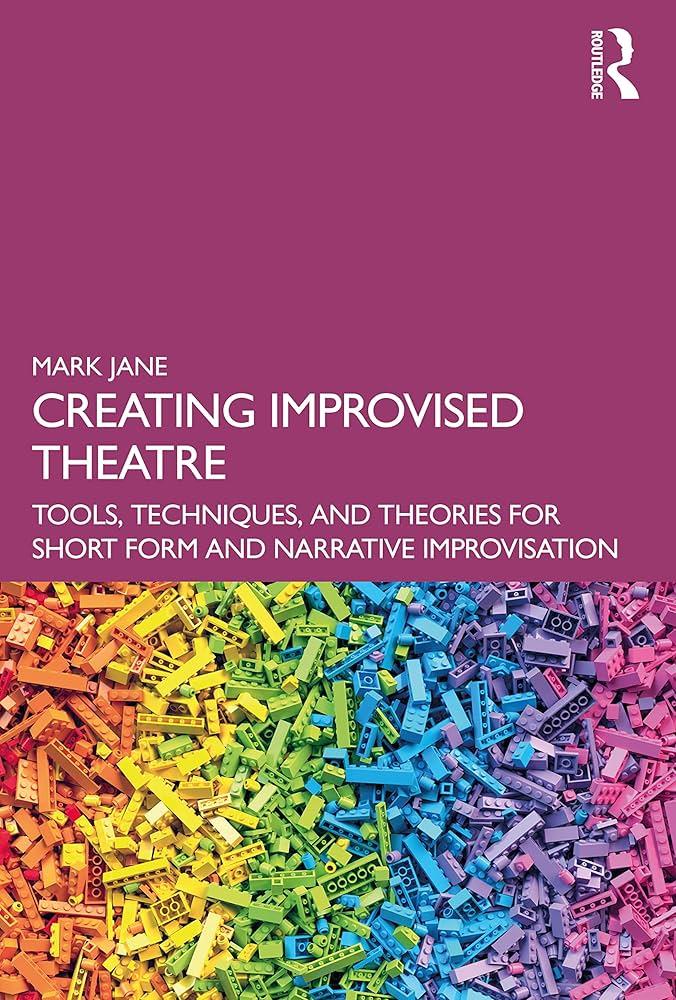
Creating Improvised Theatre
Tools, Techniques, and Theories
Mark Jane

Improvising Now
A Practical Guide to Modern Improv
Rob Norman
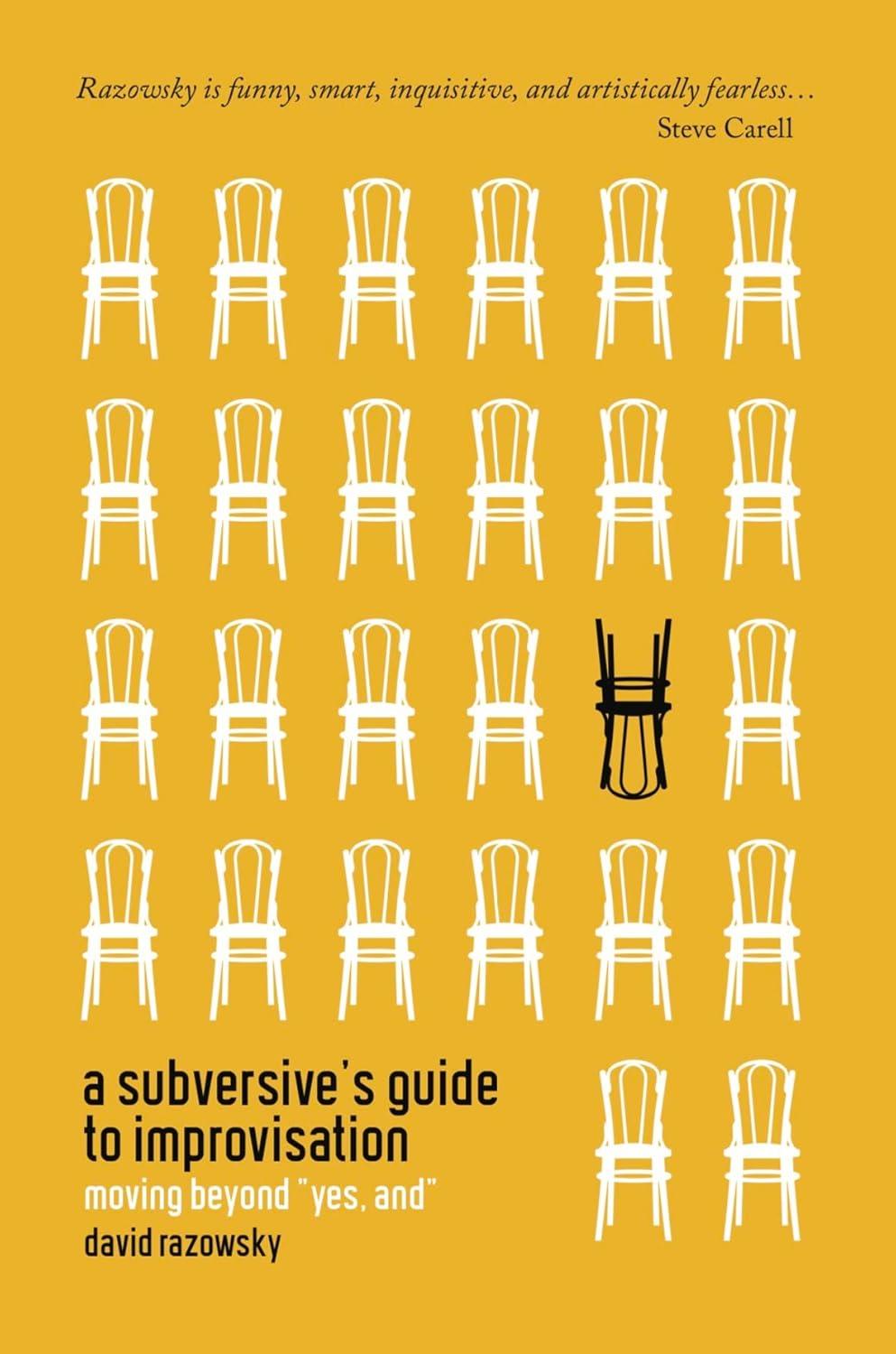
A Subversive's Guide to Improvisation
Moving Beyond "Yes, and"
David Razowsky
Theater Games for Rehearsal
Viola Spolin
Related Exercises
Location, Relationship, Escalate, End
Location, Relationship, Escalate, End is a scene construction exercise in which performers build a scene through four discrete, progressive stages: first establishing a specific physical location, then establishing the specific relationship between the characters, then escalating the scene through increasing stakes or emotional intensity, and finally bringing it to a definitive end. The exercise provides a structured scaffold for scene construction and trains performers to execute each element with commitment and specificity before moving to the next.
Advancing and Expanding
Advancing and Expanding is a scene technique exercise in which players practice the dual skills of moving a narrative forward and deepening the current moment. A caller instructs performers to either advance the plot or expand on the present beat with more detail and emotion. The exercise builds the storytelling instinct for when to push forward and when to linger.
Simple Continuation
Simple Continuation is a scene exercise in which a facilitator starts a scene with a basic premise and the performers continue from that point, practicing the skill of receiving an offer and building on it without the pressure of initiating from scratch.
Last Letter Scene
Last Letter Scene is a hybrid game and exercise in which each line of dialogue must begin with the last letter of the previous line. The constraint forces performers to listen with acute precision -- not to the general content of what is said but to the exact final sound of each utterance -- while maintaining scene coherence, character, and forward momentum simultaneously.
Montage Ending
Montage Ending is a rehearsal technique and scene-work exercise in which performers practice bringing a montage structure to a deliberate, coordinated conclusion -- finding the final image, moment, or group beat that closes the set of scenes as a unified whole rather than allowing the montage to simply stop when no one has anything left to offer. The exercise trains the ensemble's capacity to sense when a montage is complete and to create the shared ending actively rather than passively.
How to Reference This Page
The Improv Archive. (2026). Is There Any More?. Retrieved September 29, 2026, from https://improvarchive.org/exercises/is-there-any-more
The Improv Archive. "Is There Any More?." The Improv Archive, 2026. https://improvarchive.org/exercises/is-there-any-more.
The Improv Archive. "Is There Any More?." The Improv Archive, 2026, https://improvarchive.org/exercises/is-there-any-more. Accessed September 29, 2026.
The Improv Archive is a systemically maintained repository. The archive itself acts as the corporate author.