Talk Without I is an exercise in which pairs have a conversation about anything without using the word "I." The constraint forces speakers to restructure their sentences away from self-referential framing, developing awareness of how much ordinary communication centers the speaker rather than the subject.
Structure
Setup
Participants pair up. They agree on a topic to discuss, or the facilitator assigns a topic.
The Constraint
Neither participant may use the word "I" in any form during the conversation. This includes "I'm," "I've," "I'll," and "I'd." The word "my" is sometimes included in the constraint depending on the version being run.
The Conversation
Participants hold a genuine conversation on the topic. When someone uses "I," the partner may point it out and the speaker rewrites their sentence. Some versions continue without interruption and participants track their own slips.
Reformulation
Speakers discover that eliminating "I" requires them to shift from first-person statements to descriptions, observations, or questions. "I think the project is going well" becomes "The project seems to be going well" or "There is real momentum building."
Reflection
After the conversation, participants discuss what changed in the quality of their listening and speaking when the first-person frame was removed.
How to Teach It
Objectives
Talk Without I develops awareness of how self-centered framing affects communication and builds the skill of redirecting attention toward the subject, the listener, or the shared context rather than the speaker.
How to Explain It
"Have a conversation on any topic. The only rule is that neither of you can say the word I. When you catch yourself using it, reformulate the sentence."
Scaffolding
Start with a brief one-minute conversation to let participants experience the constraint before extending to a full discussion. The initial contact with the constraint usually produces laughter and then genuine effort.
Common Pitfalls
The most common issue is participants who become so focused on avoiding "I" that they stop listening to their partner. Remind them that the conversation's quality matters as much as the constraint. The goal is both speaking without "I" and genuinely engaging with what the other person is saying.
In Applied Settings
Presentation and Pitching
Talk Without I directly addresses the common professional communication problem of presentations that center the speaker rather than the audience. Speakers who practice this constraint develop the habit of framing their communication in terms of benefit and relevance to others.
Leadership Communication
The exercise builds awareness of how leaders communicate in team settings. Leaders who habitually use first-person framing can inadvertently signal that the team's work is primarily theirs. The constraint develops more inclusive communication patterns.
Facilitation Notes
In professional settings, connect the debrief to specific communication contexts where the constraint's insight is most relevant. Customer presentations, performance feedback conversations, and team meetings are all contexts where the first-person habit creates subtle friction.
Worth Reading
See all books →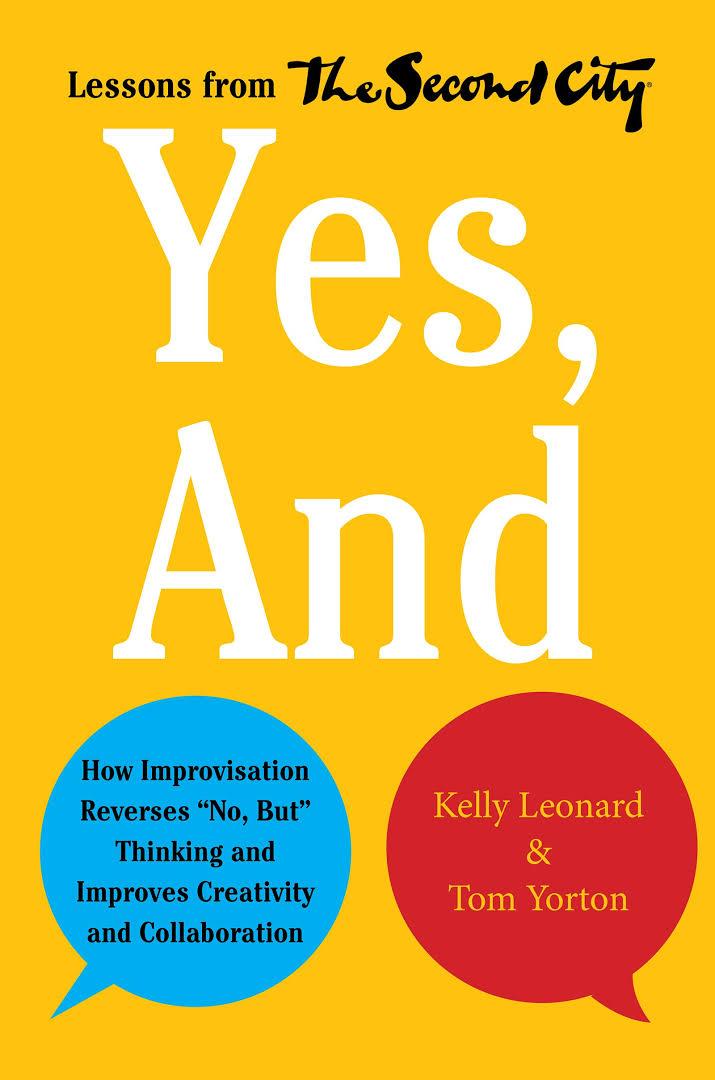
Yes, And
How Improvisation Reverses No, But Thinking and Improves Creativity and Collaboration
Kelly Leonard; Tom Yorton

When I Say This, Do You Mean That?
Enhancing Communication
Cherie Kerr; Julia Sweeney
Theater Games for the Lone Actor
Viola Spolin

Improve
How I Discovered Improv Comedy and Conquered Social Anxiety
Alex Graudins
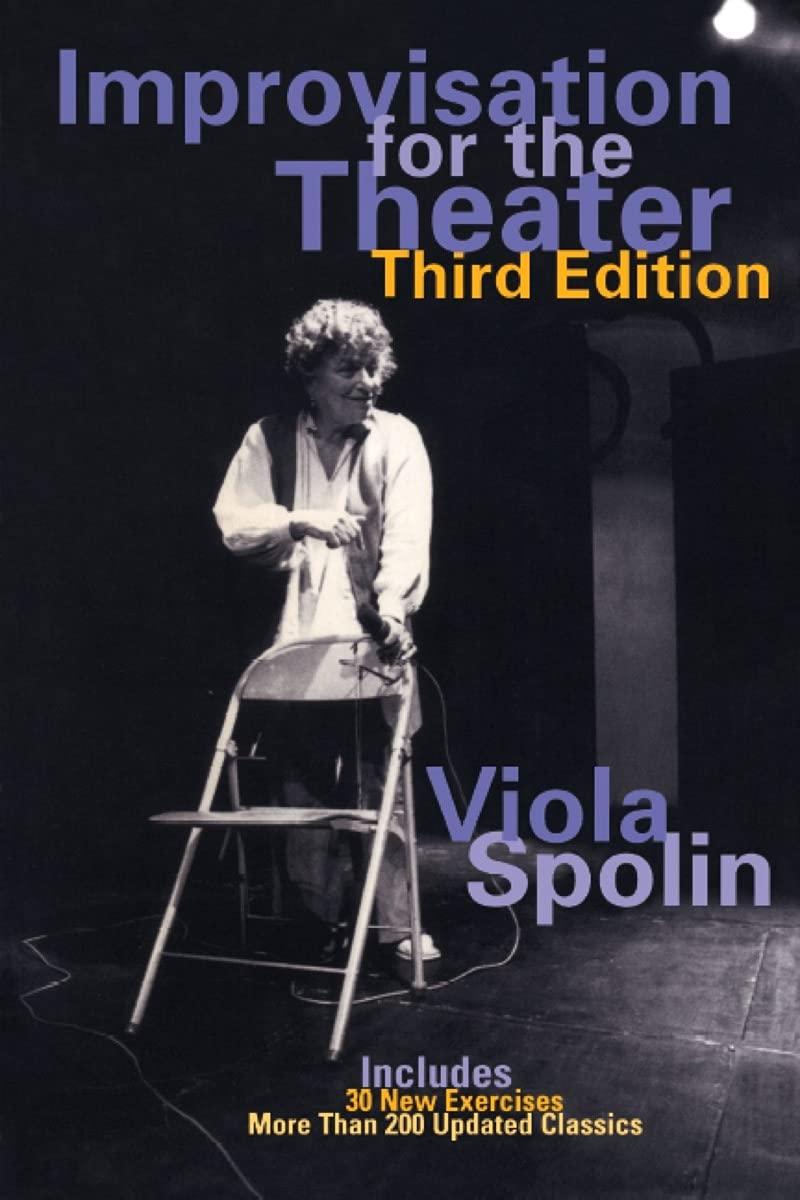
Improvisation for the Theater
A Handbook of Teaching and Directing Techniques
Viola Spolin
Improvise
Scene from the Inside Out
Mick Napier
Related Exercises
Without Words
Without Words is a scene exercise in which performers play scenes using sounds, gibberish, or silence instead of coherent language. The constraint forces communication through emotional tone, physicality, spatial relationship, and vocal texture rather than words. The exercise demonstrates that language is only one channel of theatrical communication and develops performers' physical and vocal expressiveness.
Me, Me, Me Syndrome
Me-Me-Me Syndrome is an applied improv exercise that surfaces and interrupts the habitual tendency to redirect conversations toward oneself -- to respond to a colleague's story, concern, or idea by relating it back to one's own experience rather than staying with theirs. The exercise makes this pattern visible through structured conversation in which participants are coached to notice and resist the autobiographical redirect, building the capacity for genuine other-directed attention.
Nonverbal Communication
Nonverbal Communication is an applied improvisation exercise in which participants interact, negotiate, and collaborate without spoken language, relying entirely on gesture, facial expression, body positioning, and physical presence. The exercise reveals how much information is transmitted nonverbally and trains participants to read and use body language with greater awareness and precision.
Repetition
Repetition is a paired listening exercise in which participants hold a conversation one sentence at a time, with each person required to repeat their partner's last statement before responding. The exercise forces genuine listening by making the repetition a prerequisite for the reply.
Present without Scripting
Present Without Scripting is an applied improvisation exercise from Business Improv in which participants practice delivering spontaneous presentations without prepared remarks. The exercise builds confidence in speaking from knowledge and instinct rather than from written scripts, demonstrating that authentic communication often connects more effectively than rehearsed delivery.
Talk It Out
Talk It Out is a creative unblocking technique in which a person who is stuck finds a sounding board and simply talks without filtering until they stumble across the answer. The technique applies the improv principle that articulation precedes clarity.
The Lineage
Explore the schools and structures that influenced or evolved from Talk Without I.
Yes, And (Kelly Leonard & Tom Yorton)
How to Reference This Page
The Improv Archive. (2026). Talk Without I. Retrieved September 28, 2026, from https://improvarchive.org/exercises/talk-without-i
The Improv Archive. "Talk Without I." The Improv Archive, 2026. https://improvarchive.org/exercises/talk-without-i.
The Improv Archive. "Talk Without I." The Improv Archive, 2026, https://improvarchive.org/exercises/talk-without-i. Accessed September 28, 2026.
The Improv Archive is a systemically maintained repository. The archive itself acts as the corporate author.